


The Story of Captain Robert S. Johnson Who Took Two Hundred Hits and Still Made It Home
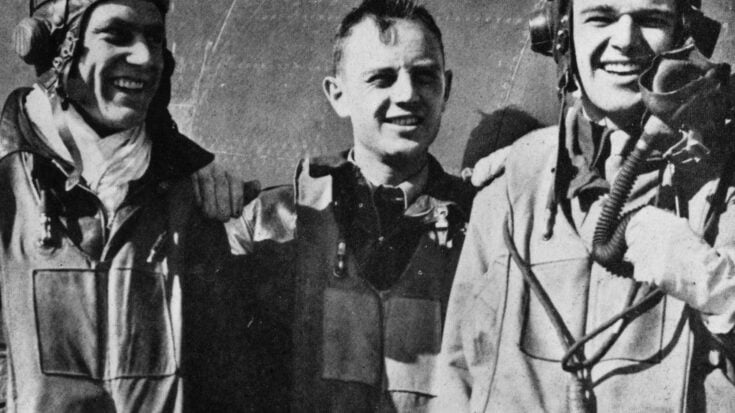
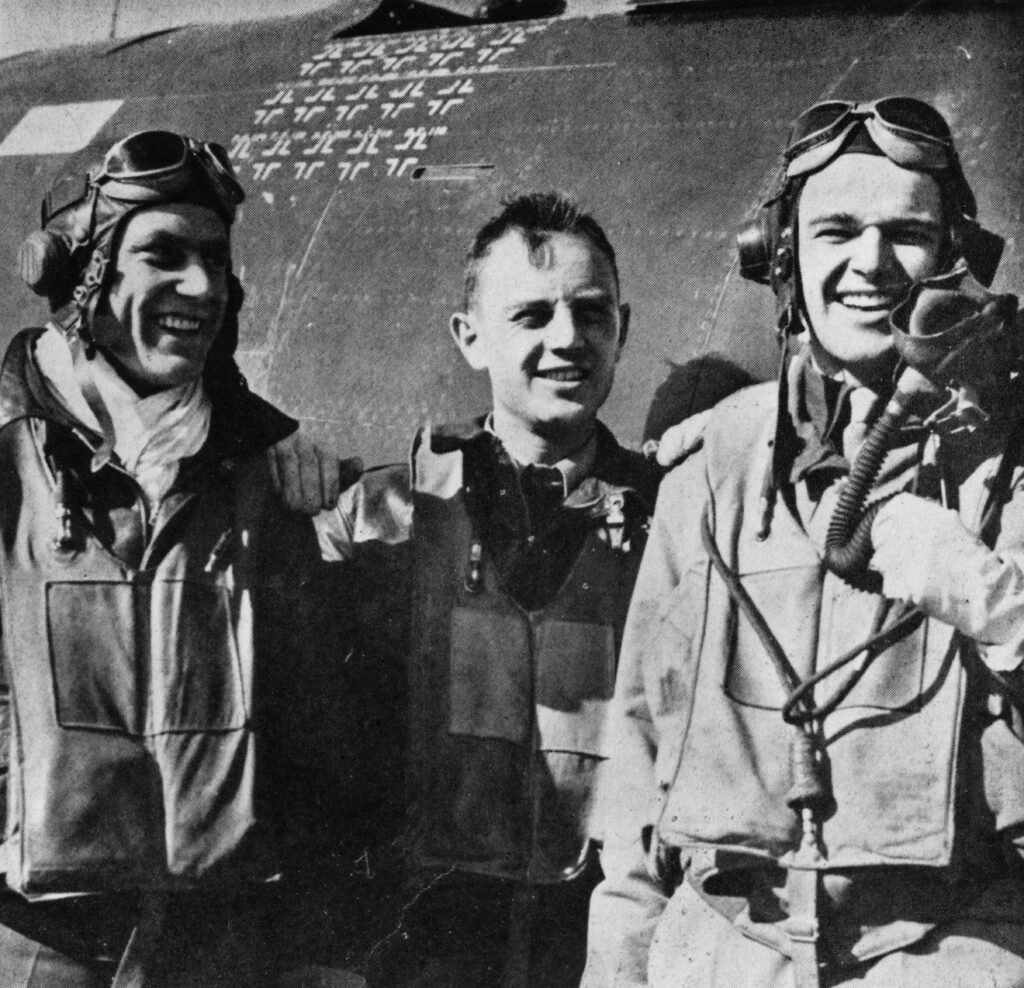
Captain Robert S. Johnson’s name became part of air combat history not because he sought fame, but because he survived what should have been a fatal encounter in the skies of Europe. His rise from a young pilot with raw talent to one of the United States’ most respected aces shows how training, instinct, and determination shaped the air war. Johnson’s story became known not only for his victories but for one extraordinary flight where his P-47 Thunderbolt absorbed more than two hundred hits and stayed airborne long enough to bring him home.
Early Life and the Making of a Fighter Pilot
Robert Johnson grew up in Georgia, where his interest in flight developed long before the war. He was drawn to aircraft from an early age, and by the time he reached training school, his instructors recognized a natural ability that set him apart. They pushed him harder, knowing the air war would demand skill under pressure, quick thinking, and calm control even when chaos closed in around a cockpit.
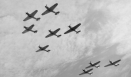
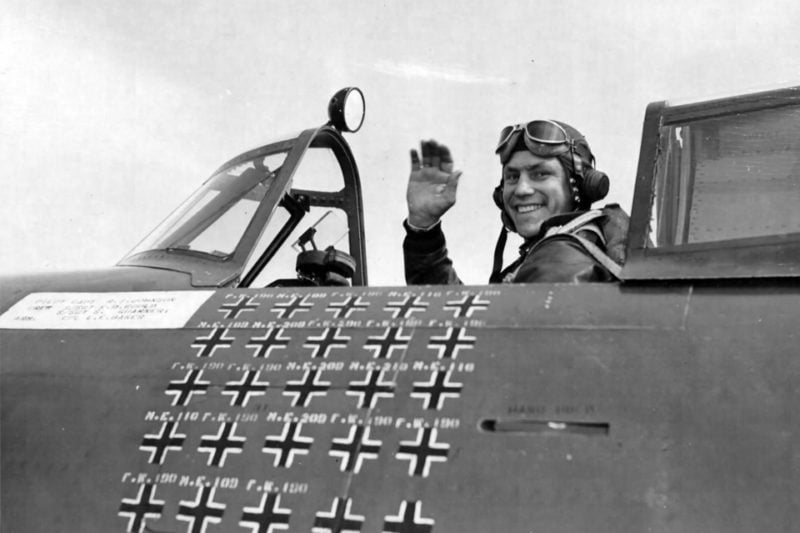
When Johnson joined his fighter group in England, he was issued a P-47 Thunderbolt, a heavy and sturdy aircraft often called on to escort bombers deep into hostile airspace. The air battles above Europe were unforgiving. German pilots had years of combat experience, and every mission carried the risk of sudden attack from fighters or ground fire. Johnson quickly learned that survival depended on discipline, teamwork, and the Thunderbolt’s rugged design.
The Mission That Nearly Ended His Life
In June 1943, Johnson’s group flew a mission deep into occupied territory. During the return flight, his P-47 was hit by ground fire before he encountered a German fighter that moved in to finish the job. The attack tore into the aircraft, ripping through control surfaces, the engine cowling, and the cockpit area. Johnson lost fuel, control authority, and visibility as his plane shook violently, but the Thunderbolt refused to break apart.
The German pilot made repeated firing passes, expecting the American fighter to fall. Instead, Johnson’s aircraft absorbed hit after hit, the metal skin buckling while pieces of the canopy and fuselage peeled away. Johnson could do little but hold the stick steady as best he could and rely on the P-47’s sheer strength to stay in the air. The German fighter circled him, firing until it nearly ran out of ammunition, then broke away. Johnson, dazed but alive, pointed his crippled aircraft toward England.

A Fight to Stay Airborne
The return flight tested every skill Johnson had learned. His instruments were damaged, cables were severed, and the engine shook so violently he expected it to fail at any moment. Yet the Thunderbolt continued to fly, held together by its strong frame and Johnson’s steady effort to keep it level. He drifted low over the Channel, bracing for a bailout or ditching that never came. When he reached his home field, crews rushed to his side, stunned by the sight of a fighter riddled with holes.
The inspection revealed more than two hundred bullet strikes across the wings, tail, and fuselage. Mechanics found damaged controls, shattered armor glass, and a fuel system that should not have carried him home. Johnson had not only survived the attack but proved the toughness of the aircraft and the importance of calm control under fire.
Aftermath and Legacy
Johnson continued to fly and ultimately became one of the highest-scoring American aces in the European air war. His experience that day was retold among pilots as an example of how training and composure could make the difference between life and death. The story also reinforced the reputation of the P-47 as one of the most durable fighters of the conflict. Johnson’s legacy grew as younger pilots learned from his example and carried those lessons through the remainder of the air campaign.




.jpg)