



How Finland Turned America’s Worst WWII Fighter into Its Greatest Weapon

Anefo, CC0, via Wikimedia Commons
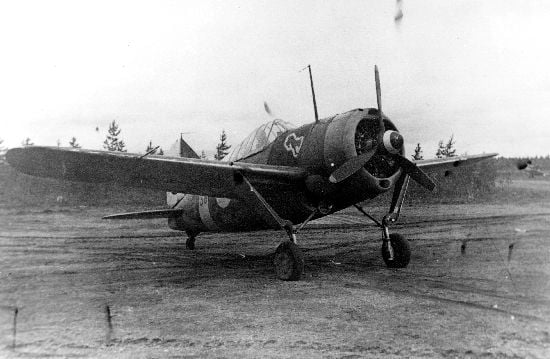
The Brewster F2A Buffalo is remembered as one of the most debated fighters of World War II. Many pilots in the Pacific called it one of the worst aircraft ever used in combat. Yet in Finland, the same plane became a feared tool of air defense and helped skilled pilots reach impressive records against Soviet aircraft. The contrast came from different weather, tactics, and technical changes made to the aircraft after it arrived in Europe.
The story shows how a fighter can be shaped by the air war that surrounds it. In a tropical climate, with fast enemy fighters and long missions over water, the Buffalo failed. In a cold climate, with short missions and a specific style of combat, it proved useful. The difference between failure and success came from how the aircraft was flown and how the pilots trained for its strengths.
Early Design and Technical Limits
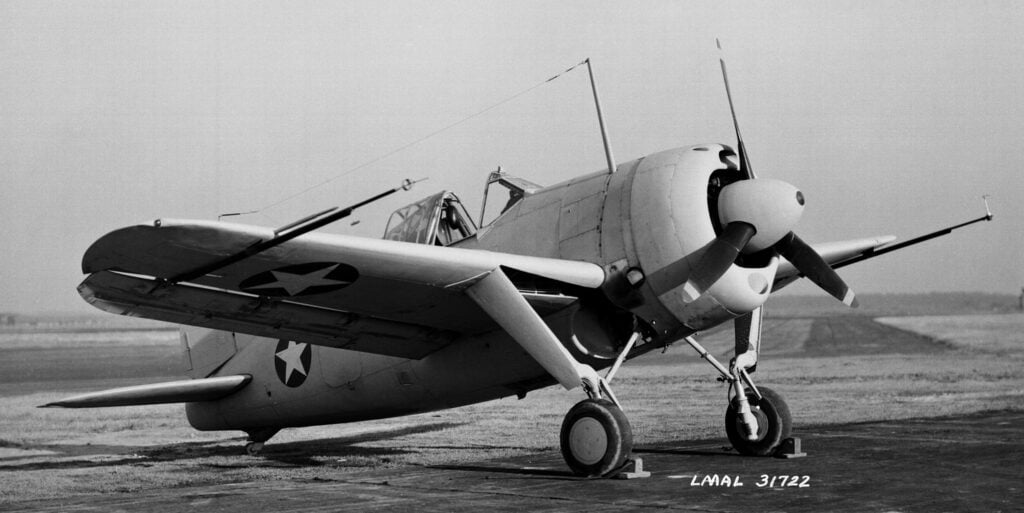
The Buffalo was developed in the late 1930s, during a time when aviation design changed quickly. It was the first U.S. Navy carrier fighter with retractable landing gear and a closed cockpit. These features helped pilots fly longer and with more comfort than earlier open cockpit fighters. On paper, the aircraft looked modern, with a metal frame, a wingspan of almost eleven meters, and a top speed near 515 kilometers per hour powered by a reliable air-cooled engine.
Design choices, however, limited its fighting ability. To fit carrier decks, the aircraft needed a compact structure, which reduced room for armor and heavier guns. Four .50 caliber machine guns gave it modest firepower when compared to later aircraft. Once war began, the Buffalo could not match the faster and more agile Japanese fighters seen across the Pacific. Many crews described how slow turns and overheating engines placed them in danger.
Combat Experience in the Pacific
In the Pacific War, the Buffalo faced the Mitsubishi A6M Zero. The Zero had strong turning ability, better climb rate, and longer range. Against this opponent, the Buffalo struggled to survive combat. Enemy pilots could out-turn it, and its engines suffered in hot air and high humidity. Damage in battle often forced pilots to ditch in the ocean. Because of these losses, the Buffalo was replaced quickly by more advanced models like the Wildcat and later the Hellcat.
By early 1942, the aircraft was mostly removed from front-line American units. Crews believed the design had no future in modern combat. Few expected that the same machine would soon become respected in another part of the war.
The Finnish Version and Its Success
Finland bought forty-four aircraft called the B-239, a lighter version of the Buffalo. Some equipment was removed, which reduced weight and made the aircraft handle better. Finnish pilots studied its behavior and focused on tactics that avoided sharp turns. They used fast dives, surprise attacks, and quick exits. They also made use of the cold, dry air, which helped the engine run smoother than in tropical climates.
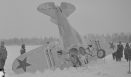
During the Winter War and the later Continuation War, Finnish pilots scored victories against several Soviet models, including the I-16 and I-153. Skilled pilots such as Eino Ilmari Juutilainen and Olli Puhakka recorded dozens of victories while flying the Buffalo. Their results showed that the aircraft could succeed when used correctly.
Conditions, Tactics, and Lessons
The Buffalo’s different history came from four main factors. Cold air improved engine performance, while reduced weight helped speed. Finnish pilots avoided dogfights that would expose weaknesses. Soviet aircraft early in the war had less advanced design than Japanese fighters, which made the match more equal. The aircraft also operated from small northern airfields, allowing frequent changes in location.
Though the Buffalo never became an American favorite, it became a symbol in Finland of skill and adaptation. The same aircraft that failed in one theater helped pilots defend their country in another.