


Hidden History: America’s Forgotten P-39 Airacobra Ace
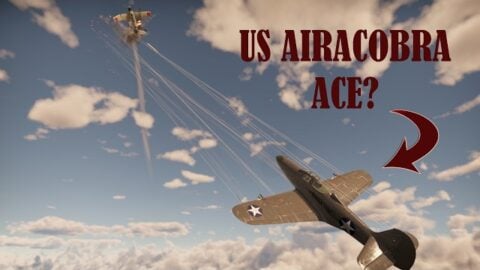
YouTube / Showtime112
The Bell P-39 Airacobra has long carried the reputation of being one of America’s least-loved fighters of World War II. Serving primarily in the Pacific, it often found itself outclassed by the nimble Japanese Zero, earning a mixed legacy among the pilots who flew it.
Despite its shortcomings, the Airacobra was the launchpad for several future American aces, each scoring their first kills behind its unconventional cockpit. So,did any pilot reach ace status flying the P-39 alone, or did this overlooked fighter remain forever a stepping stone rather than a legend in its own right?
The Airacobra’s Controversial Legacy
The Bell P-39 Airacobra has long been remembered as one of America’s most troubled fighters of World War II. Innovative in design yet limited in performance, the aircraft struggled where it mattered most- high-altitude combat.
Without a turbo-supercharger, the P-39 lagged behind its adversaries in climb rate and power, especially against the agile Japanese Zero in the Pacific. Pilots often viewed it as difficult to handle and dangerously underpowered when the flight went upward.
An Underdog Fighter with Hidden Strengths
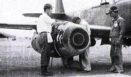
Despite its reputation, the Airacobra had qualities that skilled pilots could exploit. At low altitude, it was fast, stable, and armed with a devastating 37 mm cannon capable of tearing through enemy aircraft with a single hit. Many young American pilots honed their skills on the P-39, learning valuable lessons in energy management, situational awareness, and disciplined flying. Several future aces scored their first kills in the cockpit of this misunderstood machine.
In the American service, the P-39 is credited with over 300 aerial victories. In fact, more than 20 American pilots who achieved their first kills on the Airacobra would later become aces. However, only one pilot was credited with five victories exclusively on the P-39, Lt. William Fiedler.
Fiedler’s Combat Environment
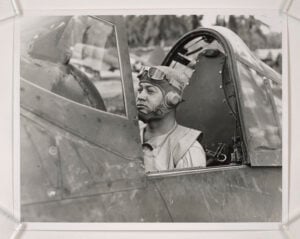
William Fiedler was one of the pilots who first flew the P-39. Despite the aircraft’s limitations, he managed to score early victories that demonstrated his skill and resilience. The Airacobra’s quirks- its mid-engine layout and heavy cannon- required adaptability and precision, traits Fiedler quickly mastered. These formative experiences laid the foundation for his later success, showing that even a “flawed” fighter could produce capable and daring pilots.
Fiedler operated mainly in the Southwest Pacific, a theater defined by intense, low-altitude aerial combat. Japanese fighters like the Mitsubishi A6M Zero often attacked from treetop height, and pilots had to rely on agility, tactics, and nerves of steel. In this environment, the Airacobra’s weaknesses mattered less than its strengths: firepower and sturdiness. Fiedler’s skill in leveraging these advantages allowed him to rise above the limitations that frustrated so many others.
Achievements and Legacy
Unlike more famous aces who flew multiple aircraft types, Fiedler achieved his victories exclusively in the P-39. This makes his record particularly remarkable, proving that even a “flawed” fighter could deliver ace-level performance under the right circumstances. His accomplishments remain largely unrecognized in mainstream World War II aviation histories, yet they are a testament to his skill, courage, and the untapped potential of the Airacobra.
While several pilots opened their victory accounts in the P-39, very few achieved ace status exclusively in the aircraft. The Airacobra often served as a stepping stone, a platform for honing combat skills before moving on to higher-performing fighters. Fiedler’s story illustrates this perfectly: his accomplishments in the P-39 were impressive, but the aircraft’s limitations meant that true recognition often came later, in other machines better suited to dominating the skies.