Corsair and Hellcat Vs. Bf 109 and Fw 190
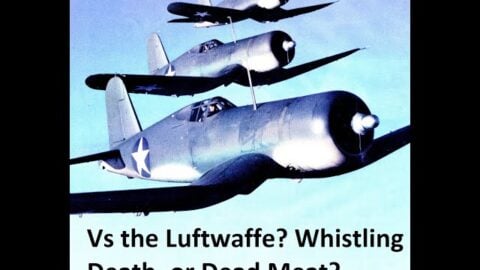
YouTube / Greg's Airplanes and Automobiles
The question of how the American naval fighters like the F4U Corsair and F6F Hellcat would have performed against the Luftwaffe’s Messerschmitt Bf 109 and Focke-Wulf Fw 190 is a fascinating “what if” of World War II aviation. While these aircraft were designed for different theaters and roles, comparing their performance reveals how closely matched they could have been in combat.
Speed and Power
In terms of top speed, the Bf 109 and Fw 190 generally held a slight edge at higher altitudes early in the war. The Fw 190, especially later variants, could reach around 650 km/h, making it one of the fastest piston fighters of its time. The Corsair and Hellcat, however, were no slouches. The Corsair could exceed 630 km/h, while the Hellcat reached around 610 km/h. In a straight-line race, the Luftwaffe fighters might have had a slight advantage, but it was not overwhelming.
Climb Rate and Acceleration
Climb rate was an area where the Bf 109 excelled, particularly in its lighter early variants. It could out-climb both American naval fighters in many conditions. The Fw 190, while powerful, had a heavier airframe and slightly reduced climb performance compared to the Bf 109. The Hellcat was respectable but not exceptional in climb, while the Corsair improved significantly as its engine and aerodynamics were refined.
Maneuverability and Dogfighting
At low to medium altitudes, the Hellcat proved extremely stable and forgiving, often matching or surpassing Japanese fighters in turning combat. Against German aircraft, it would likely have held its own in sustained dogfights. The Corsair, with its long nose and powerful engine, excelled in high-speed turns and energy fighting.
The Fw 190 was also a strong energy fighter, with excellent roll rate and firepower, making it deadly in boom-and-zoom tactics. The Bf 109 remained highly agile in vertical maneuvers but could be more demanding for pilots at high speed.
Dive Performance and Durability
Both American aircraft were known for rugged construction. The Corsair especially had excellent dive performance and structural strength, allowing it to absorb punishment.
The Fw 190 also dived very well, often matching or exceeding Allied fighters in controlled dives. The Hellcat’s durability was legendary, designed to take damage and still bring pilots home, a major advantage in prolonged engagements.
Why They Didn’t Meet
The reason these aircraft never faced each other in large numbers was operational geography. The Corsair and Hellcat were primarily deployed in the Pacific against Japan, while the Bf 109 and Fw 190 fought over Europe and North Africa. Different theaters meant different air wars, even though their performance levels suggest they would have been closely matched opponents in combat.