The Battle That Helped Stop Germany’s Invasion Began With 12 Hurricanes vs 200 Bombers
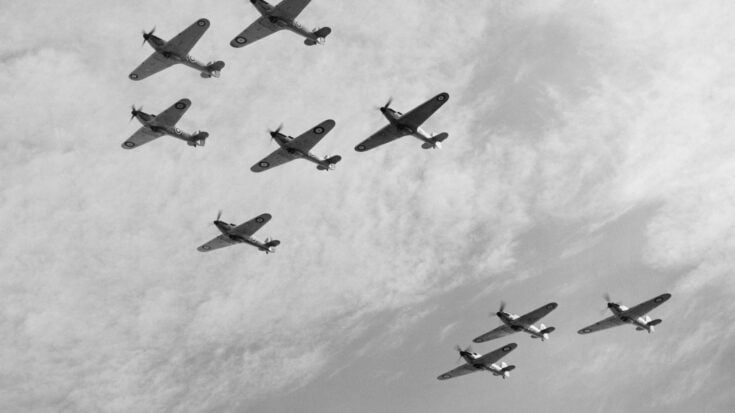
Daventry B J (Mr), Royal Air Force official photographer, Public domain, via Wikimedia Commons
The Day Hurricanes Faced a Sky Full of Bombers Over Britain
On September 15, 1940, the skies above southern England carried the weight of a decision that would shape the war. German air forces launched one of their largest daylight raids against London, aiming to overwhelm British defenses and break resistance. For the Royal Air Force, the response depended on limited aircraft, tight coordination, and pilots who had already endured months of continuous combat.
Among those pilots was Flight Lieutenant Thomas Callaway, flying a Hawker Hurricane. At high altitude, he climbed above the incoming formation and saw what awaited him. Hundreds of bombers, supported by fighter escorts, stretched across the sky in layered formations. Against this force, his squadron had only a handful of aircraft. Orders came quickly: Hurricanes would attack the bombers, while Spitfires engaged the escorts.
The Role of the Hurricane
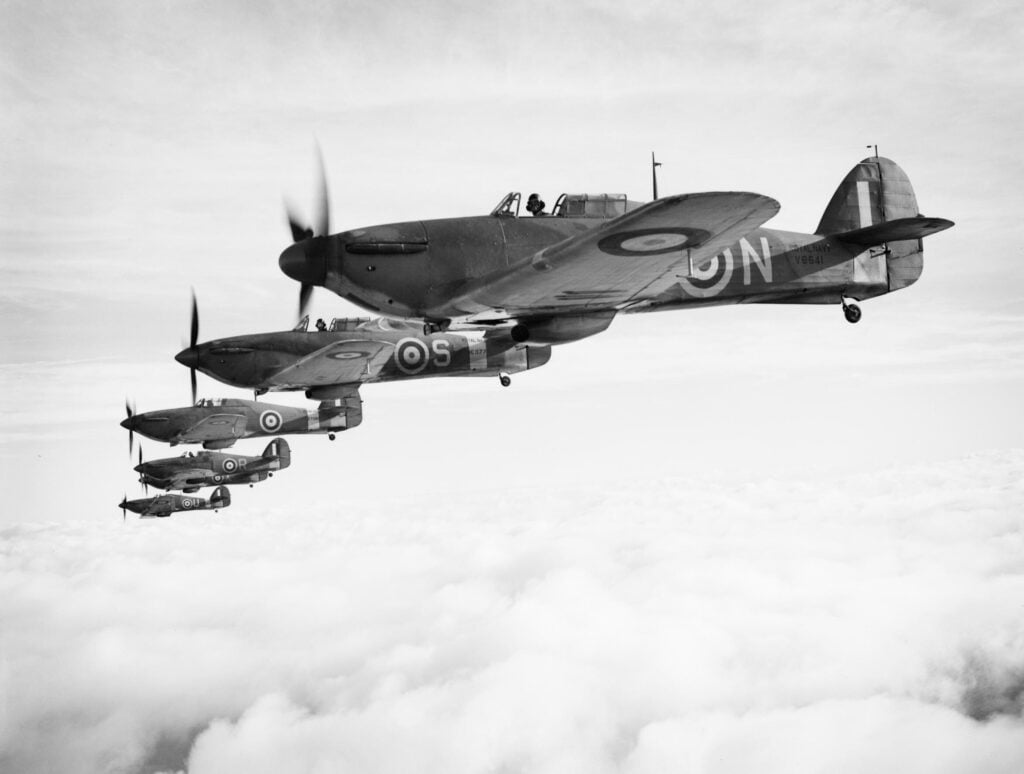
By late summer 1940, Britain’s defense system relied on radar stations, ground controllers, and fighter squadrons working together. While the Spitfire gained public attention, the Hurricane carried much of the burden. It was more numerous and often assigned to strike the bombers directly, which were the true threat to cities and infrastructure.
The Hurricane’s design reflected an earlier era, with a sturdy frame and fabric-covered sections. Though less advanced than newer fighters, it could absorb damage and remain operational. Its stable gun platform made it effective against large targets flying steady courses. Pilots learned to aim for engines and cockpits, where concentrated fire could quickly disable a bomber.
Entering the Formation
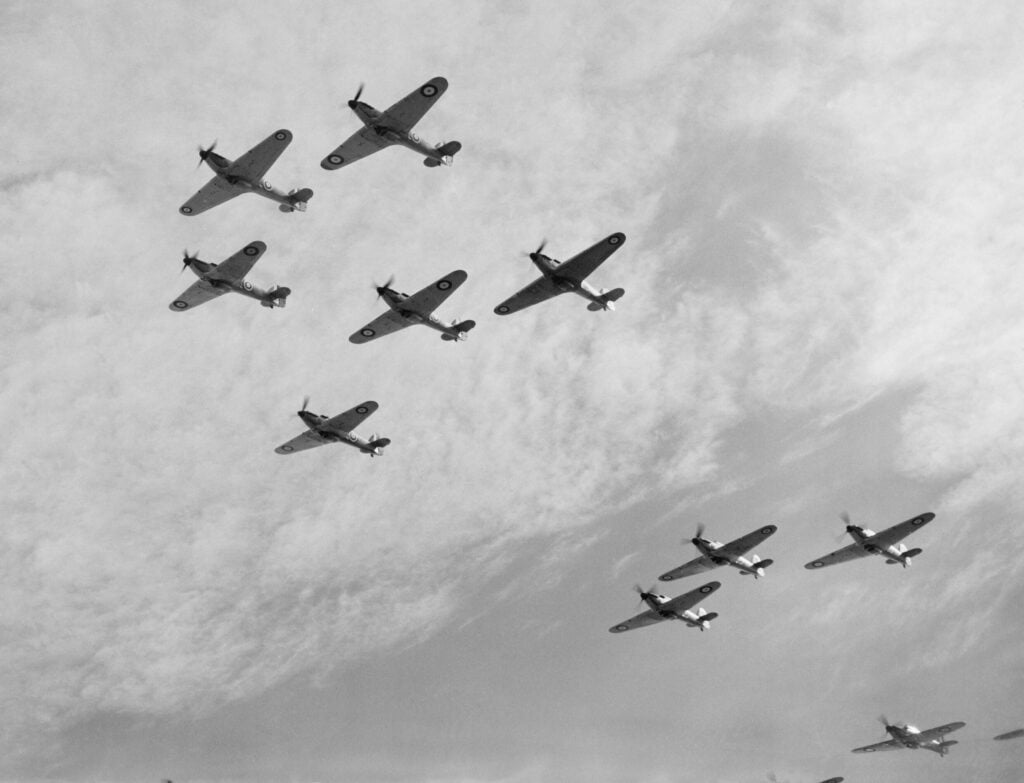
Callaway and his squadron approached the German formation as it moved toward London. Bombers flew in defensive groups, arranged to cover each other with overlapping gunfire. Attacking from behind exposed fighters to concentrated resistance, so experienced pilots developed other methods. Callaway chose a head-on approach, closing rapidly and firing in a brief window before passing through.
In one such attack, he aligned his guns on the lead bomber and fired at close range. The effect was immediate, as the aircraft lost control and dropped away. He then climbed and turned for another pass, targeting bombers that drifted from formation. Each engagement required precise timing, as the speed of approach allowed only seconds to act.
Sustained Combat Under Pressure
As the battle continued, Callaway pressed repeated attacks against the bombers. Some aircraft were damaged and forced to fall back, reducing the effectiveness of the formation. Others were destroyed outright. Each pass exposed him to defensive fire, and the risks increased with every maneuver.
At one point, a German fighter intercepted him, attacking from above. Cannon fire struck his Hurricane, damaging the wing and engine. Instruments showed a gradual loss of oil pressure, signaling that the engine would not last long. Despite this, he chose to continue his attacks, using the remaining performance of the aircraft to make additional passes.
A Forced Landing and Wider Impact
With his engine failing, Callaway eventually turned away from the formation and descended toward open ground. The engine stopped completely as he approached a field, forcing him to land without power. The aircraft was damaged on landing but remained intact enough for him to exit safely.
The events of that day extended far beyond one pilot. German forces committed large numbers of aircraft to the attack, yet British defenses held. Losses on both sides were significant, but the bombing failed to achieve its intended effect. Within weeks, plans for a cross-channel invasion were postponed.
Callaway continued flying throughout the campaign, later serving in other theaters. Like many pilots of the Battle of Britain, his experience reflected the demands placed on a small group facing sustained pressure. The outcome depended not on a single moment, but on repeated efforts across many such encounters in the skies above England.