

Shot, Wounded, and Alone—He Refused to Abandon His B-17 to Save a Crewman With No Parachute
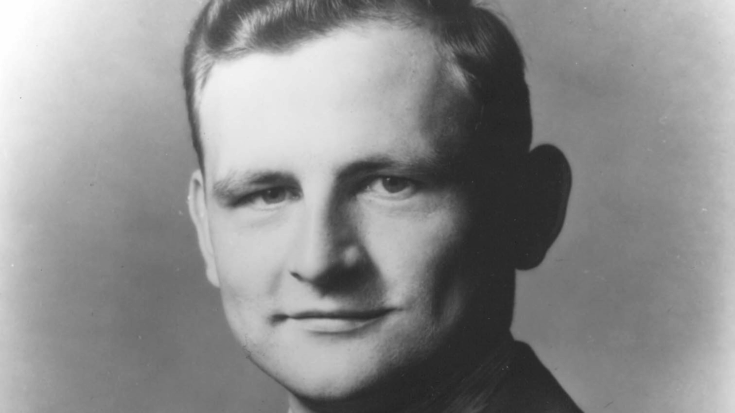
US government/DoD, Public domain, via Wikimedia Commons
He Stayed With the Aircraft: Edward Stanley Michael and the Flight of “Bertie Lee”
In the spring of 1944, American bomber crews operating from England faced some of the most dangerous missions of the war. Deep strikes into German-controlled territory were essential to disrupt industry, but they came at a heavy cost. Among those who took part in these operations was First Lieutenant Edward Stanley Michael, a pilot whose actions during one mission would stand out even in a conflict filled with risk and sacrifice.
Michael flew with the United States Army Air Forces as part of the Eighth Air Force, which carried out daylight bombing raids over Europe. These missions relied on formations of B-17 Flying Fortresses, heavily armed aircraft designed to defend themselves while delivering bombs with precision. Despite their strength, they were often met by intense anti-aircraft fire and determined fighter opposition.
A Mission Over Stettin
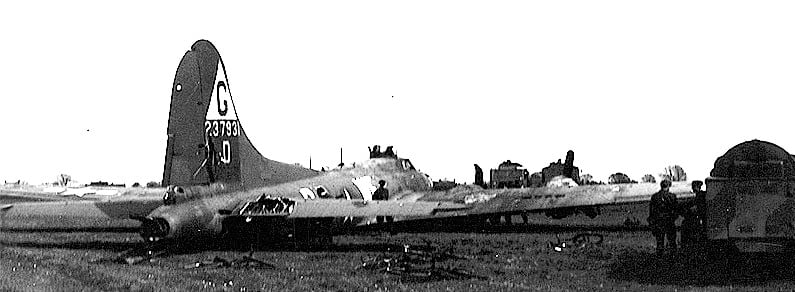
On April 11, 1944, Michael piloted a B-17 known as “Bertie Lee” during an attack on industrial targets near Stettin, an important center for German production. Ball-bearing plants in the region were considered critical, as they supported the manufacture of vehicles and aircraft. Destroying them was a priority, but the defenses around such sites were strong.
As the formation approached the target, heavy flak filled the sky. Exploding shells sent fragments through the aircraft, causing severe damage. Michael was struck by shrapnel and badly wounded, yet he remained at the controls. Inside the bomber, the situation grew more difficult as systems failed and the crew faced growing danger.
A Choice in the Air
With the aircraft damaged, several crew members were forced to leave the bomber using parachutes. This was standard procedure when survival in the air seemed unlikely. However, during the emergency, Michael learned that his bombardier, Second Lieutenant John Lieber, could not follow them. Lieber’s parachute had been destroyed, leaving him with no safe way to escape.
At that moment, Michael faced a clear decision. He could abandon the aircraft along with the others or attempt to bring the damaged bomber back to England. Despite his injuries and the risks involved, he chose to remain. This meant flying a crippled aircraft across hostile territory, with enemy fighters still a threat and limited control over the damaged systems.
The Return Across the Channel
Maintaining control of a B-17 under normal conditions required coordination between multiple crew members. Doing so while wounded, and with parts of the aircraft no longer functioning properly, demanded exceptional effort. Michael guided “Bertie Lee” away from danger, avoiding further attacks and keeping the bomber in the air long enough to reach the English Channel.
Crossing the water marked only part of the challenge. The aircraft still had to land safely, despite its damage. Michael managed a forced landing at an airfield in England, bringing the bomber down in one piece. His decision ensured that Lieber survived, even as other members of the crew who had bailed out were captured and spent the remainder of the war as prisoners.
Recognition and Later Service
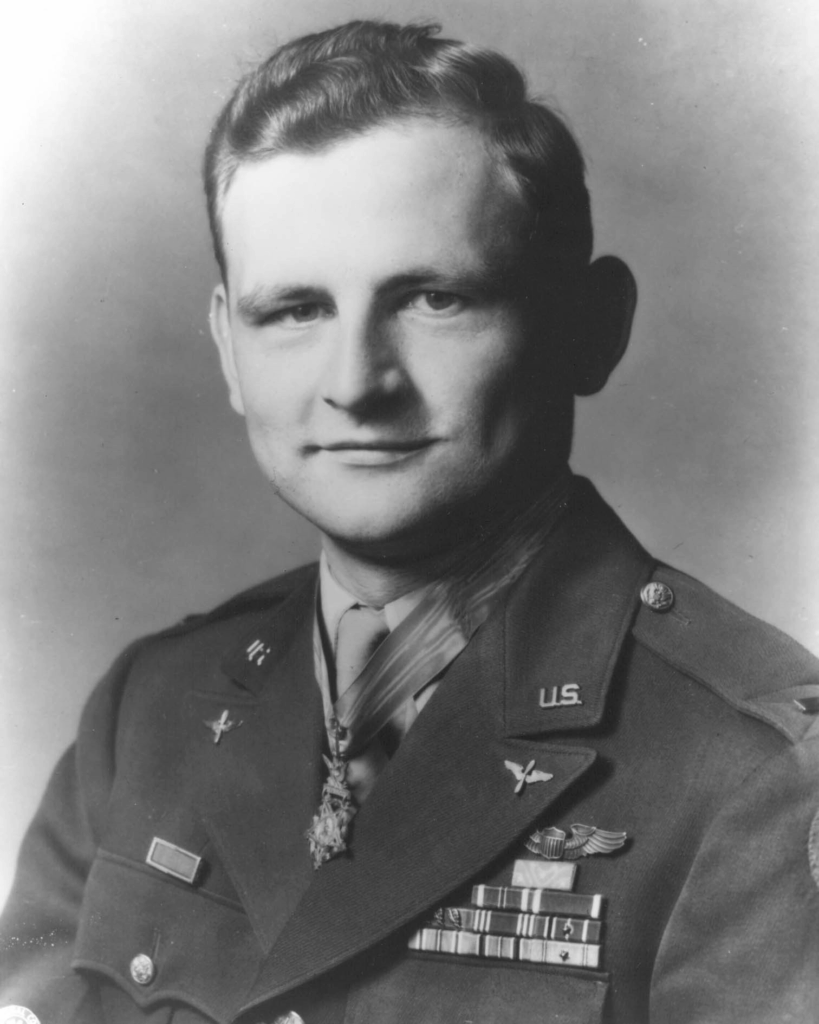
For his actions that day, Michael received the Medal of Honor, the highest military award in the United States. The presentation took place at the White House on January 10, 1945, with President Franklin D. Roosevelt presiding. The award recognized not only his flying skill but also his decision to place another crewman’s life ahead of his own safety.
Michael’s service did not end with that mission. After recovering from his wounds, he returned to duty and continued his career as the war drew to a close. With the establishment of the United States Air Force as a separate branch in 1947, he remained in service, flying aircraft such as the B-47 and taking on roles in transport operations.








