Israeli Forces Turn to Netting as Drone Threat Grows in Lebanon
Israeli forces are adapting to a rapidly evolving battlefield as Hezbollah increases its use of fiber-optic guided FPV drones. These small, one-way attack drones have emerged as a persistent threat, striking troops and vehicles even during a fragile ceasefire.
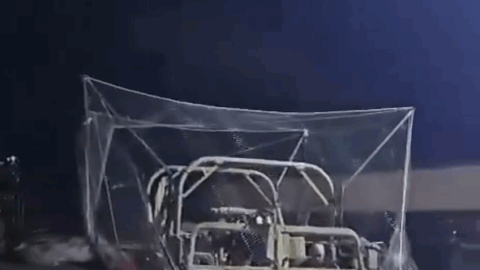
Recent footage shows Israeli vehicles fitted with overhead netting, stretched across metal frames like a cage. The concept is simple. The net is meant to catch or disrupt incoming drones before they reach the vehicle. In theory, this could prevent a direct hit or force a premature detonation at a safer distance.
Israeli Defense Forces testing a folded anti-drone net installed on a Humvee.
The video emerged amid a surge of Hezbollah strikes with FPV drones against the IDF in Lebanon. pic.twitter.com/PwIyuJQVs4
— Status-6 (War & Military News) (@Archer83Able) April 29, 2026
A Growing Battlefield Problem
The urgency behind these improvised defenses is clear. FPV drones have already caused casualties, including a fatal strike that exposed gaps in current countermeasures. In one incident, a follow-up drone attack nearly struck a medical evacuation helicopter, highlighting the speed and unpredictability of the threat.
Fiber-optic guidance makes these drones especially difficult to counter. Unlike radio-controlled systems, they are immune to electronic jamming and can operate beyond expected ranges. Israeli assessments initially underestimated their reach, only to find launches occurring from distances up to 15 kilometers.
Improvised Solutions Under Pressure
On the ground, units are experimenting with whatever materials are available. They use fishing nets, camouflage mesh, and other barriers placed over vehicles. Similar methods have already appeared in the war in Ukraine, where both sides have tried to create physical barriers against drone strikes.
However, these solutions come with serious limitations. Netting often leaves large portions of a vehicle exposed. Even when a drone is caught, its warhead can still detonate nearby, sending shrapnel toward the crew. Military officials have acknowledged that this approach offers only partial protection.