

The B-17 That Flew With Its Tail Nearly Torn Off After a Mid-Air Collision With a Me 109
via Robert / YouTube
The B-17 “All American” and the Collision That Nearly Tore It Apart
In early 1943, American heavy bombers based in North Africa carried out frequent attacks against German-held ports and supply centers. These missions were vital to the Allied campaign in Tunisia, where control of harbors such as Bizerte and Tunis influenced the flow of troops and equipment. Among the aircraft assigned to these operations was a B-17 Flying Fortress known as “All American,” a bomber that would soon be linked to one of the most unusual incidents of the air war.
The aircraft, a B-17F model delivered in August 1942, served with the 414th Bomb Squadron of the 97th Bomb Group. Like many crews in the Twelfth Air Force, its men operated under difficult conditions, flying long missions over contested territory while facing anti-aircraft fire and intercepting fighters. By early 1943, such dangers had become routine.
A Mission Over Tunisia
On February 1, 1943, a formation of B-17s departed from their base near Biskra, Algeria, to strike targets along the Tunisian coast. “All American” joined the mission as a replacement aircraft after another bomber developed engine trouble before takeoff. The formation reached its objectives and released its bombs over the assigned targets before turning back toward base.
As the bombers withdrew, German fighters moved in to intercept. Messerschmitt Me 109 aircraft approached the formation, attempting to break it apart and damage individual bombers. Defensive guns from the B-17s opened fire, and one attacking fighter was shot down. A second continued its approach, heading directly toward “All American.”
The Mid-Air Collision
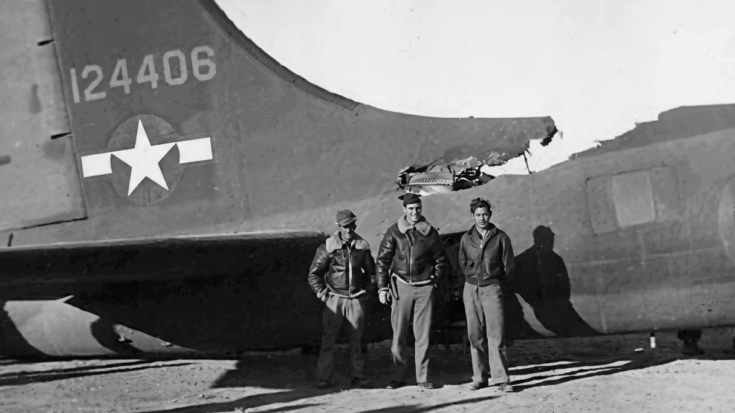
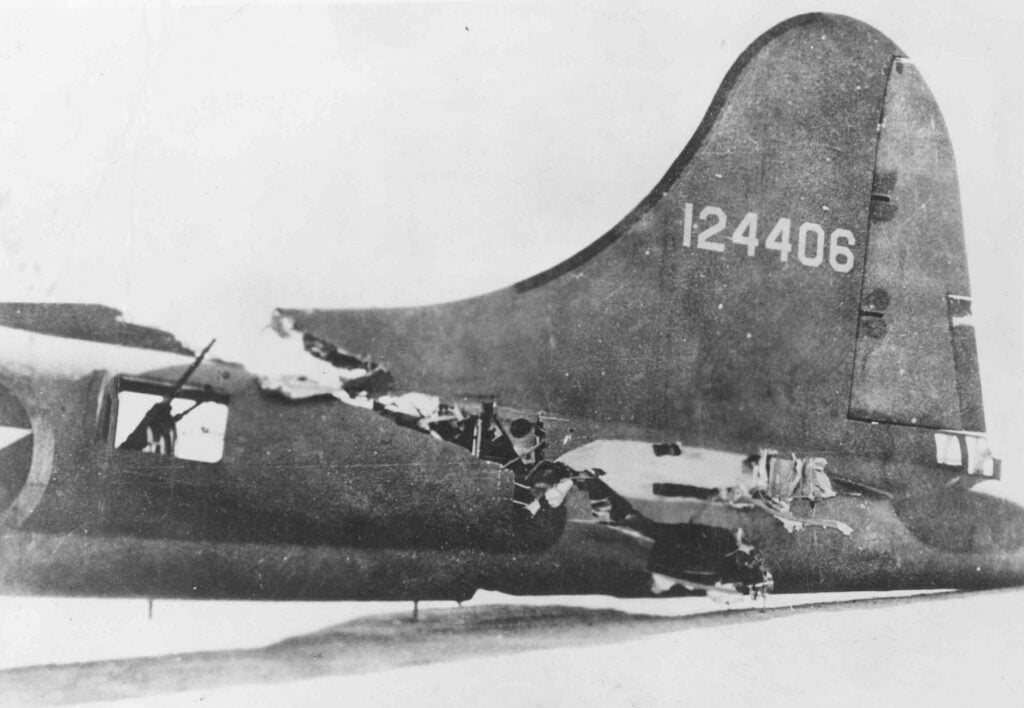
What followed occurred in seconds. The attacking fighter, possibly disabled during its run, failed to break away cleanly. Instead, it passed dangerously close and struck the B-17. The impact caused severe structural damage. The tail section of “All American” was nearly cut away, left attached by only a few internal supports and a thin strip of outer skin.
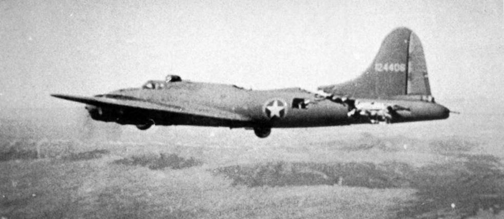
Crew members inside the bomber immediately felt the effect. The aircraft pitched and began to behave unpredictably. Controls became difficult to manage, and key systems were affected. Despite the damage, the structure held together, and the bomber did not break apart in the air.
Holding the Aircraft Together
Pilot Lieutenant Kendrick R. Bragg and his co-pilot worked to regain control. They found that standard control inputs no longer responded normally. By adjusting engine power and applying steady pressure, they managed to stabilize the aircraft enough to keep it flying in a roughly level path.
The crew faced a difficult decision. With the tail section barely attached, the risk of losing the aircraft remained high. However, abandoning it would mean parachuting into enemy-held territory. Bragg chose to attempt the return flight, guiding the damaged bomber across the remaining distance back to base.
A Careful Return
As “All American” approached the airfield, the crew signaled an emergency. Other aircraft in the formation landed first, clearing the runway. Bragg then began a cautious approach, lowering the landing gear and testing how the bomber responded. The aircraft remained controllable, though only just.
The landing required precision. Without full control of the tail, the bomber touched down heavily, sliding along the ground. The tail wheel was no longer functional, and the rear section dragged across the surface as the aircraft slowed. Despite this, the landing succeeded, and the engines were shut down.
Aftermath and Continued Service
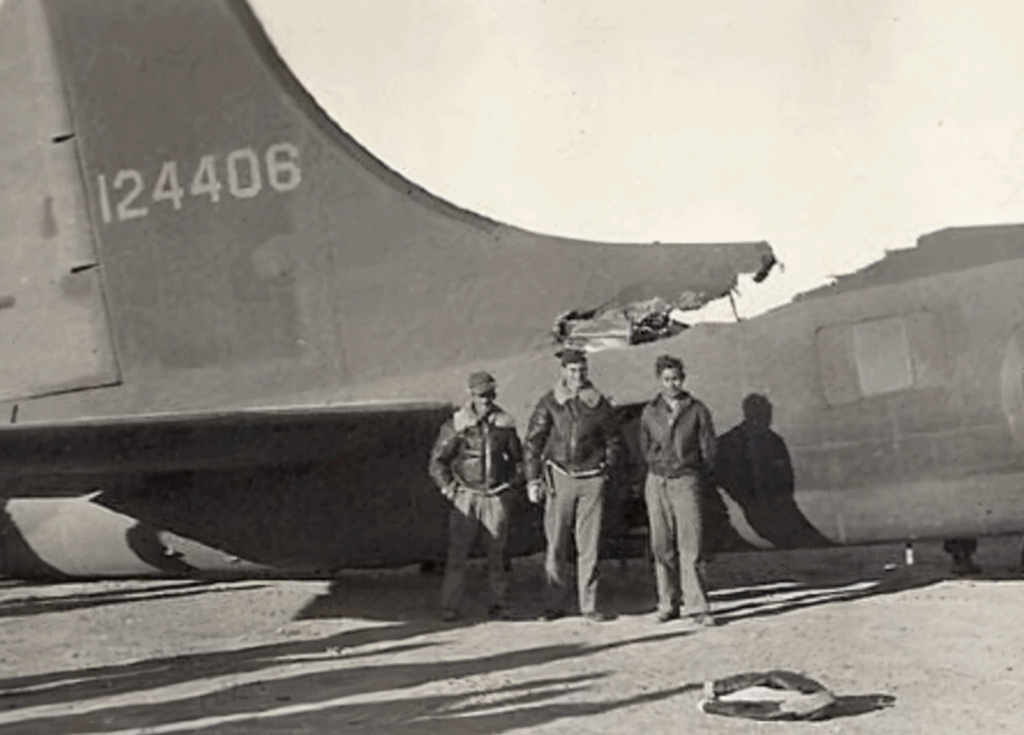
Inspection of the aircraft revealed the full extent of the damage. The tail had been nearly severed, held in place by minimal structural elements. Photographs taken after the landing later became widely known, illustrating how close the bomber had come to destruction.
“All American” was repaired and returned to service, although it no longer performed front-line bombing missions. Instead, it was used for secondary duties until it was eventually retired overseas in 1945.








