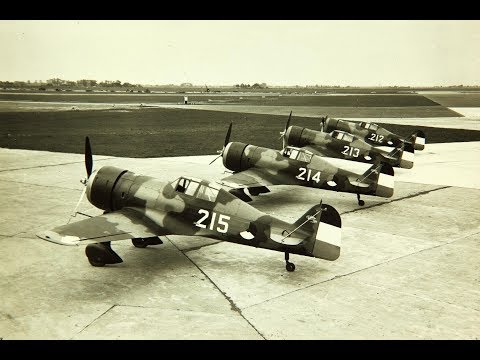
Why BF 109s Always Ran Out Of Fuel

YouTube / Greg's Airplanes and Automobiles
The Bf 109’s range problem during the Battle of Britain is one of the most discussed topics in WWII aviation. Luftwaffe pilots crossing the English Channel from French bases had roughly 20 minutes of flying time over England and about 10 over London before fuel became critical. Many didn’t make it back. The question most people ask is why the 109 had such short range. That’s actually the wrong question.
Not Short By European Standards
Compared to its contemporaries, the Bf 109’s range was entirely typical. The Spitfire carried 102 gallons of internal fuel against the 109’s 106. Both aircraft had a range of roughly 400 miles. The Soviet Yak-1 was similar, powered by the 35.1-liter Klimov M-105, an engine even larger than the 109’s DB 601, which actually gave it slightly less range than the German fighter. By European standards of early WWII, the 109 was normal.

The comparison that made the 109 look deficient was the P-51 Mustang, and that comparison requires context. The Merlin-powered Mustang didn’t enter production until mid-1943. Its designers already knew how important range would be and what distances the aircraft would need to cover. The P-51 carried 269 gallons of internal fuel. The 109G carried 106. The Mustang could travel roughly 980 miles at cruise power. The 109G managed around 450. The difference is almost exactly proportional to the fuel capacity gap.
Why the 109 Couldn’t Simply Carry More Fuel
The 109’s small airframe left almost no room to add tankage. The area behind the cockpit was largely occupied, and adding fuel there would have created serious weight and balance problems. Wing tanks would have required a complete redesign. The wings were already packed with flap and slat mechanisms, landing gear, and weapons, and were smaller than most comparable fighters to begin with.

Adding weight in the wings would also have degraded the aircraft’s roll rate, which was already a known limitation. There was no practical path to meaningfully increasing the 109’s fuel capacity without starting over.
The Engine Behind the Problem
The 109G’s Daimler-Benz DB 605 displaced 35.7 liters. The P-51’s Merlin displaced 27 liters. The 109 was feeding nearly nine additional liters of engine from a tank less than half the size of the Mustang’s. That is the core of the range issue. A large engine in a small airframe with limited fuel capacity produces limited range. The physics are straightforward.

The DB 605 did have genuine advantages that partially offset its size. Direct fuel injection gave the 109 the ability to maneuver without engine interruption and allowed more precise fuel distribution, reducing knock risk and enabling more power output. An infinitely variable supercharger drive system was among the most advanced of any fighter engine of the war. These features made the 109 competitive in performance despite its limitations in range. They didn’t solve the fuel problem, but they weren’t designed to.
The honest summary is that the 109 wasn’t a range-limited aircraft by the standards under which it was designed. It became range-limited when the war expanded beyond the tactical European engagements German designers had planned for, and when American industry produced a late-war fighter built specifically to cover the distances the 109 never had to consider.