Watch: U.S. Air Force B‑1 Bomber Takes Off From Ramstein After Diverting From UK Ahead of Potential Strikes on Iran
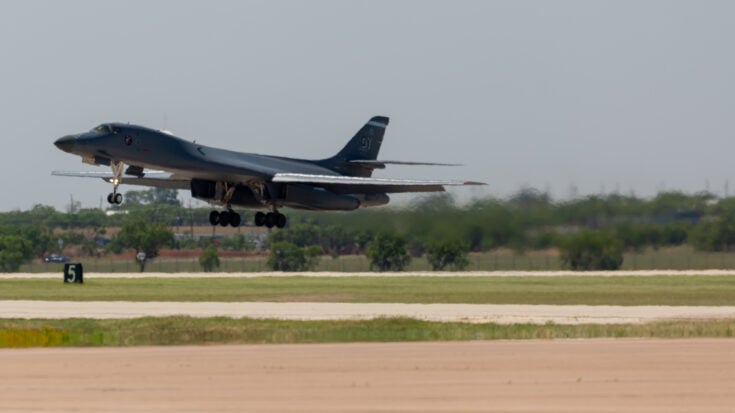
Balon Greyjoy, CC0, via Wikimedia Commons
A United States Air Force Rockwell B‑1 Lancer bomber was recorded taking off late at night from Ramstein Air Base in Germany after weather forced a change of plans for its original destination. The bomber, part of a group of long‑range aircraft operating in support of heightened military readiness, had been scheduled to land at RAF Fairford in the United Kingdom but was diverted due to stormy conditions that made safe landing difficult.
The video, taken around 11:30 p.m. local time, shows the B‑1 leaving the German airbase and climbing into the night sky. While U.S. officials have not confirmed the bomber’s specific mission, analysts suggest the aircraft may be repositioning in preparation for possible air operations in the Middle East linked to rising tensions with Iran. Long‑range bombers such as the B‑1 have played supportive roles in recent years when major military campaigns have escalated.
Diversion from Fairford Due to Weather
The diversion from RAF Fairford in Gloucestershire came after weather systems in Western Europe made conditions unsafe for large aircraft to land. Fairford is one of several bases NATO allies use for strategic bomber operations, particularly for deployments that require quick access to multiple theaters. The shift to Ramstein allowed the bomber to avoid delays and maintain operational timing with other aircraft in its group.
Ramstein Air Base, located near Kaiserslautern in southwestern Germany, has long served as a key hub for U.S. Air Force operations in Europe. It provides logistic support, maintenance, and command infrastructure for a wide range of missions. When the B‑1 first arrived at Ramstein, crews prepared it for onward movement, indicating that ground teams were working to keep the aircraft mission‑ready despite the change in plans.
View this post on Instagram
B‑1’s Capabilities and Possible Roles
The B‑1 Lancer, often known simply as the “Bone,” is a supersonic heavy bomber designed for long‑range missions. It can carry a large payload of conventional bombs and missiles and has the range to fly deep into conflict zones without refueling, though aerial refueling support is available when needed. Its flexibility has made it a useful platform for both deterrence and combat operations.
In recent years, B‑1 bombers have been deployed to various global hotspots as part of U.S. force posture adjustments. The aircraft’s presence in Europe, along with other strategic assets such as B‑52 Stratofortresses and F‑35 fighter jets, reflects ongoing efforts to maintain readiness in the face of shifting geopolitical challenges.
Context of Heightened Tensions
The possible movement of the B‑1 toward operations related to Iran comes amid a backdrop of escalating tensions in the Middle East. Iran’s regional activities, including missile and drone strikes, have prompted U.S. and allied military responses and force positioning to deter further escalation. While it is not clear when or where the B‑1 might be used, its relocation signals that military planners are positioning assets to respond quickly if directives are issued.
The bomber’s night departure from Ramstein captures a moment in evolving events, illustrating how logistical flexibility and forward positioning remain part of modern military strategy when situations change rapidly or unexpected obstacles arise.