The B-52 That Flew Home Without a Tail
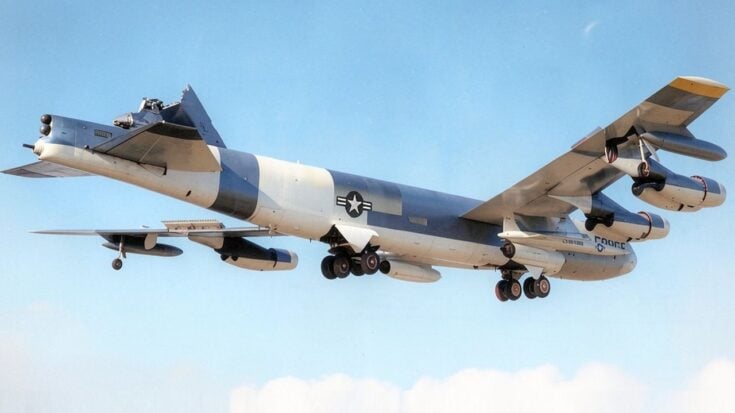
YouTube / FlakAlley
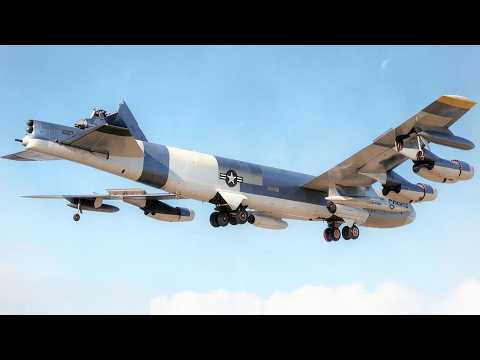
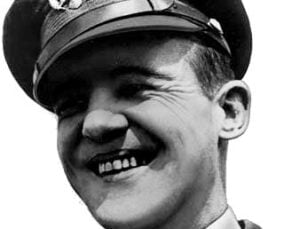
On January 10, 1964, Captain Charles Chuck Fischer landed a 480,000-lb B-52H Stratofortress at Blytheville Air Force Base in Arkansas after flying it for six hours with no vertical stabilizer. The tail had been sheared off by turbulence over the New Mexico mountains. The footage from that flight has been mandatory viewing for B-52 crews ever since.

Why the Test Was Happening
The B-52 was designed in the 1950s for high-altitude near-supersonic flight, following the same doctrine that had guided the B-29 before it. As Soviet air defense systems improved through the early 1960s, that doctrine became obsolete. High-speed low-level penetration offered a more survivable approach, but flying close to terrain at high speed placed stresses on the airframe the B-52 was never designed to handle. The Air Force needed to understand exactly where those limits were.

Fischer was flying B-52H tail number 6123, a unique modification equipped with sensors measuring stress across every part of the airframe. The mission on January 10 was to test turbulence limits at low level through the Rocky Mountains.
What Happened
At approximately 14,300 feet during an emergency climb to reach smoother air, a severe gust struck the aircraft from the port side at 81 mph. The bomber dropped 300 feet in half a second and rolled sharply right. Fischer later described being thrown physically against the left side of the cockpit and over the navigation table while fighting the controls with everything available. He ordered the crew to prepare to abandon the aircraft.

The gust bent the wings up to 13 feet vertically. It also sheared off the vertical stabilizer and rudder. Fischer and his crew did not yet know the tail was gone. The B-52 entered a graveyard spiral, the condition from which recovery is considered essentially impossible. Fischer recovered it anyway. No one has fully explained how.

The bomber settled into a crippled but flyable state, swaying continuously but maintaining level flight. Fischer issued a Mayday. An F-100 Super Sabre scrambled to intercept and escort the damaged aircraft. Blytheville Air Force Base in Arkansas was selected as the landing destination partly because it sat in a less densely populated area.
The Six-Hour Flight Home
Boeing engineers and Air Force personnel coordinated with Fischer by radio for the next six hours, working through the problem of landing an aircraft with no tail. The solution involved redistributing fuel to shift the center of gravity, carefully managing engine power differentials, and using minimal airbrake input. Together these adjustments provided enough stability to maintain controlled flight at just over 200 mph.

Fischer was instructed to land with flaps retracted, at low speed, without tail support. He touched down safely. Lowering the front main gear during the approach caused the aircraft to yaw, but once fully extended it stabilized enough to complete the landing.

The crew’s survival also preserved the sensor data and film recorded throughout the flight. Engineers used that data to identify the cause of the tail failure and redesign the tail assembly on the B-52H. The improvements they made are present on the aircraft still flying today. The footage Fischer brought home became mandatory viewing for every B-52 crew that followed.