

The Best Biplane Fighter of WW2?
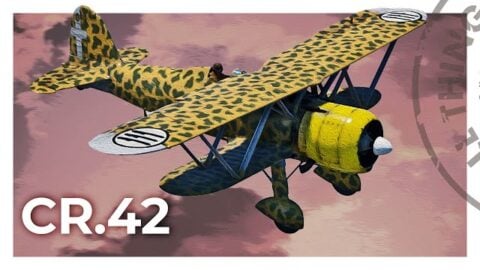
YouTube / AllthingsWW2
The Fiat CR.42 represents one of the final chapters in the era of biplane fighters. While it could not compete indefinitely with faster, better-armed monoplanes, it demonstrated that design philosophy and pilot skill could still allow an older aircraft to remain relevant- at least for a time. Today, the CR.42 is remembered as perhaps the best operational biplane of World War II, a graceful anachronism that refused to disappear quietly from the skies.
Design and Development
The CR.42 was the culmination of Fiat’s biplane fighter lineage. Featuring a steel-tube fuselage with fabric covering, wooden wings, and a powerful Piaggio radial engine, it combined traditional construction with modern performance improvements. Its open cockpit provided excellent visibility, and its fixed landing gear, while seemingly outdated, made the aircraft rugged and easy to maintain in harsh conditions.
Though slower and less heavily armed than contemporary monoplanes, the CR.42 emphasized maneuverability, the classic strength of biplane fighters.
Operational History
The CR.42 first saw combat in the Spanish Civil War, earning a reputation as a nimble dogfighter. By World War II, it was in service with the Regia Aeronautica.
In North Africa and the Mediterranean, the Falco’s agility was effective against slower or lightly armed opponents, but it struggled against faster monoplanes like the Hurricane and Spitfire. Italian pilots adapted their tactics, employed surprise attacks, and worked together as a team to capitalize on their strengths.
The CR.42 also served with the Finnish Air Force during the Winter and Continuation Wars, where pilots used its maneuverability to achieve notable success against Soviet fighters despite its outdated design.
Strengths and Weaknesses
The CR.42’s greatest strength was its exceptional maneuverability, especially at low altitudes. It was rugged, simple to maintain, and forgiving to fly. Pilots benefited from excellent visibility and responsive handling, allowing them to maximize the biplane’s classic agility.
Its weaknesses were equally clear. The aircraft was outclassed in speed and armament by contemporary monoplanes, making it vulnerable in direct confrontations. Its open cockpit exposed pilots to harsh weather and combat hazards, and over time, it became increasingly obsolete in the rapidly evolving aerial battles of World War II.
Legacy: The Last of the Biplanes
The Fiat CR.42 represents one of the final chapters in the era of biplane fighters. While it could not compete indefinitely with faster, better-armed monoplanes, it demonstrated that design philosophy and pilot skill could still allow an older aircraft to remain relevant- at least for a time. Today, the CR.42 is remembered as perhaps the best operational biplane of World War II, a graceful anachronism that refused to disappear quietly from the skies.







