Which Country Had the Most Effective Bomber Planes in World War 2
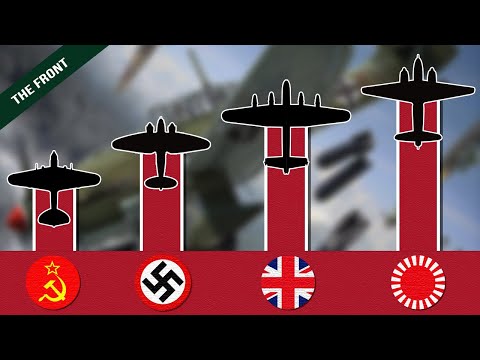
World War II saw rapid advancements in aviation, and bomber aircraft became one of the most decisive tools of war. Different nations developed bombers suited to their strategies, whether for precision strikes, tactical support, or large-scale destruction. Determining which country had the most effective bomber planes depends on how effectiveness is defined- range, payload, survivability, or overall impact on the war.
Japan and the Mitsubishi G4M
Japan’s primary land-based bomber, the Mitsubishi G4M, was known for its exceptional range. This allowed Japanese forces to conduct long-distance operations across the Pacific, striking targets that were otherwise out of reach. However, this advantage came at a cost. The aircraft lacked sufficient armor and self-sealing fuel tanks, making it highly vulnerable to enemy fighters. While it played a significant role early in the war, its weaknesses became increasingly apparent as Allied air power improved.
Germany and the Junkers Ju 87
Germany relied heavily on the Junkers Ju 87, commonly known as the Stuka. This dive bomber was incredibly accurate, making it a powerful weapon for close air support during early campaigns such as the invasion of Poland and France. Its psychological impact was also notable, as the sirens mounted on the aircraft created terror on the ground. However, the Ju 87’s slow speed and lack of maneuverability made it an easy target once the Allies gained air superiority, limiting its long-term effectiveness.
Soviet Union and the Ilyushin Il 2 Shturmovik
The Soviet Union’s Ilyushin Il-2 Shturmovik stands out as one of the most rugged and heavily produced aircraft of the war. Designed for ground attack, it was heavily armored, earning the nickname “Flying Tank.” The Il-2 excelled in destroying German tanks, artillery, and infantry, particularly on the Eastern Front. Its durability and effectiveness in close support missions made it one of the most impactful aircraft in the Soviet arsenal.
United States and Strategic Bombing Power
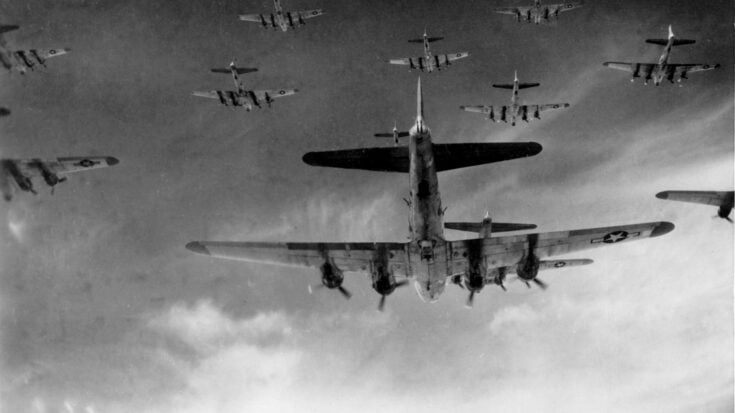
The United States developed some of the most advanced and effective strategic bombers of the war. The Boeing B-17 Flying Fortress was renowned for its durability and defensive firepower, allowing it to survive heavy damage and still return home. The Consolidated B-24 Liberator offered greater range and payload capacity, making it highly versatile.
Later in the war, the Boeing B-29 Superfortress represented a major technological leap. With pressurized cabins, advanced targeting systems, and long-range capability, the B-29 enabled deep strikes into Japan, including the atomic bomb missions. These aircraft played a central role in crippling enemy industry and infrastructure.
Britain and Precision and Innovation
Britain contributed significantly with aircraft like the Avro Lancaster, which was capable of carrying massive bomb loads, including the famous “Tallboy” and “Grand Slam” bombs. It was instrumental in nighttime bombing campaigns over Germany.
Equally impressive was the De Havilland Mosquito, a fast and versatile aircraft made largely of wood. It served in roles ranging from precision bombing to reconnaissance and night fighting. Its speed often allowed it to outrun enemy fighters, reducing the need for heavy defensive armament.
Conclusion
Each country developed bomber aircraft tailored to its needs, but the United States arguably had the most effective overall bomber force due to its combination of range, payload, durability, and technological innovation. However, effectiveness varied by mission. Germany and the Soviet Union excelled in tactical support, Britain in precision and innovation, and Japan in long-range operations early in the war. Ultimately, the success of these aircraft shaped the outcome of the conflict and demonstrated the growing importance of air power in modern warfare.