

Marine Corps F-35Cs Are Heading to the Middle East for the First Time as Land-Based Fighters
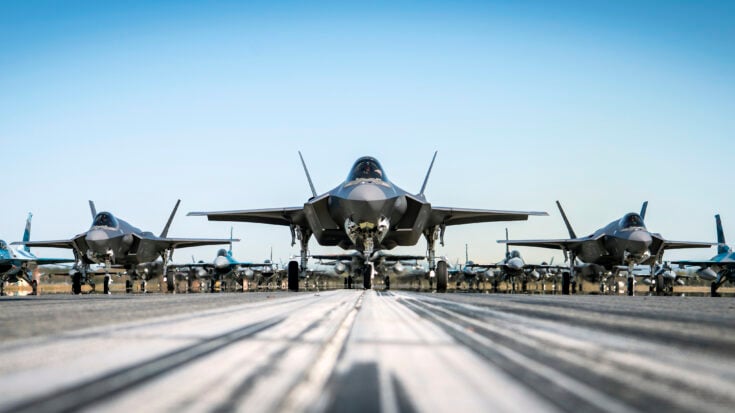
Five F-35Cs from Marine Fighter Attack Squadron 311, the Tomcats, landed at RAF Lakenheath in England on their way to the Middle East, marking the beginning of what would be the first land-based combat deployment for the carrier variant of the Joint Strike Fighter. Five more from the same squadron are expected to follow, bringing the total to ten aircraft staging through Lakenheath before moving to their final destination in the CENTCOM area of responsibility.
The aircraft departed Marine Corps Air Station Miramar in California on March 10. Their final operating location has not been confirmed.
Having left MCAS Miramar on March 10, the first 5 of 10 jets from VMFA-311 ‘Tomcats’ finally landed at RAF Lakenheath last night as they head for the F-35C’s first land-based combat deployment. 5 more due today before heading east (USMC stock photo) pic.twitter.com/FAhX8HXFNB
— CarrierAirWings dot com (@CVW19752015) March 24, 2026
A Significant F-35 Concentration
The VMFA-311 deployment adds to an already substantial F-35 presence in the region. Land-based Air Force F-35As are already conducting missions. Navy and Marine Corps F-35Cs are flying from USS Abraham Lincoln. Marine F-35Bs are now reported heading to the theater aboard two amphibious assault ships, USS Boxer and USS Tripoli. The combination of all three F-35 variants operating simultaneously in the same theater would be unprecedented in combat operations.
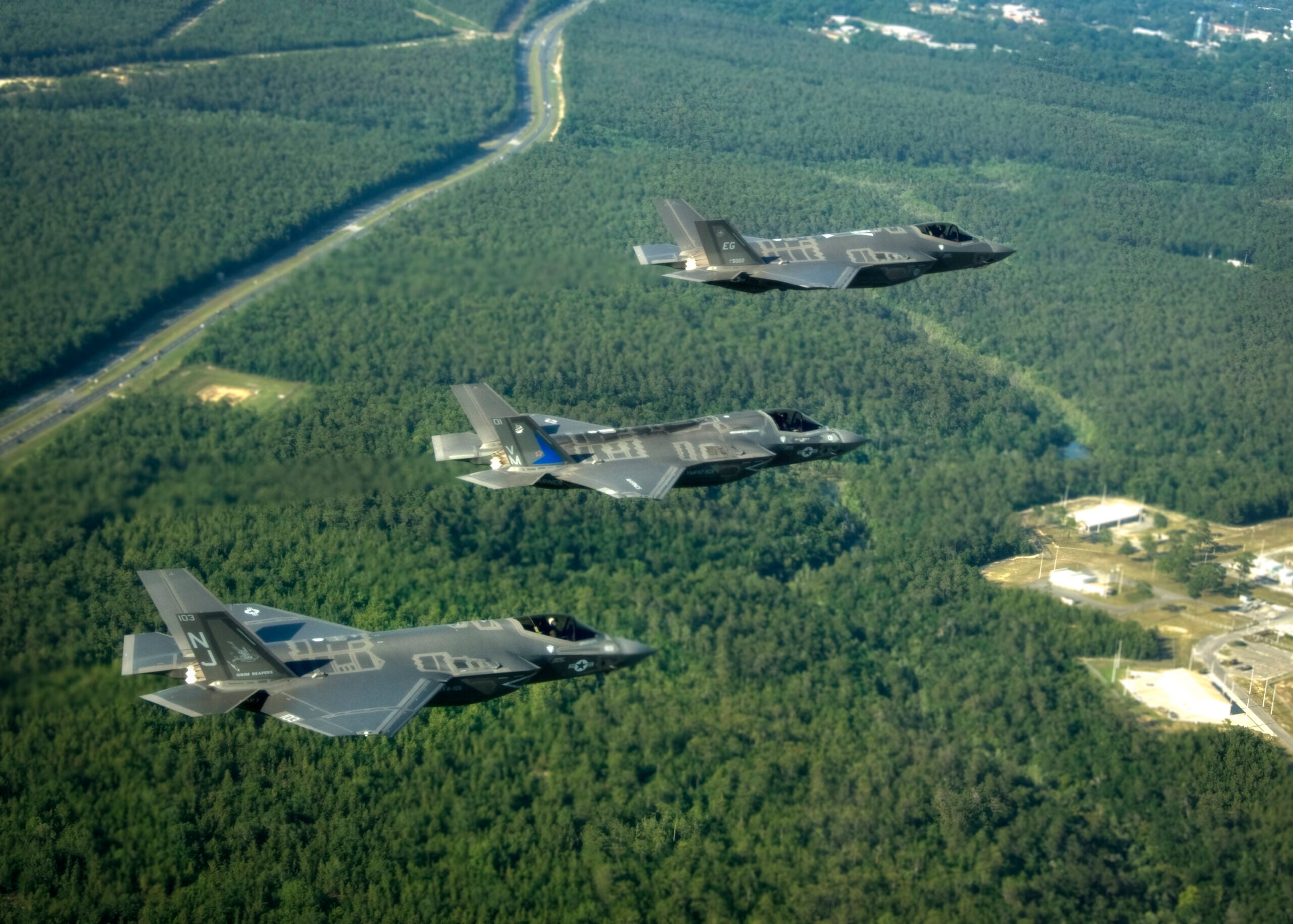
The F-35C differs from the Air Force’s F-35A in its strengthened undercarriage and arresting hook for carrier operations and its larger wing for lower approach speeds. Flying from a land base removes the carrier landing requirement while retaining the aircraft’s stealth, sensors, and weapons capability. The Lakenheath deployment suggests the Marine Corps intends to use the F-35C’s full combat capability from a fixed base rather than restricting it to carrier-based operations.
USS Tripoli at Diego Garcia
Open-source satellite imagery captured over the Indian Ocean confirmed USS Tripoli docked at Diego Garcia. The ship had previously been tracked moving rapidly through the South China Sea from its Japan homeport. The Wall Street Journal reported that USS Tripoli, amphibious dock USS New Orleans, and approximately 2,200 Marines from the 31st Marine Expeditionary Unit are expected to cross into the CENTCOM area of responsibility on Friday, the deadline President Trump has set for Iran to reopen the Strait of Hormuz.
The satellite just passed over the Indian Ocean at 11:46:00 on March 23, 2026 (Beijing time), capturing the moment when the #USSTripoli LHA-7 docked at Diego Garcia.Via Mizarvision #OSINT pic.twitter.com/EAfwjw46qB
— GEOINT (@lobsterlarryliu) March 24, 2026
Reaching positions near the Persian Gulf from Diego Garcia would take additional days beyond that crossing. Speculation about the MEU’s objectives has centered on the islands controlling access to the strait, though no landing operation has been ordered or confirmed.
The Close Air Support Connection
The F-35Cs now moving toward the theater would provide critical close air support capability for Marine ground forces if an amphibious operation is ordered. The F-35C’s sensor fusion, targeting capability, and ability to operate in contested airspace makes it significantly more capable in that role than legacy strike aircraft, particularly in an environment where Iranian air defenses have been degraded but not eliminated. Ten land-based F-35Cs operating from a fixed base alongside carrier-based variants would give ground force commanders substantial air support options.

The convergence of the 82nd Airborne deployment, two amphibious ready groups, Marine F-35Bs aboard assault ships, and now land-based F-35Cs all moving toward the same theater simultaneously represents a ground force enabling package that goes well beyond the air campaign that has defined the first four weeks of Operation Epic Fury.






