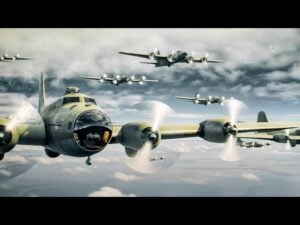
How WWII Pilots Found Their Way Back to the Carriers
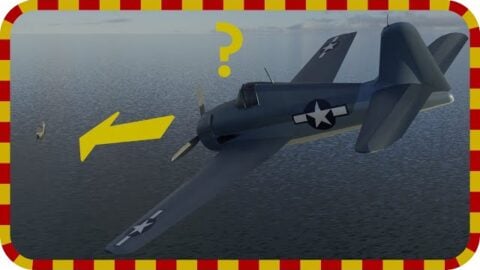
YouTube / X-planed
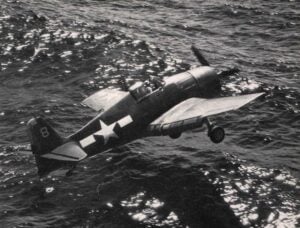
During World War II, carrier-based aviation pushed technology and human skill to the limit. Pilots launching from aircraft carriers faced a unique and dangerous problem: how to find their way back to a moving ship in the vast, featureless ocean.
With limited fuel, changing weather, and the constant threat of enemy action, even experienced aviators could easily become disoriented. Unlike land bases, carriers could not be located using fixed landmarks, making reliable navigation systems essential for survival.
Early Navigation Methods
Before advanced electronic aids became widespread, pilots relied heavily on dead reckoning, visual cues, and basic radio communication. Dead reckoning involved calculating position based on speed, heading, and time flown, but even small errors could cause a miss of the carrier by miles. Pilots also depended on homing beacons and voice instructions from ships, though these methods were often unreliable in combat conditions or bad weather.
The YZ RB System Explained
To solve this problem, the United States Navy developed the YZ RB system, a radio-based navigation aid designed specifically for carrier operations. The system combined two key components: the YZ homing beacon aboard the carrier and the RB receiver installed in the aircraft.
The YZ beacon transmitted directional radio signals in a rotating pattern. As the signal swept across the sky, pilots could interpret its strength and timing through their RB receivers. By listening to changes in tone or signal intensity, they could determine whether they were on the correct bearing toward the carrier. Rather than providing a simple point-and-go direction, the system required training and skill. Pilots had to interpret audio cues, often described as a mix of dots, dashes, or steady tones, to align themselves with the carrier’s position. When used correctly, it guided them along an invisible path back to the ship.
Advantages in Combat Conditions
The YZ RB system proved especially valuable during night operations and poor visibility. In situations where visual navigation was impossible, the system gave pilots a strong chance to locate their carrier before running out of fuel. It also reduced reliance on continuous radio communication, which could reveal a carrier’s position to enemy forces.
Additionally, the system allowed multiple aircraft to home in on the same signal without overwhelming communication channels. This was critical during large-scale operations in the Pacific Theater, where dozens of planes might be returning at the same time.
Legacy and Impact
The YZ RB system marked an important step in the evolution of electronic navigation. While primitive by modern standards, it demonstrated how radio technology could solve one of naval aviation’s most dangerous challenges. Systems like YZ RB paved the way for more advanced navigation aids, including radar and modern GPS.
For WWII pilots, however, it was more than just technology. It was often the difference between safely landing on a carrier deck and being lost at sea.