What’s Left of Iran’s Air Force After Operation Epic Fury
Before Operation Epic Fury began on February 28, 2026, Iran’s air force was already in trouble. Decades of sanctions had left its fighter fleet aging, parts-starved, and increasingly difficult to sustain. The inventory included Cold War-era F-4 Phantoms, F-5 Tigers, F-14 Tomcats, MiG-29s, Su-24s, and Mirage F1s, most of them decades old and maintained through improvisation rather than supply chains. When US and Israeli strikes began, that fleet became a primary target.
What the Strikes Took Away
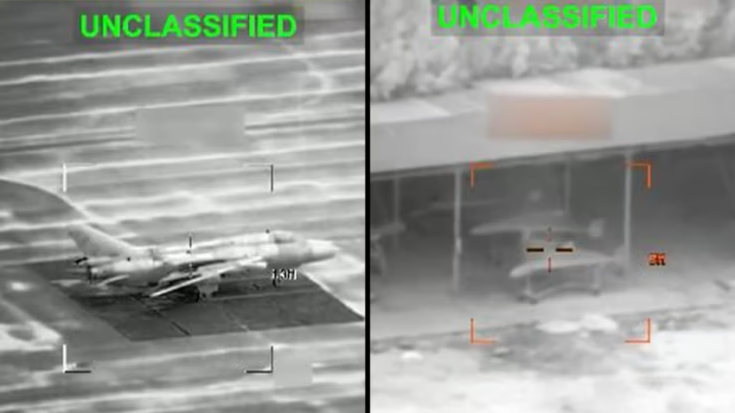
Israel released footage of F-4s and F-5s destroyed at Tabriz as they prepared for takeoff, eliminating aircraft before they could even get airborne. Satellite imagery confirmed damage at Konarak, including destroyed storage bunkers and a radar installation at Zahedan airbase. Additional Iranian F-14s had already been destroyed during Israel’s Operation Midnight Hammer in June 2025. Qatar’s air defenses shot down two Su-24s during Iranian attacks on the country.

The strikes didn’t just target aircraft. They targeted the infrastructure that allows an air force to function. Radar systems, storage facilities, and drone bases all appeared in damage assessments. An air force without early warning, without functioning radar, and without protected storage for its remaining aircraft has very limited options for mounting sustained operations.

The Drone Alternative
Iran’s most sustained aviation response to the campaign has come without pilots. Gulf governments reported staggering drone volumes in the first days of the conflict. The UAE alone detected 812 drones, intercepting 755 with 57 getting through and causing damage. Kuwait intercepted 283. Early tallies across the UAE, Kuwait, Jordan, Qatar, and Bahrain suggested at least 1,150 drones launched at regional targets in the opening days, with the actual figure likely higher.

US forces underscored the point when they struck the IRIS Shahid Bagheri, an Iranian drone carrier ship, in the opening hours of the operation. The strike came shortly after Iranian claims that Tehran could sink a US aircraft carrier. US Central Command responded publicly that the only carrier that had been hit was the Shahid Bagheri.
Drones remain Iran’s most viable offensive tool for a straightforward reason. They are cheaper to produce, simpler to launch, and easier to replace than manned aircraft. Even with strikes degrading production capacity, Iran entered the conflict with an inventory analysts described as numbering in the thousands. That stockpile doesn’t disappear overnight.