The Airplane That Looked Fake, But Was 100% Real
YouTube / Not What You Think
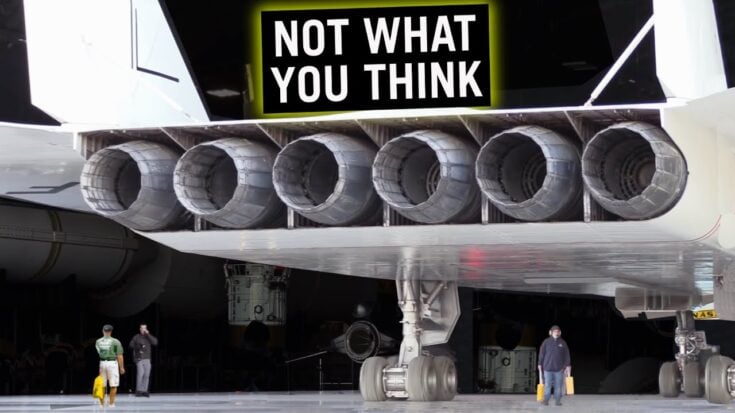
Six jet engines, folding wingtips, and a top speed exceeding Mach 3. The XB-70 Valkyrie looked fast standing still. It was also canceled before the first prototype flew, lost one of its two airframes to a marketing photoshoot, and inadvertently produced the F-15 Eagle. The story behind all of that is stranger than the aircraft itself.
Why It Existed
By 1955 the US bomber fleet had a problem. The B-52 carried the most but was too slow for a first strike. The B-47 and B-58 were faster but lacked the range to reach Soviet targets. The Air Force needed something that could do everything simultaneously.

North American Aviation won the contract on the strength of one specific innovation: compression lift. At supersonic speeds an aircraft generates shockwaves. The XB-70 folded its wingtips downward in flight to trap those shockwaves beneath the wing, riding its own pressure wave like a speedboat planes across water. Each wingtip exceeded 500 square feet. At top speed they folded to 65 degrees and increased total lift by up to 30 percent.
What Mach 3 Actually Required
Air friction at that speed softened the aluminum skin, so engineers pumped fuel hydraulically through the fuselage as coolant and injected nitrogen into that fuel to prevent auto-ignition. The aircraft also leaked badly enough that ground crews collected fuel in buckets. Paint chipped off the fuselage from heat-induced brittleness. Tires caught fire on landing.

On the maiden flight the landing gear became stuck mid-retraction. The co-pilot fixed it with a paper clip from his briefcase. That was considered a successful first flight.
The US also needed titanium the country couldn’t produce in sufficient quantities. Engineers sourced it through shell companies and third-party brokers. The supplier was the Soviet Union, which unknowingly provided materials for a nuclear bomber aimed at Soviet targets.
Dead Before It Started
On May 1 1960, a Soviet missile shot down Francis Gary Powers in his U-2 at 70,000 feet. The XB-70 was designed to operate at that same altitude. The primary survivability argument for the program collapsed the same day. Nuclear deterrence was also shifting from bombers to ICBMs, removing the strategic rationale entirely.

Eisenhower moved to cancel the program. Kennedy campaigned against that decision as evidence of weak defense policy, won the presidency, and canceled the program himself three months after taking office. Eight hundred million dollars had already been spent.
The Accident That Ended Everything
On June 8 1966, XB-70 No. 2 flew in formation with four other aircraft for a General Electric promotional photoshoot. After photography was complete an F-104 drifted into the XB-70’s wingtip, exploded, and destroyed the aircraft’s tail surfaces. The XB-70 crashed into the California desert. The co-pilot died. The pilot survived with severe injuries. Two lives and a multi-billion dollar prototype were lost for an advertisement.

What It Left Behind
The Soviets built the MiG-25 specifically to intercept the XB-70. When the US identified that program it designed the F-15 Eagle to defeat the MiG-25. The XB-70 was already canceled. A bomber that never entered service produced America’s most successful air superiority fighter by frightening the Soviets into building something that then frightened America into building something better.

The surviving prototype made its final flight to Wright-Patterson in 1969. Traffic lights had to be removed along the route to fit it through. It sits in the National Museum of the United States Air Force in Dayton, Ohio, where it still looks like something that shouldn’t exist.