US Navy Sets August 2026 Decision for Its Next Carrier Fighter
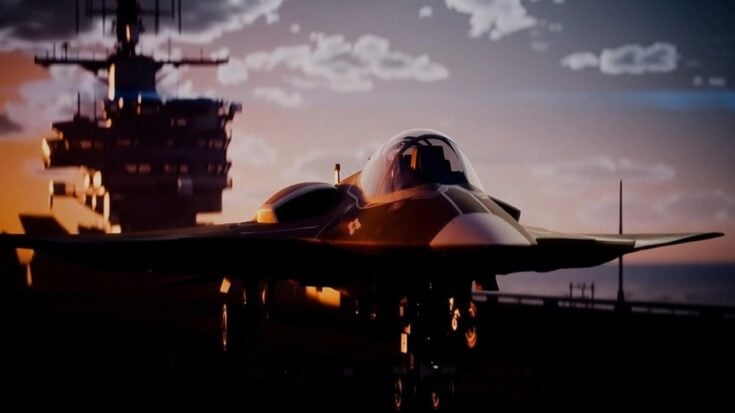
The U.S. Navy has set August 2026 as the target date to award the contract for its next-generation carrier fighter, known as the F/A-XX. The program sits at the center of the Navy’s long-term airpower strategy, even as funding debates in Washington continue to favor the U.S. Air Force’s parallel effort, the F-47.
Chief of Naval Operations Adm. Daryl Caudle confirmed the timeline during the Sea-Air-Space 2026 exposition. His remarks clarified earlier expectations that a decision could come sooner, placing the program on a more defined schedule after months of uncertainty.
🚨🇺🇸 “The Navy will award a production contract for the F/A-XX sixth generation [stealth] fighter in August.” ~Chief of Naval Operations Admiral Daryl Caudle https://t.co/5iFXK5J6xj pic.twitter.com/HTBq34NHp9
— Colby Badhwar (@ColbyBadhwar) April 20, 2026
A Growing Range Problem at Sea
The Navy’s requirement for the F/A-XX is tied directly to a gap that has existed for years. Since the retirement of the Grumman F-14 Tomcat and dedicated tanker aircraft like the Grumman KA-6D Intruder and Lockheed S-3B Viking, carrier air wings have lacked a true long-range strike option.
The Boeing F/A-18E/F Super Hornet offers improved range over earlier Hornets, but evolving threats have pushed aircraft carriers farther from contested areas. That added distance reduces strike reach and complicates mission planning.
To extend operational range, the Navy is introducing the Boeing MQ-25 Stingray, an unmanned tanker designed to refuel fighters in flight. The F/A-XX is expected to build on that capability, combining longer range with survivability in heavily defended environments.
A Two-Company Race
The competition to build the F/A-XX has narrowed to two firms: Boeing and Northrop Grumman. Lockheed Martin, builder of the F-22 Raptor and F-35 Lightning II, is no longer in contention.
We’re bringing tomorrow’s horizon into focus, faster, stronger and ready when the warfighter needs it.#SAS2026 pic.twitter.com/r0uORyR5kM
— Northrop Grumman (@northropgrumman) April 20, 2026
Each remaining bidder brings a different portfolio. Boeing continues production of the F-15EX Eagle II and the Super Hornet, while also developing the Air Force’s F-47. Northrop Grumman leads development of the B-21 Raider and contributes heavily to the F-35 program.
The decision will shape not only the Navy’s future air wing, but also the balance of the U.S. defense industrial base. Maintaining multiple capable manufacturers remains a priority in Washington, as gaps in production can erode long-term capacity.
The Navy’s Position
Navy leadership maintains that both programs can move forward together. The service argues that modern threats demand aircraft capable of operating at longer distances with greater uncertainty and risk tolerance.
The F/A-XX is intended to meet that requirement, extending the reach of carrier air power and restoring capabilities lost over the past two decades. The August 2026 contract decision will mark a critical step in defining how the Navy plans to fight in contested airspace in the years ahead.