The Real Story Behind “633 Squadron”
YouTube / Mark Felton Productions
The film 633 Squadron tells the story of a daring low-level raid against a heavily defended target. While fictional, its inspiration came from a real operation carried out two years earlier over occupied Europe. That mission was known as Operation Oyster.
A Target Too Dangerous
In 1942, the Philips factories in Eindhoven became a critical German asset. The plants produced radio tubes used widely in military equipment, making them a high-priority target for the Royal Air Force.

Conventional bombing posed a serious problem. The factories sat within the city, and nighttime raids risked heavy civilian casualties. Daylight attacks without escort would expose bombers to German fighters and flak. A different approach was required.
Operation Oyster Takes Shape
The RAF chose a precision strike at extremely low altitude. Medium bombers would cross the North Sea at just 100 feet, staying below radar before striking the factories directly.

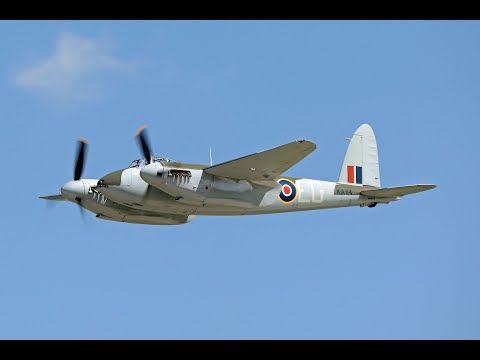
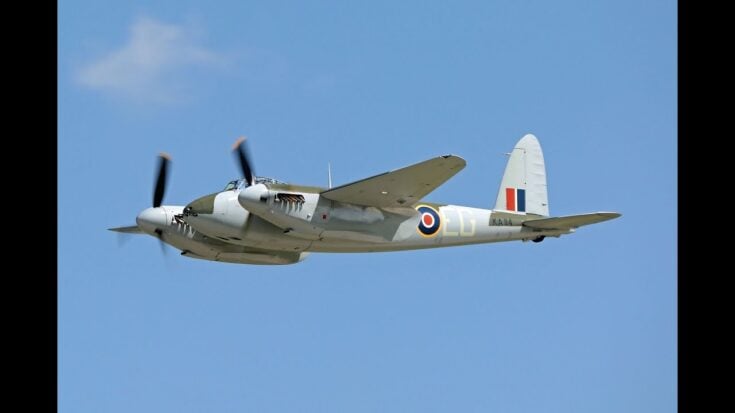
Aircraft from multiple nations took part, including de Havilland Mosquito, Douglas Boston, and Lockheed Ventura. Each had different speed and handling characteristics, adding complexity to the mission.
The plan required strict timing. Waves of aircraft would hit separate targets within a ten-minute window, then escape before German defenses could fully respond.
Flying Into the Unexpected
On December 6, 1942, the raid began. The first aircraft crossed the Dutch coast undetected, catching German defenses off guard. Initial flak was light, but new hazards appeared almost immediately.
Flying at low altitude brought unexpected danger. Birds struck several aircraft, damaging engines and wings. As later waves arrived, German gunners were ready. Intense flak filled the sky, and Focke-Wulf Fw 190 fighters joined the fight.

Crews navigated around chimneys, power lines, and church towers while under fire. Some aircraft were lost before reaching the target.
The Attack on Eindhoven
The bombers reached Eindhoven in sequence and struck the Philips plants directly. Anti-aircraft fire from rooftops hit several aircraft, but the attack continued.

Wing Commander James Pelly-Fry led the raid despite damage to his aircraft. Bombs landed across the factory complex, delivering roughly 60 tons of explosives.
The mission disrupted production and triggered worker strikes against German control. A follow-up Mosquito raid in 1943 extended the damage further.
Success at a Cost
Operation Oyster achieved its objective, but losses were significant. 16% of the attacking force was destroyed, with 62 airmen killed. More than half the surviving aircraft returned damaged.

The mission demonstrated both the effectiveness and the danger of low-level precision attacks. These tactics would later define Mosquito operations and influence future RAF strategy.
The Reality Behind the Legend
The story behind 633 Squadron reflects the same risks faced during Operation Oyster. Precision, timing, and low-level flying offered a solution to difficult targets, but the cost in aircraft and crews remained high.
For the men who flew the mission, success came with losses that could not be ignored. Their experience shaped how similar operations were carried out for the rest of the war.