When America Sacrificed an Aircraft Carrier
YouTube / Dark Seas
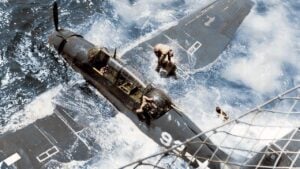
When USS Lexington (CV-2) slid into service, she represented the future of naval warfare. Fast, heavily armed, and capable of launching waves of aircraft far beyond the reach of battleship guns, she was one of the U.S. Navy’s first true fleet carriers. Nicknamed “Lady Lex,” she was built to project American power across the Pacific- yet no one fully understood how fragile that power could be in the age of air warfare.
By May 1942, Lexington found herself at the center of an experiment the world had never seen before: a naval battle where the opposing fleets would never sight one another.
The Battle of the Coral Sea Begins
The Battle of the Coral Sea erupted as Japan moved to seize Port Moresby, a conquest that would isolate Australia and threaten Allied supply lines. Lexington, alongside USS Yorktown, was sent to stop them. From the opening hours, the battle was brutal and confusing. Aircraft screamed overhead, bombs plunged from the clouds, and torpedoes raced unseen beneath the waves. Victory or defeat would be decided not by gunfire, but by flight decks and fuel lines.
Lexington did not escape unscathed. Japanese torpedo bombers struck her port side, ripping open the hull and flooding boiler rooms. Dive bombers followed, smashing her decks with explosives that ignited raging fires below. More than 200 sailors were killed or missing. Seawater poured in. Smoke choked passageways. A damaged siren wailed endlessly, jammed on by the violence of the explosions. Officers on the bridge quietly debated whether to retreat or abandon.
The Captain’s Stand
Captain Fred C. Sherman refused to give up. He understood what was at stake. If Lexington withdrew, Port Moresby would fall, Australia would be cut off, and the balance of the Pacific War could tilt decisively toward Japan. As long as the carrier could launch aircraft and fire her guns, Sherman believed she still mattered. For hours, damage control teams fought flooding and flames while Lexington continued flight operations, a testament to discipline and courage under impossible conditions.
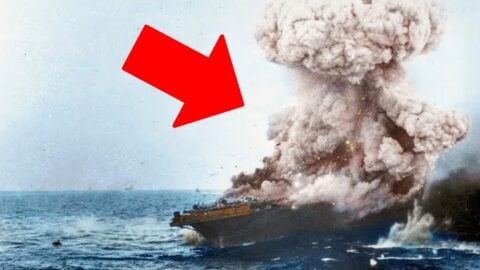
What doomed Lexington was not another bomb or torpedo but a chain reaction of her own systems. Gasoline vapors from ruptured aviation fuel lines spread invisibly through the ship. Poor ventilation and damaged piping allowed explosive fumes to build deep inside her hull. Then came the first internal blast. A massive explosion ripped through Lexington’s interior, followed by another, and then another. Each one fed on leaked fuel and stored ordnance. The ship was, quite literally, blowing itself apart from the inside. No amount of bravery could stop it.
A Strategic Victory in Defeat
By late afternoon, Lexington was beyond saving. Fires raged uncontrollably. Power failed. The flight deck was unusable. Captain Sherman gave the order no commander ever wants to speak: abandon ship. Escort destroyers moved in to rescue survivors as Lady Lex burned. Finally, to prevent capture, she was scuttled by American torpedoes, slipping beneath the Coral Sea she had fought to defend.
Though Lexington was lost, her sacrifice was not in vain. The Battle of the Coral Sea stopped Japan’s advance on Port Moresby- the first time a major Japanese offensive had been halted. Strategically, it was a victory for the Allies. More importantly, the battle exposed hard lessons about carrier design, fuel handling, and damage control- lessons that would save countless lives in later battles like Midway.
Legacy of a Supercarrier
USS Lexington did not fall to overwhelming enemy fire alone. She fell to the terrifying reality of modern naval warfare: that a ship could be mortally wounded by what lay within her own steel walls.
America’s supercarrier that blew itself apart helped prove that aircraft carriers, not battleships, would decide the future of war at sea. And in her destruction, Lady Lex helped ensure that the future belonged to the Allies.