How the La-5 Changed the Air War on the Eastern Front
YouTube / AllthingsWW2
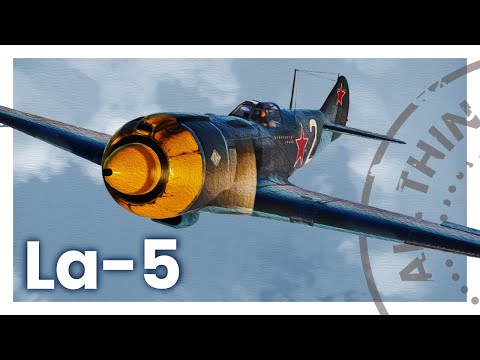
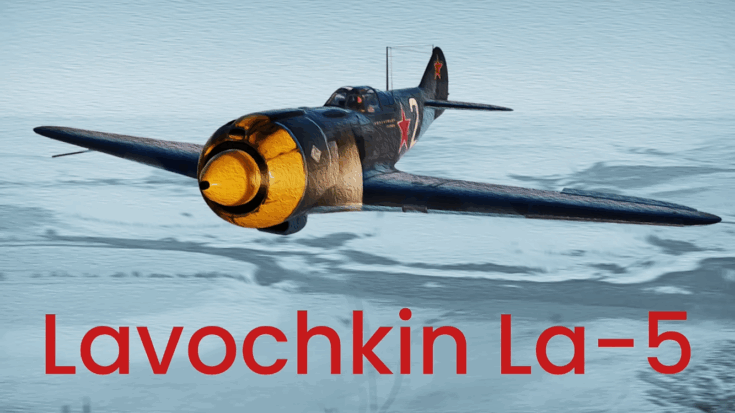
The Lavochkin La-5 marked a turning point for Soviet fighter aviation during the Second World War. It was the first domestically produced fighter to reach rough parity with German aircraft on the Eastern Front, restoring confidence at a time when earlier designs consistently fell short. Its importance lay not in refinement, but in timely effectiveness.
From Failure to Opportunity
When Germany invaded the Soviet Union in June 1941, the VVS fielded three modern fighters: the Yak-1, MiG-3, and LaGG-3. All were inferior to the Messerschmitt Bf 109F. The LaGG-3 in particular suffered from excessive weight and poor performance, despite repeated attempts to improve it. Further gains required a more powerful engine.

That opportunity appeared in early 1942 when production of the Su-2 light bomber ended, leaving the Shvetsov M-82 radial engine without an airframe. The engine was heavier and far wider than the LaGG-3’s inline powerplant, making integration difficult. Designing a new fighter would take too long, and Lavochkin’s design bureau faced elimination as production shifted toward Yakovlev aircraft.
An Improvised Solution That Worked
Lavochkin chose adaptation over reinvention. The M-82 was hastily fitted to the LaGG-3 airframe using plywood fairings and modified cooling systems. The result flew in March 1942 and immediately outperformed all Soviet fighters then in production. Despite cooling issues, the design showed enough promise to gain approval after a personal review by Stalin in May.

The aircraft entered service as the La-5 in June 1942. Built largely from wood using Delta Drevesina plywood, it conserved strategic materials while retaining structural strength. Powered by a 1,700 hp M-82 radial engine and armed with two 20 mm ShVAK cannons, it offered solid performance and durability under frontline conditions.
Stalingrad to Kursk
The La-5 debuted in combat at Stalingrad in August 1942. While still inferior to the Bf 109G, pilots felt it provided a genuine chance in air combat. Improved variants soon followed. The La-5F and later La-5FN introduced better engines, improved cooling, a full vision canopy, and lighter airframes.

The La-5FN, appearing during the Battle of Kursk, transformed the type. With 1,850 hp and improved reliability, it matched German fighters at low altitude where most Eastern Front combat occurred. Soviet pilots now felt on equal footing, a critical psychological shift.
Impact and Legacy
The La-5 bore the brunt of air fighting in 1943 and early 1944, suffering heavy losses but also producing many of the Soviet Union’s top aces. Nearly half of the country’s highest scoring pilots flew Lavochkin fighters. More importantly, the La-5 led directly to the La-7, one of the most effective low altitude fighters of the war.

The La-5 was not elegant or technologically advanced. Its value came from timing, simplicity, and adequacy under pressure. In that role, it changed the balance of the air war on the Eastern Front.