The most insane photos of a US bomber ever taken
YouTube / History Geek
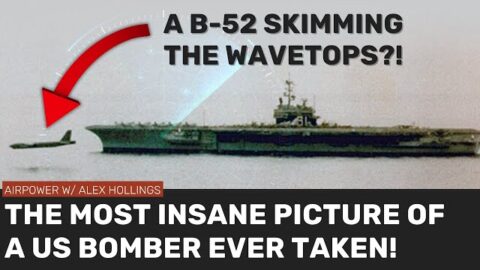
A remarkable series of photographs, captured by sailors aboard the USS Ranger carrier strike group in 1990, offers a breathtaking look into one of the most daring tactics in modern aerial warfare. These images freeze moments that few people ever get to witness, showing a massive US bomber flying at shockingly low altitudes, skimming just above the earth’s surface.
The perspective from the deck of a naval vessel makes the aircraft appear even more imposing, highlighting both its size and the precision required to control it in such extreme conditions.
Flying Below the Radar
This type of flying, often referred to as “nap of the earth,” is designed to keep aircraft hidden from enemy radar systems. By hugging the terrain, whether over land or sea, the bomber minimizes its visibility, using the natural curvature of the earth and obstacles to avoid detection. While effective, this method leaves almost no margin for error. Pilots must maintain intense focus, reacting instantly to changes in terrain, weather, and speed, all while controlling an aircraft that weighs tens of thousands of pounds.
Precision Under Pressure
The photographs emphasize just how skilled these crews had to be. Flying at such low altitudes at high speeds requires not only technical mastery but also nerves of steel. Even the slightest miscalculation could lead to disaster. From the sailors’ vantage point, the bomber appears to roar past at an almost unbelievable proximity, underscoring the razor-thin line between success and catastrophe.
Taken near the end of the Cold War, these images serve as a powerful reminder of the lengths militaries were willing to go to gain an advantage. They capture not just a dramatic visual, but a strategy built on stealth, speed, and precision, an approach that defined an era of high-stakes aerial operations.