The WWII Pilot Who Survived a Fall by Catching a Parachute in Mid-Air
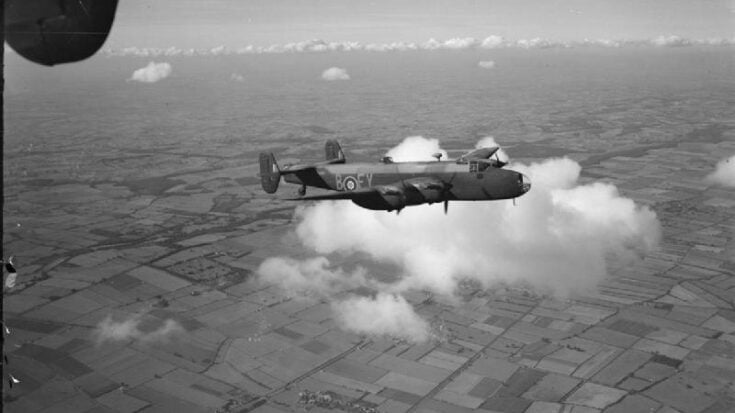
Royal Air Force official photographer, Woodbine G (Flying Officer), Public domain, via Wikimedia Commons
In 1944, as Allied bombing operations intensified over Europe, aircrews faced constant danger from anti-aircraft fire and enemy fighters. Missions often took place at night, where darkness offered some protection but also increased confusion during emergencies. It was in this setting that an extraordinary survival unfolded, involving two crewmen from the same aircraft who met in mid-air under the most unlikely conditions.
Among them was Joe Herman, an Australian serving in a bomber crew. Like many airmen of the time, he depended on strict procedures and reliable equipment. Each crew member carried a parachute, as escape from a damaged aircraft often came with little warning. However, events did not always allow for careful preparation.
A Fall Without Protection
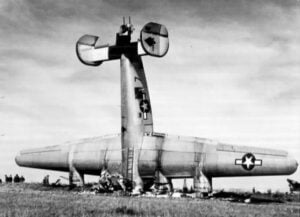
During one night mission over occupied territory, Herman’s aircraft was struck, likely by anti-aircraft fire. Bombers such as the Avro Lancaster were large but vulnerable, and even a single hit could cause severe damage. In the confusion that followed, Herman was forced out of the aircraft without his parachute. Suddenly, he found himself falling from high altitude into darkness.
Conditions in such a fall were extreme. Temperatures dropped sharply at altitude, and strong winds made movement difficult. With no parachute to slow his descent, survival seemed impossible. Airmen were trained for emergency exits, but not for situations like this. Herman could do little more than brace himself as he dropped through the night sky.

An Encounter Against All Odds
At the same time, another crew member, John Vivash, had managed to leave the aircraft with his parachute deployed. As the mid-upper gunner, his position allowed him a clearer path to escape. Suspended beneath his canopy, he began a controlled descent, unaware that Herman was falling nearby.
By pure chance, the two men collided mid-air. In the darkness, with no visual warning, Herman struck Vivash and reacted instantly. He grabbed onto Vivash’s legs, holding tightly as they continued downward together. The parachute, designed for one person, now carried both men. The added weight increased their rate of descent, but the canopy held.
Reaching the Ground Alive
Despite the strain on the equipment, the parachute did not fail. Their descent, though faster than normal, slowed enough to prevent a fatal impact. Both men remained conscious and maintained their grip until they reached the ground. Against all expectations, they survived without serious injury.
Such an event was not something aircrews were trained for, nor was it considered possible under normal conditions. Wartime parachutes were sturdy but had clear limits, making this outcome highly unusual.
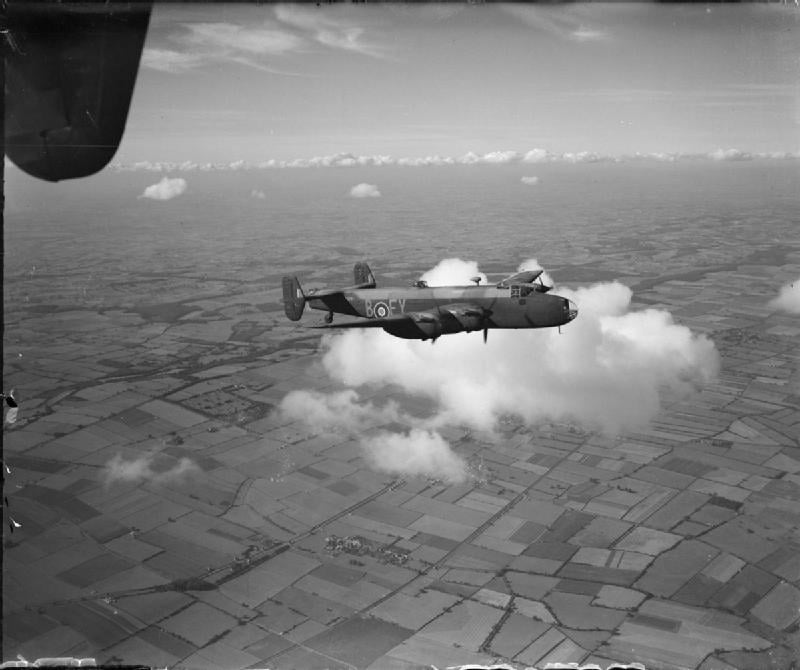
Air War Realities in 1944
By 1944, Allied air forces carried out large-scale bombing campaigns across German-held Europe. Crews flew repeated missions under heavy risk, and losses were frequent. While procedures existed for escape, many situations unfolded too quickly for them to be followed exactly.
This incident shows how unpredictable air combat could be. Survival often depended on training and equipment, but sometimes it came down to chance.