When Germany’s Greatest Ace Actually TRICKED The Allies
YouTube / TJ3 History
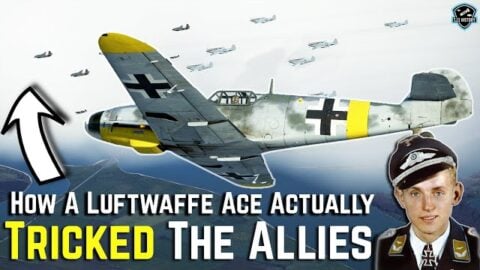
During the later years of World War II, the Luftwaffe was fighting a desperate defensive war. Allied aircraft filled the skies over Europe in overwhelming numbers, and German pilots were increasingly outmatched in fuel, aircraft production, and strategic position. Yet one man continued to rack up victories at a pace that defied belief- Erich Hartmann.
Known as the highest-scoring fighter ace in history, Hartmann would finish the war with 352 aerial victories, most of them against Soviet aircraft on the Eastern Front. But his success was never about reckless aggression. It was about discipline, positioning, and deception.
A Hunter in a Sky Full of Enemies
By the later years of World War II, the Luftwaffe was fighting a desperate defensive war. Allied aircraft filled the skies over Europe in overwhelming numbers, and German pilots were increasingly outmatched in fuel, aircraft production, and strategic position. Yet one man continued to rack up victories at a pace that defied belief- Erich Hartmann.
Known as the highest-scoring fighter ace in history, Hartmann would finish the war with 352 aerial victories, most of them against Soviet aircraft on the Eastern Front. But his success was never about reckless aggression. It was about discipline, positioning, and deception.
Patience Over Pride
Unlike many fighter pilots who sought glory in dogfights, Hartmann avoided prolonged turning battles. He believed in getting close, dangerously close, before firing. His approach was simple: stalk from above, remain unseen, strike at point-blank range, and disengage immediately.
He called it “see, decide, attack, break away.”
Hartmann relied heavily on surprise. He often positioned himself between layers of enemy formations or used cloud cover and sun glare to conceal his approach. He was less interested in maneuvering contests and more focused on psychological advantage, making the enemy react on his terms. That mindset set the stage for one of his most unusual encounters.
Chaos in the Sky
As the war intensified, American P-51 Mustangs began operating deeper into Eastern European airspace, sometimes crossing paths with Soviet aircraft. Coordination between Allied forces was not always perfect, especially in rapidly shifting front lines.
During one engagement, Hartmann found himself in a complex aerial environment involving both Soviet Yak fighters and American Mustangs. Rather than charging directly into a superior force, he positioned himself carefully, exploiting altitude and confusion. By attacking at precisely the right moment and then disappearing, he created uncertainty among the opposing pilots. In the swirling chaos of high-speed combat, aircraft silhouettes could be misidentified, especially in fleeting head-on or crossing passes. Split-second decisions determined survival.
In that moment of confusion, Hartmann’s maneuvering and timing helped trigger hesitation and misjudgment among Allied pilots. Distrust and uncertainty briefly replaced coordination. For a few crucial seconds, the Allies were reacting to shadows.
The Psychology of Air Combat
Air combat in World War II was as much a mental as a mechanical endeavor. Hartmann understood this pressure. He thrived in it. Rather than relying on superior firepower or technical advantages,though his Messerschmitt Bf 109 was a formidable aircraft, he weaponized uncertainty. He allowed opponents to overcommit, to misread situations, and to break formation in pursuit.
By war’s end, Hartmann had flown over 1,400 combat missions and had been shot down multiple times, yet he somehow survived. In a conflict that consumed thousands of young pilots, survival itself was an extraordinary achievement.