Why the V-22 Osprey’s Most Dangerous Risks Are Still Unfixed After Nine Years
YouTube / FLUCTUS
A Growing Risk Profile
Two major reviews released on December 12, 2025 reached the same conclusion about the V-22 Osprey. The aircraft remains airworthy, but unresolved safety risks have continued to accumulate across the joint fleet. A Navy-led Comprehensive Review by Naval Air Systems Command and a separate Government Accountability Office report both warned that corrective actions have moved too slowly to prevent recurring mishaps.
The Navy review stated that risk has increased over time due to delayed fixes, inconsistent adherence to procedures, and uneven application of airworthiness standards. These issues affect all three variants, the Marine Corps MV-22, Air Force CV-22, and Navy CMV-22, each operating under different missions and risk tolerances.

Mechanical Issues Drive Many Serious Mishaps
Both reviews highlighted persistent mechanical concerns, particularly within the drive-train and prop-rotor gearbox. Investigators linked more than half of the most serious recent mishaps to these systems. Hard clutch engagement events and material defects associated with X-53 steel inclusions remain central concerns.

Some procedural changes and inspection regimes have reduced the likelihood of specific failures. Permanent hardware fixes, however, remain years away, with several not expected to be fully implemented until the 2030s. Until then, the fleet continues to operate under restrictions and enhanced maintenance controls.
Accident History and Operational Impact
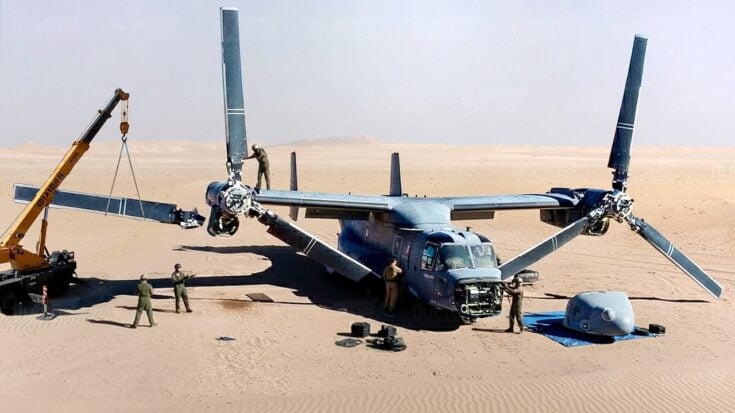
Over the past four years, the V-22 fleet has suffered 12 Class A flight mishaps, resulting in four aircraft losses and 20 fatalities. Since entering service, at least 65 people have died in Osprey related accidents. The most visible recent loss occurred in November 2023, when a CV-22B crashed near Yakushima, Japan, killing eight Air Force personnel and prompting a worldwide grounding.

Although the formal grounding was lifted in March 2024, all variants remain subject to operational limits, including mission restrictions that require aircraft to remain within 30 minutes of a safe landing zone. The fleet has repeatedly cycled through pauses and restrictions as new incidents emerge.
Oversight Gaps Across a Joint Program
The GAO report focused less on the aircraft itself and more on how safety is managed. As of mid 2025, the Navy tracked 28 unresolved risks classified as catastrophic, with an average age of roughly nine years. This exceeds the norm for most Navy aviation programs.

According to GAO findings, safety information does not consistently flow between services. Oversight forums have lapsed, reporting systems differ, and lessons learned in one fleet have not always reached another. The result is a slow and uneven approach to closing known hazards.
What Comes Next
The Department of Defense has accepted all GAO recommendations, including rebuilding the joint risk management framework and restoring formal information sharing across services. These changes will take time, particularly as mechanical upgrades move through the fleet.

The reviews make one point clear. The V-22’s safety challenges are well understood. The remaining question is whether the oversight system can respond quickly enough to prevent known risks from becoming repeated accidents.