

Watch: U.S. Navy Releases Dramatic Footage of Torpedo Strike Destroying Iranian Warship
Euronews English / YouTube
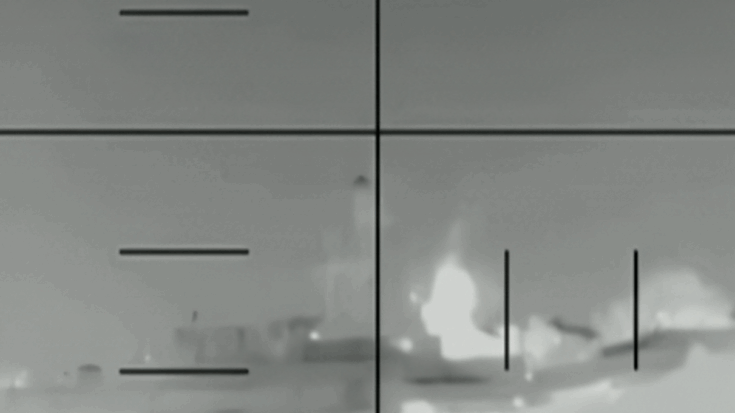
The United States Navy released video footage showing a submarine launching a torpedo that sank an Iranian warship in the Indian Ocean, marking one of the most serious naval confrontations in the ongoing conflict involving the United States, Israel, and Iran. The strike came as military operations across the Middle East intensified, with missile attacks, airstrikes, and naval actions unfolding across several regions.
According to U.S. Defense Secretary Pete Hegseth, the warship was destroyed Tuesday night by a torpedo fired from an American submarine operating in international waters. Sri Lankan authorities later confirmed that rescue operations recovered survivors from the sinking vessel. Officials said 32 people were rescued, while 87 bodies were recovered after the ship went down outside Sri Lanka’s territorial waters.
Rising Conflict Across the Region
The naval strike occurred during a broader escalation that has spread far beyond a single battlefield. U.S. and Israeli forces have carried out repeated attacks targeting Iran’s military infrastructure, missile systems, and security organizations. Iranian forces responded by launching missiles and drones toward Israel and several Gulf states, widening fears of a regional war.
The pace of attacks has been so intense that Iranian state television announced the postponement of a planned mourning ceremony for Supreme Leader Ayatollah Ali Khamenei, who was reported killed earlier in the conflict. Fighting has also extended into Lebanon, where Israeli forces exchanged fire with the Iranian-backed Hezbollah group, while air defense systems in Turkey reportedly intercepted a ballistic missile before it entered Turkish airspace.
Officials across the region reported heavy casualties. Iranian authorities said more than 1,000 people had been killed, while Lebanon reported over 50 deaths and Israel confirmed around a dozen fatalities. Six U.S. service members were also reported killed during operations connected to the conflict.
Military Strategy and Expanding Operations
During a Pentagon briefing, Hegseth declined to give a fixed timeline for U.S. military action. “You can say four weeks, but it could be six, it could be eight, it could be three,” he said. “Ultimately, we set the pace and the tempo. The enemy is off balance, and we’re going to keep them off balance.”
Adm. Brad Cooper, the top U.S. commander in the Middle East, said American forces had significantly damaged Iran’s air defenses and destroyed missile launchers, drones, and ballistic weapons. Israeli military spokesman Brig. Gen. Effie Defrin added that the strikes reduced the number of launches originating from Iranian territory, though missile alerts continued across central and northern Israel.
Israel also confirmed strikes against buildings linked to Iran’s Basij force and internal security command. Iranian Foreign Minister Abbas Araghchi responded by saying Iranian units operate under decentralized leadership, allowing forces to continue operating even when command centers are attacked.
Economic Shock and Political Uncertainty
The conflict has begun affecting global energy markets and international shipping routes. A container ship traveling through the Strait of Hormuz was struck by an unidentified projectile, according to the United Kingdom Maritime Trade Operations agency. Shipping tracker MarineTraffic reported tanker traffic through the strait had fallen by about 90 percent compared to prewar levels.
Oil prices surged as disruptions threatened one of the world’s most important energy corridors, raising concerns about economic instability worldwide. At the same time, Iran’s leadership began the process of selecting a new supreme leader, only the second such transition since the 1979 revolution.
Israeli Defense Minister Israel Katz said the offensive had originally been planned for mid-2026 but was moved forward due to changing conditions. Meanwhile, Iranian judicial authorities warned that anyone cooperating with opposing forces would be treated as an enemy, signaling continued internal pressure as the conflict evolves.







