Watch: USS Spruance Fires 5-Inch Gun as Marines Board Iranian-Flagged Vessel
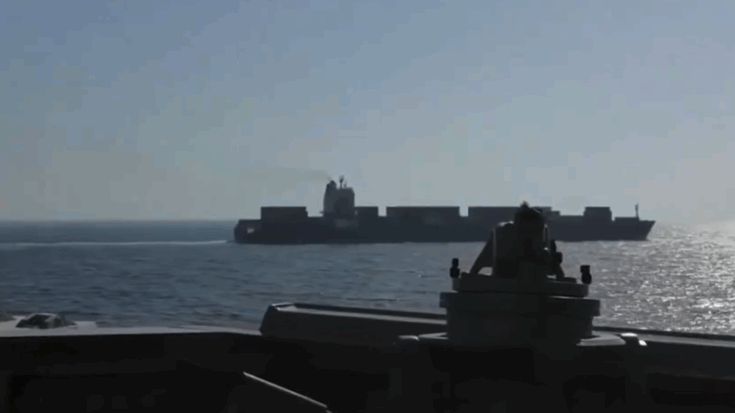
@DOWResponse / X
Seizure of M/V Touska and Escalating Maritime Tensions in the Arabian Sea
On April 19, 2026, United States naval forces intercepted and seized the Iranian flagged cargo vessel M/V Touska in the Arabian Sea after it was accused of violating a declared maritime blockade established in the region. The operation, later confirmed by U.S. Central Command, escalated tensions between Washington and Tehran as armed enforcement actions at sea resumed during ongoing diplomatic disputes affecting regional security with heightened maritime security operations in effect ongoing.
CENTCOM reported the vessel was traveling toward Bandar Abbas in Iran at moderate speed when it was detected by the Arleigh Burke class destroyer USS Spruance operating in international waters. The warship was dispatched to intercept and issued repeated warnings stating the ship was breaching the blockade, while tracking data confirmed its approach through monitored sea lanes under continuous surveillance as regional monitoring systems tracked vessel movement continuously.
Naval Interception and Warnings
Over a six hour period, the destroyer maintained contact and warned the crew multiple times to alter course or face enforcement action under blockade authority rules. According to released communications, the vessel was instructed to evacuate its engine room before disabling fire was authorized after continued noncompliance by the Iranian flagged crew operating onboard under strict maritime enforcement engagement procedures applied consistently.
Radio recordings released by CENTCOM captured repeated horn signals and verbal commands ordering compliance at close range. The USS Spruance then fired its five inch MK 45 naval gun, directing several rounds toward the ship’s engine compartment as it maneuvered at distance under naval engagement protocols designed to disable propulsion systems rather than sink vessels entirely during controlled naval escalation designed to limit damage.
Boarding Operation at Sea
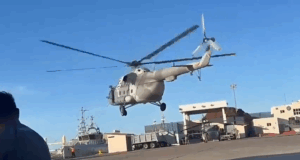
U.S. Marines from the 31st Marine Expeditionary Unit later boarded the M/V Touska following the strike operation. Two MH-60S helicopters launched from USS Tripoli deployed Visit Board Search and Seizure teams who fast roped onto the deck during night conditions, securing control of the vessel without reported casualties or resistance encountered during coordinated night insertion operations conducted at sea.
CENTCOM stated that the operation was conducted in a deliberate and proportional manner, noting that multiple commercial ships had previously been redirected under the blockade enforcement framework affecting maritime traffic linked to Iranian ports in the wider strategic region according to official operational assessments released publicly later.
Diplomatic Mediation Efforts
Diplomatic discussions between the United States and Iran have continued intermittently with Pakistan acting as a mediator hosting delegations in Islamabad and facilitating indirect communication channels. Reports indicated partial progress on certain issues while significant disagreements remained over nuclear policy and control of strategic waterways such as the Strait of Hormuz amid ongoing regional security and energy concerns growing.
A new round of talks was scheduled for April 20, with reports suggesting participation from senior U.S. officials including special envoys and political advisors traveling with the delegation. Iranian state media, however, signaled hesitation and at times rejection of renewed negotiations, reflecting continued instability in diplomatic engagement efforts overall amid increasing diplomatic pressure from multiple stakeholders regions.
Regional Escalation and Responses
Statements from political leaders on both sides escalated rhetoric, with threats exchanged regarding strikes on infrastructure across the Gulf region and surrounding maritime facilities. U.S. officials warned of severe consequences for continued defiance, while Iranian representatives indicated potential retaliation against energy and desalination facilities in neighboring states further intensifying uncertainty across regional security frameworks systems.
The blockade was imposed after failed negotiations in early April, with CENTCOM beginning enforcement operations against maritime traffic entering or leaving Iranian ports under newly issued directives. Tehran condemned the measure as illegal and equivalent to piracy, warning that regional shipping security could deteriorate further if tensions continued escalating with international observers monitoring developments closely in real time.