

Why WWII Aircraft Carrier Life Was So Harsh for Sailors
Department of Defense. Department of the Navy. Naval Photographic Center, Public domain, via Wikimedia Commons
Before dawn in the Pacific, life aboard a World War II aircraft carrier often began in darkness, noise, and exhaustion. Young sailors, many barely out of school, worked long hours on crowded ships that rarely rested. These vessels, especially the Essex-class carriers introduced in the early 1940s, were central to American naval strategy, carrying dozens of aircraft across vast ocean distances. Yet behind their power lay a daily routine shaped by danger, discomfort, and constant strain.
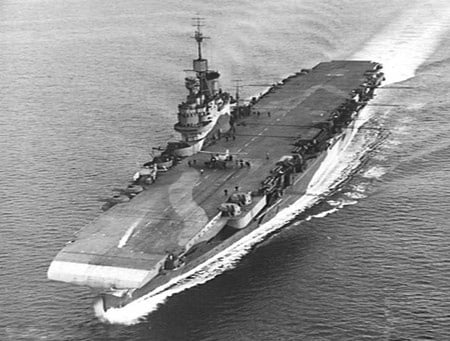
By 1945, an Essex-class carrier could hold close to 4,000 crew members. These ships stretched more than 800 feet in length but still felt crowded. Sailors lived in tight compartments below deck, where rows of canvas bunks were stacked closely together. Privacy was almost nonexistent, and personal belongings were limited to what could fit in a small bag. Conditions grew worse in tropical waters, where heat below deck often exceeded 100 degrees Fahrenheit, with little ventilation to ease the discomfort.
Life Above and Below Deck
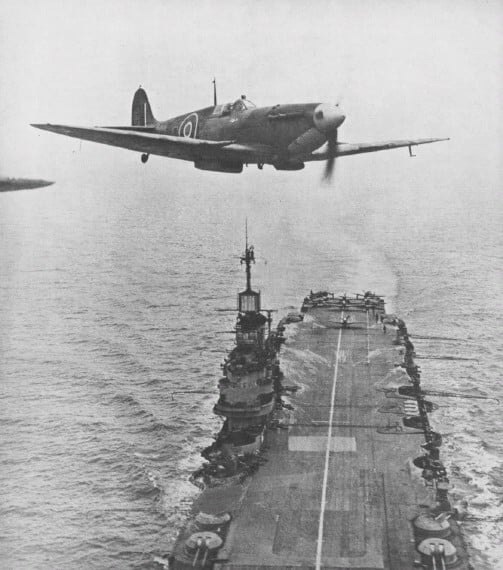
The contrast between topside and below decks defined daily life. Above, the flight deck was a place of constant motion and risk. Aircraft were launched and recovered in quick succession, often by hand, as crews pushed heavy planes into position. Timing was critical. A pilot had to take off as the ship rose on ocean swells, while landing required catching a narrow arresting wire at speed. Even minor errors could lead to crashes, fires, or aircraft sliding into the sea.
Below decks, the environment was no less difficult. Engine rooms and workspaces were hot, loud, and often without natural light. Sailors assigned there could go weeks without seeing the sky. The smell of fuel, oil, and machinery filled the air. Despite these conditions, the ship’s systems had to operate without interruption, powering the vessel at speeds over 30 knots while supporting flight operations above.
Work, Food, and Routine
Daily life followed a demanding rhythm. Sailors worked long shifts maintaining aircraft, fueling planes, and repairing damage from combat missions. Meals were one of the few structured breaks. Compared to other branches of service, naval crews were often better fed, receiving regular servings of bread, stews, and coffee. Even so, meals were taken in shifts, and during combat alerts, food was brought directly to battle stations.
Between periods of action, long stretches of waiting filled the days. Sailors played cards, wrote letters, or found small ways to pass the time. Mail from home carried great importance, though it often took weeks to arrive. These quiet moments stood in sharp contrast to sudden calls to action, when alarms would send every man rushing to his assigned position within minutes.
Combat and Its Consequences
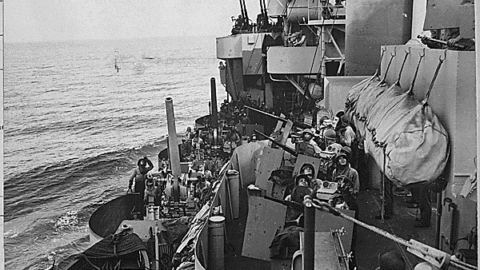
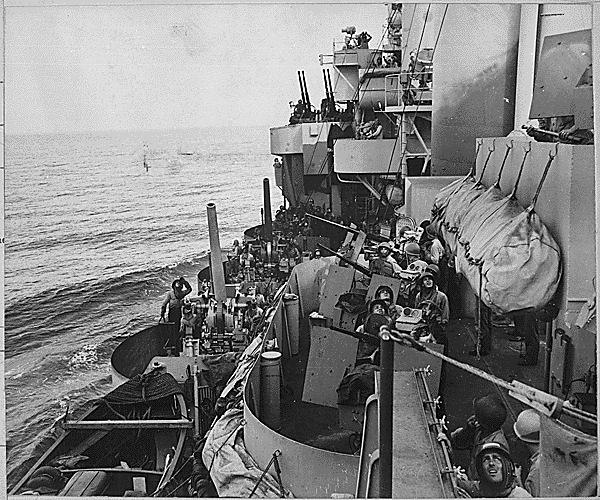
The most dangerous moments came during enemy attacks. Aircraft carriers in the Pacific were frequent targets, particularly during the later stages of the war. Kamikaze strikes, in which enemy pilots deliberately crashed into ships, posed a serious threat. When attacks occurred, anti-aircraft guns opened fire across the deck, creating intense noise and confusion.
If an aircraft struck the ship, fires fueled by aviation gasoline could spread quickly. Damage control teams responded immediately, using foam and water to contain the flames. Their training often determined whether a ship survived. One such attack on USS Bunker Hill in May 1945 caused heavy casualties, with hundreds killed or wounded in a single morning.
For those who served, life aboard a carrier combined long hours of routine with moments of sudden danger. The experience left lasting memories shaped by both hardship and the close bonds formed among crew members.









.jpg)