

1945 in Color: P-51 Mustangs and RAF Lancaster Pathfinders Captured in Rare USAAF Film (SFP 186)
footagefarm / YouTube
Color combat footage from the final months of the Second World War remains rare, making USAAF Special Film Project 186 an important visual record of Allied air operations in 1945. Filmed in England, the material documents cooperation between American fighter units and Royal Air Force bomber crews during a period when air power played a central role in ending the conflict in Europe.
The film survives as an unedited archival document created for training, analysis, and historical preservation. Unlike staged wartime newsreels, this footage captures routine preparations, quiet moments between missions, and operational procedures as they unfolded. Identified aircraft and personnel include members of RAF No. 156 Squadron, part of the Pathfinder Force, and pilots from the USAAF 355th Fighter Group.
Preparing for Night Operations
Early scenes show Avro Lancaster bomber crews assembling on the tarmac before a mission. Airmen wear Mae West life jackets, heavy flight clothing, and oxygen equipment suited for long, high-altitude flights. Close views of gunners climbing into turrets reveal the cramped working conditions faced during bombing operations, where visibility and mechanical reliability were essential for survival.
Ground activity continues with maintenance crews cleaning gun turrets and inspecting aircraft systems. Nearby, RAF personnel gather at a NAAFI canteen truck, receiving drinks and sandwiches before departure. These brief scenes offer a human view of wartime routine, showing laughter and conversation alongside the seriousness of the task ahead. Behind them, a Lancaster bomber waits with bomb bay doors open while refueling crews complete final checks.
Pathfinder Force at Work
One Lancaster marked PB560 (GT-L) is shown starting engines and taxiing for takeoff. Additional footage highlights a Canadian crew serving within 156 Squadron, identified by “CANADA” patches on their uniforms. Another aircraft displays more than one hundred bomb symbols painted beneath the cockpit, representing completed missions and reflecting the demanding pace experienced by bomber crews late in the war.
The squadron insignia reading “We light the way” appears prominently, referencing the Pathfinder role. These specialized crews flew ahead of main bomber formations, dropping colored target indicators to guide following aircraft toward assigned objectives. Aerial sequences show red and yellow markers falling through darkness, illustrating how precision marking improved bombing accuracy during large operations against German targets.

American Fighter Escorts in Formation
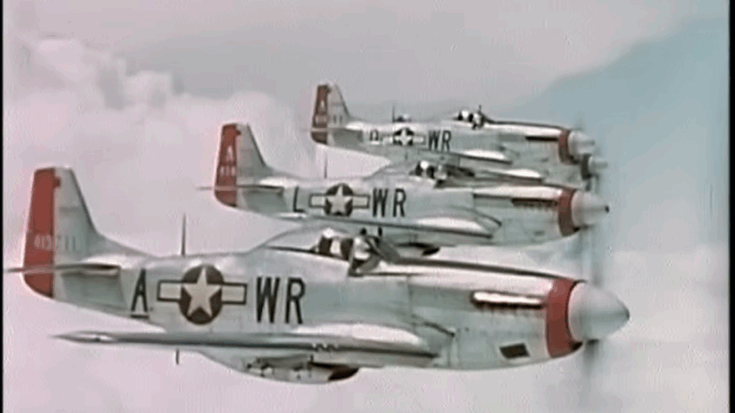
The film then shifts to American fighter aircraft operating above cloud layers. P-51 Mustang formations from the 355th Fighter Group appear in clear color footage, including aircraft coded WR-A “Bubb’s Baby” and WR-L “Slender Tender & Tall.” Smooth aerial tracking shots show fighters peeling away in formation, demonstrating escort tactics used to protect bombers from interception.
Later scenes include Republic P-47 Thunderbolts and additional Mustang formations flying in tight groups across open sky. One aircraft, P-51D “Down for Double,” carries a distinctive black ace-of-spades emblem on its nose. These sequences highlight coordination between bomber and fighter units, offering a detailed visual record of Allied air strategy during the closing phase of the European air war.






