3 U.S. B-52 Stratofortress Arrives at RAF Fairford Amid Escalating Iran Conflict
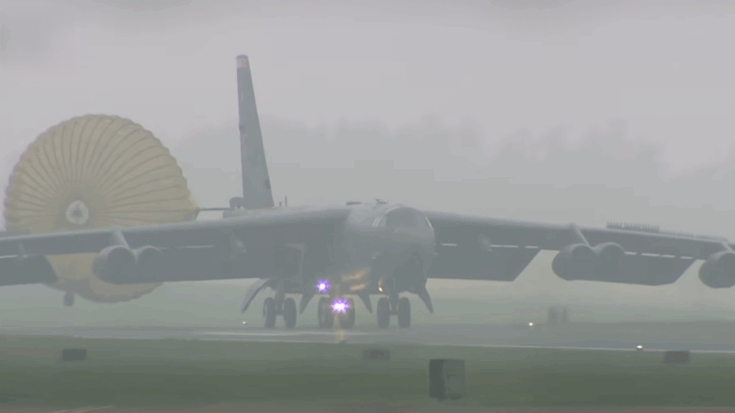
ET Digital / YouTube
The arrival of American strategic bombers in the United Kingdom has drawn renewed attention to the widening military crisis connected to the ongoing conflict involving Iran. According to media reports released Monday, three U.S. Air Force B-52 Stratofortress bombers landed at Royal Air Force Fairford in Gloucestershire, southwest England, reinforcing an expanding Western air presence tied to regional operations.
The deployment marks the first confirmed appearance of B-52 aircraft in Britain since the current phase of fighting began. Observers see the move as both operational and symbolic, showing how long-range airpower continues to shape modern conflict planning while allies coordinate defense measures across multiple regions.
Strategic Aircraft Return to RAF Fairford
The newly arrived bombers joined other American aircraft already stationed at RAF Fairford, a base historically used for U.S. bomber deployments during periods of heightened tension. A B-1B Lancer bomber reportedly arrived on Friday evening, followed by two additional aircraft on Saturday, creating a growing fleet capable of conducting long-range missions.
The B-52 Stratofortress remains one of the oldest active aircraft in the U.S. Air Force, yet it continues to serve a central role due to its range and payload capacity. The aircraft can carry up to 31,751 kilograms, nearly 70,000 pounds, of mixed weapons, including cruise missiles capable of striking targets more than 1,500 miles away. Military planners value the bomber for its ability to operate far from combat zones while maintaining constant pressure through precision strike capability.
RAF Fairford has long functioned as a forward operating location for American bombers during European and Middle Eastern crises. Its long runway and specialized support infrastructure allow heavy aircraft to deploy quickly without permanent relocation of forces, reflecting decades of defense cooperation between the United States and the United Kingdom.
Political Debate and Expanding Conflict
The deployment followed political discussions inside the British government regarding the use of national bases. Prime Minister Keir Starmer initially declined permission for U.S. forces to use British facilities in joint operations involving Iran, a decision that reportedly created tension with U.S. President Donald Trump. The disagreement highlighted the balance British leaders sought between alliance commitments and concerns over escalation.
In a video statement released Sunday, Starmer confirmed approval for U.S. access to RAF Fairford and Diego Garcia in the Indian Ocean. He told lawmakers the government “does not believe in regime change from the skies,” while explaining that permission was granted under the principle of “collective self-defense” to protect allies and British citizens. British officials also accused Iran of pursuing a “scorched-earth strategy,” framing the decision as defensive rather than offensive.
The wider conflict has already caused significant casualties. Iranian authorities reported that around 1,300 people have been killed and more than 10,000 injured in U.S. and Israeli attacks since Feb. 28. Tehran has responded with drone and missile strikes targeting Israel, Jordan, Iraq, and Gulf nations hosting American military assets, expanding the geographic reach of the confrontation.
Defense analysts note that the positioning of long-range bombers in Europe provides flexibility, allowing rapid response across several theaters without requiring immediate deployment closer to contested airspace. The arrival of the B-52s reflects how strategic aviation continues to influence military planning even decades after the aircraft first entered service, linking Cold War-era design with modern conflict realities.