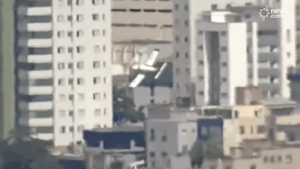
IDF Launches Several Waves of Strikes Across Tehran, Isfahan, and Southern Iran, Footage Reveals
Kanal13 / YouTube
Military tensions in the Middle East intensified after Israeli forces confirmed a series of coordinated airstrikes targeting military infrastructure across Iran. According to official statements released Monday, multiple waves of attacks were carried out against sites linked to missile operations, drone activity, and command structures. Videos released by the Israeli military showed precision strikes hitting facilities in Tehran, Isfahan, and southern regions, marking one of the most extensive operations reported during the current escalation.
Israeli officials said the operation focused on limiting Iran’s ability to launch long-range attacks. The strikes followed days of missile alerts that sent millions of Israeli civilians into shelters. Military leaders described the campaign as part of an ongoing effort to weaken offensive systems while maintaining pressure on key military networks believed responsible for recent launches.
Targets Across Major Iranian Cities
Earlier on Monday, the Israeli military revealed it had struck several long-range ballistic missile launch sites and military infrastructure connected to the Islamic Revolutionary Guard Corps. Command centers and manufacturing facilities were among the main targets, with operations extending across Tehran, Isfahan, and Shiraz. Officials said the goal was to disrupt coordination and reduce production capacity tied to missile programs.
In Isfahan, strikes reportedly hit the headquarters of the regime’s Internal Security Force and a police command center associated with the Guard Corps. A base belonging to the Basij militia was also targeted, along with a facility described as producing rocket engines. Later updates stated that an unmanned aerial vehicle headquarters had been struck after being identified as a location used to launch drones toward Israel while storing additional systems for future operations.
Expanding Campaign Against Missile Capabilities
Military statements emphasized that the attacks were ongoing. “The combined effort to further degrade the regime’s firing capabilities and defense capabilities continues at these moment,” the military said, adding that operations were expanding toward ballistic-missile production infrastructure throughout Iran. Additional military facilities near Shiraz were also struck during later waves.
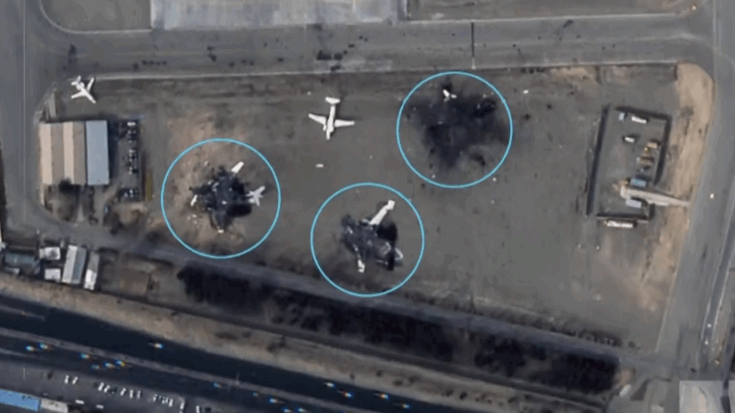
The air campaign followed another operation completed Sunday night, when Israeli forces carried out strikes against six Iranian military airfields. According to the military, several aircraft were dismantled during the attacks, including planes linked to the Quds Force and multiple combat helicopters. Analysts said targeting airfields could limit Iran’s ability to coordinate aerial responses and move equipment between regions.

Ongoing Threat Despite Reported Damage
Despite significant reported losses, Israeli officials cautioned that Iran still retains the ability to continue attacks for an extended period. Military assessments indicated that about 75 percent of Iran’s ballistic missile launchers had been destroyed, an increase from earlier estimates of 65 percent just days before. The updated figure was presented as evidence of steady progress but not a final outcome.
Officials noted that missile warning sirens continued across Israel during recent days, reflecting ongoing threats even as strike operations expanded. The military sought to reassure the public that defensive and offensive measures were working together to reduce risks while maintaining readiness for further escalation. Analysts observing the conflict said the situation reflects a shift toward sustained operations aimed at limiting long-range strike capacity rather than a single decisive engagement.