80 Years After Oryoku Maru Sinking in WWII, Divers Return to Recover Remains of 250 Trapped Men
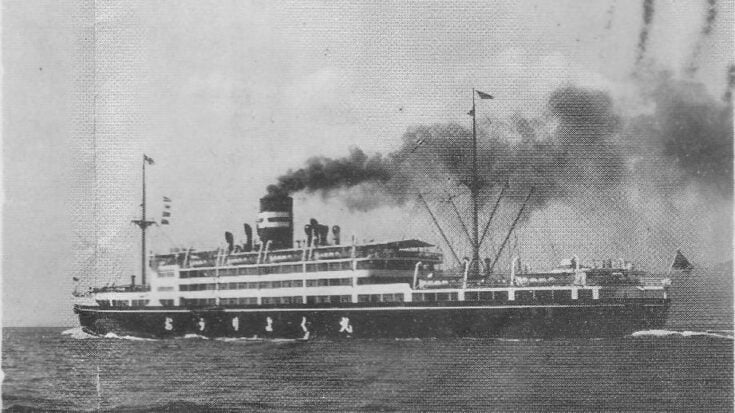
Unknown (O.S.K. Line), Public domain, via Wikimedia Commons
A Return to Subic Bay
Eighty years after one of the Pacific War’s most tragic maritime losses, divers have returned to the waters of Subic Bay in the Philippines to search for men who never came home. Beneath the surface lies the wreck of the Oryoku Maru, a former passenger liner turned wartime transport that sank in December 1944 during American air attacks. Inside the wreck are believed to be the remains of as many as 250 prisoners of war who died during the disaster.
The recovery effort, led by the United States Defense POW/MIA Accounting Agency working with the U.S. Navy and the Philippine government, marks one of the most complex underwater missions ever attempted by the agency. The operation began in early 2026 and is expected to continue for several years, reflecting both the technical difficulty of the work and the care required when handling human remains lost for generations.
From Passenger Liner to Prison Transport
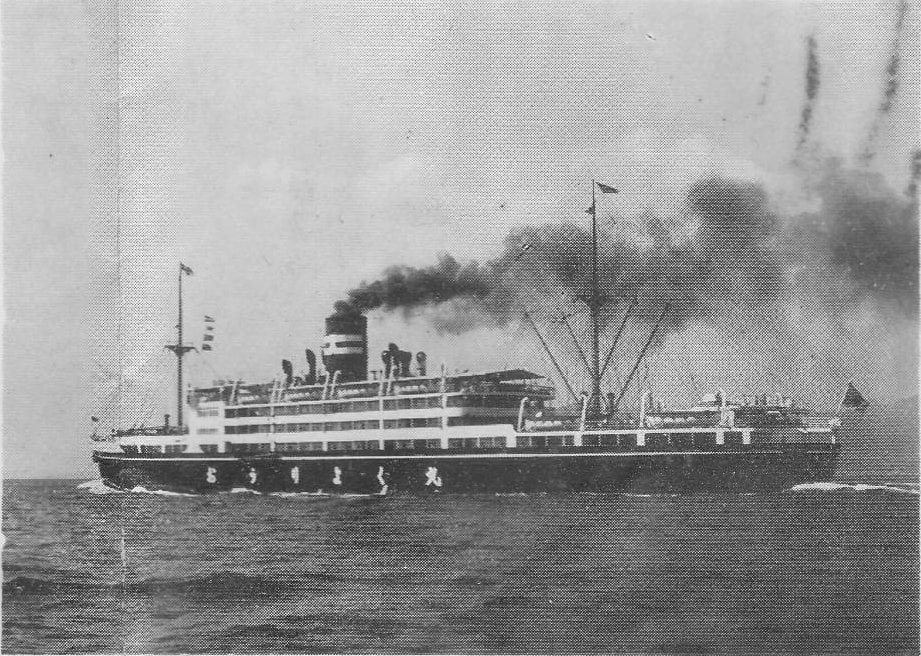
The Oryoku Maru was built in the 1930s as a civilian passenger and cargo ship operating across the Pacific. Before the war, it carried travelers between Japan and ports along the American west coast. As fighting expanded across Asia, the vessel was taken over by the Japanese military and converted into a troop and prisoner transport, part of a fleet later remembered for the harsh conditions endured by captives.
By late 1944, Allied forces were advancing toward the Philippines. On December 13 of that year, the ship departed Manila carrying 1,619 prisoners of war packed tightly into cargo holds below deck. Most were Americans, along with smaller numbers of British, Dutch, Czech, and Norwegian prisoners. Ventilation was poor, sanitation was minimal, and space was so limited that many men could barely sit or lie down during the voyage.
An Unmarked Ship at Sea
The vessel carried no markings to indicate prisoners were aboard. Above deck were Japanese civilians, soldiers, and military cargo, creating the appearance of a standard wartime transport. The absence of identification meant that American pilots flying from carrier groups had no warning about the human cargo hidden below.
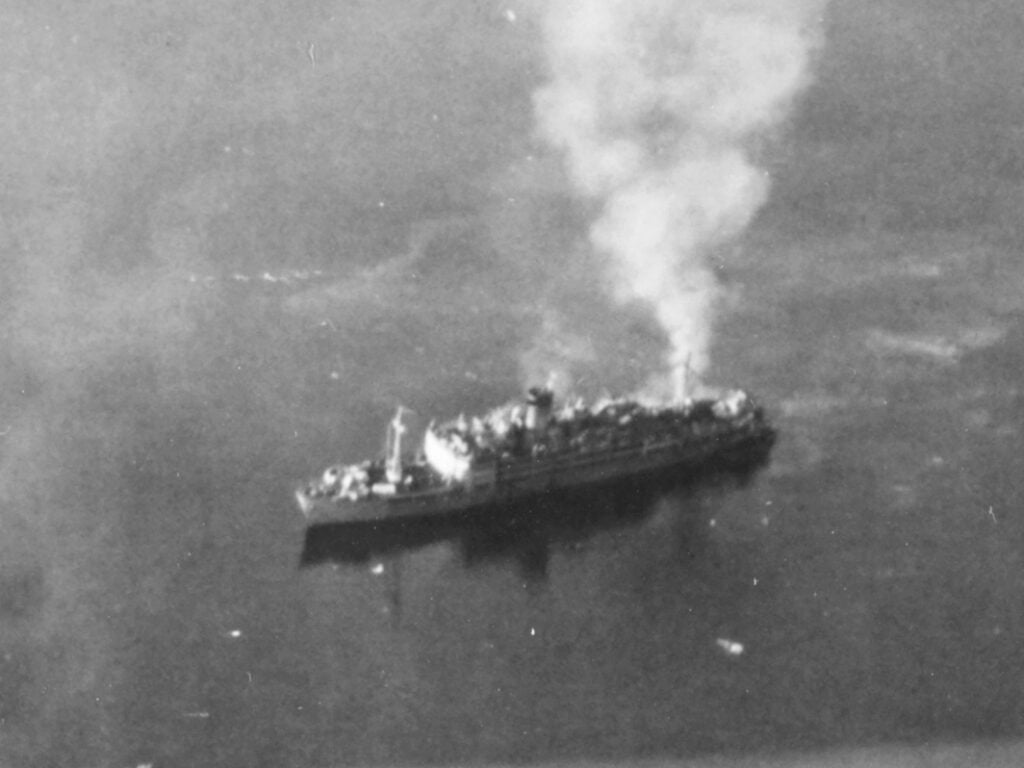
On the morning of December 14, aircraft from the carriers USS Hornet and USS Cabot spotted the convoy off Luzon. Believing the ships to be legitimate military targets, they launched repeated bombing runs. Explosions damaged the vessel, forcing it to seek shelter in Subic Bay while fires and flooding spread through the ship’s interior.
Bombs, Panic, and Violence
Over two days, multiple air attacks struck the ship as it struggled to remain afloat. Inside the holds, prisoners faced chaos. Survivors later described darkness, smoke, and intense heat as bombs exploded nearby. Guards fired weapons to control crowds of desperate men attempting to reach ladders leading to the deck.
As conditions worsened, many prisoners realized they might be abandoned. Japanese civilians were quietly evacuated to shore during the night, while prisoners remained confined. When the final attacks disabled firefighting equipment and the ship began to sink, guards ordered captives into the water. Some men jumped or swam toward shore despite gunfire.
Survival Without Safety
Reaching land did not end the suffering. Survivors who managed to swim ashore were gathered and confined on a fenced tennis court near Olongapo. Many were wounded, burned, or weakened from days without proper food or water. For two days, little medical care was provided, and deaths continued even after the bombing stopped.
Records show that 286 prisoners were already dead or missing following the sinking. Those who survived were later transported north aboard other ships, including the Enoura Maru and Brazil Maru. Additional bombings during these transfers caused hundreds more deaths. Of the original prisoners loaded in Manila, only a few hundred lived to see the end of the war.
A Larger Forgotten Tragedy
The sinking of the Oryoku Maru was not an isolated event but part of a wider wartime pattern. During the Pacific conflict, more than a hundred Japanese transport vessels carried Allied prisoners across dangerous waters without markings. Allied aircraft and submarines, unaware of who was aboard, attacked many of these ships during normal combat operations.
Historical estimates suggest that about 126,000 prisoners were transported on such voyages. Thousands died from disease, starvation, and harsh confinement, while many more were killed when ships were sunk during attacks meant for military targets. The tragedy revealed the risks faced by prisoners caught between opposing forces in a global conflict.
The Modern Recovery Mission
Today, the wreck rests roughly 90 feet below the surface and about 550 yards from shore in Subic Bay. Over decades, parts of the ship collapsed or were cleared to prevent hazards to navigation, leaving a tangled structure that complicates exploration. Poor visibility, shifting sediment, and fragile remains make recovery work slow and demanding.
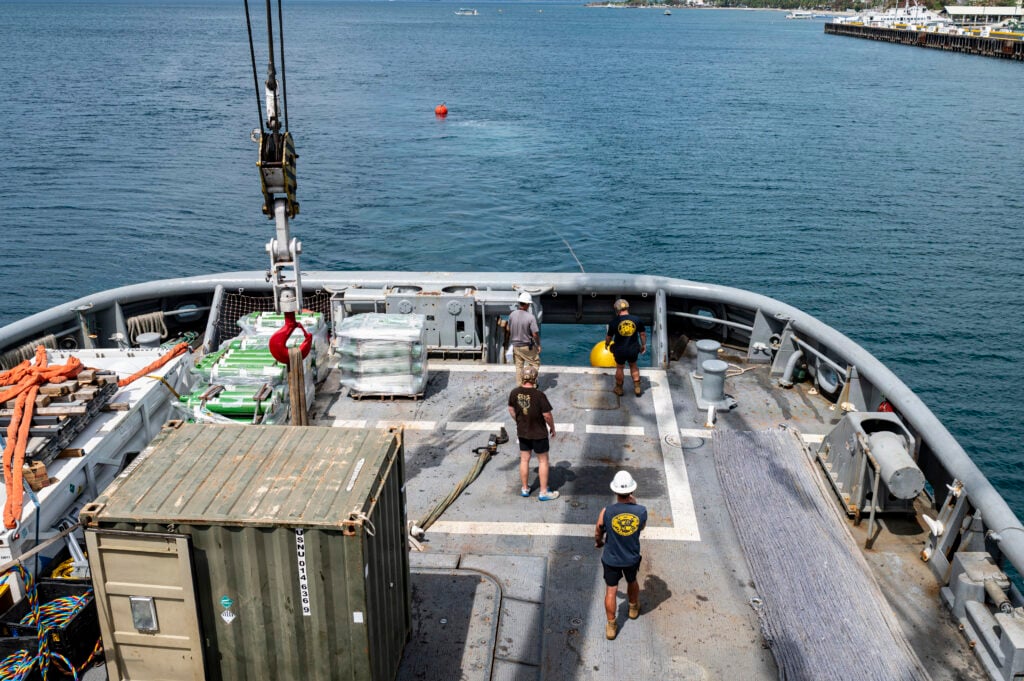
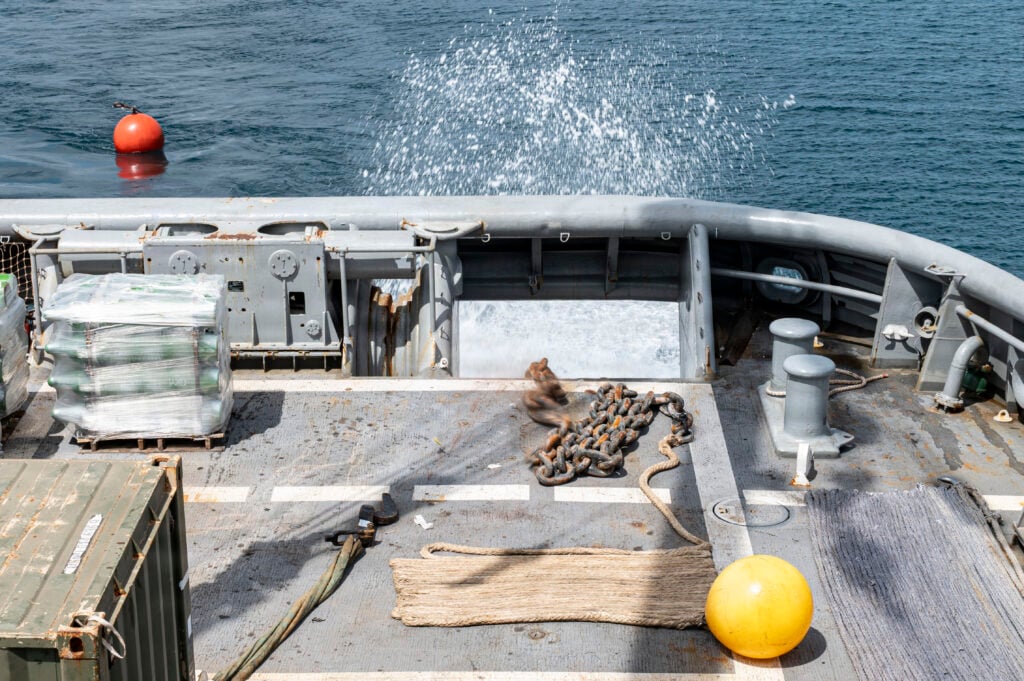
Divers involved in the mission use advanced underwater mapping, careful excavation methods, and forensic recovery procedures. Each dive is planned to minimize disturbance while documenting artifacts and possible burial locations. Teams may return repeatedly to the same site across multiple seasons, depending on weather, currents, and findings.
Identification and the Waiting Families
Any remains recovered are transported to laboratories in Hawaii, where forensic anthropologists attempt identification through dental records, DNA testing, and historical documentation. The process can take years, especially when remains are incomplete or mixed with debris from the wreck.
Once identification is confirmed, military casualty offices contact surviving relatives, many of whom have spent decades with unanswered questions. For individuals who cannot be identified, collective burial in a military cemetery ensures formal recognition and honor. The mission reflects an ongoing national policy to account for missing personnel from past wars, even many decades after conflict has ended.
Memory Beneath the Water
Divers who visit the site often describe a quiet and heavy atmosphere shaped by history rather than danger. The wreck has become both an archaeological site and a place of remembrance, linking modern recovery teams with events that unfolded during the final months of the Pacific War.
Off Subic Bay, the work continues slowly, dive by dive, as specialists search through twisted metal and layers of sand. Each recovered fragment carries the possibility of restoring a name, a story, and a place in history to men who vanished beneath the sea in December 1944, leaving families waiting across generations for news that is only now beginning to arrive.