A Fighter Between Two Eras: The Day the Curtiss XF15C Made Its First Flight
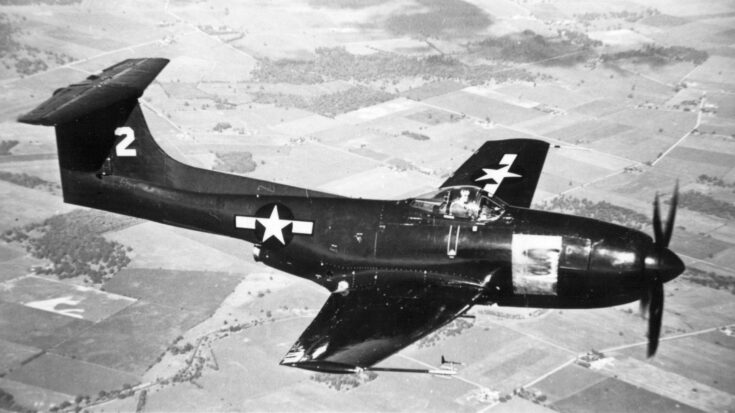
See page for author, Public domain, via Wikimedia Commons
In the final year of the Second World War, military aviation was changing at a fast pace. Engineers who had spent years refining piston-powered fighters were now racing to master jet propulsion. In this moment of transition, some designers tried to combine both systems in a single aircraft. One of the most unusual results of that effort was the Curtiss XF15C.
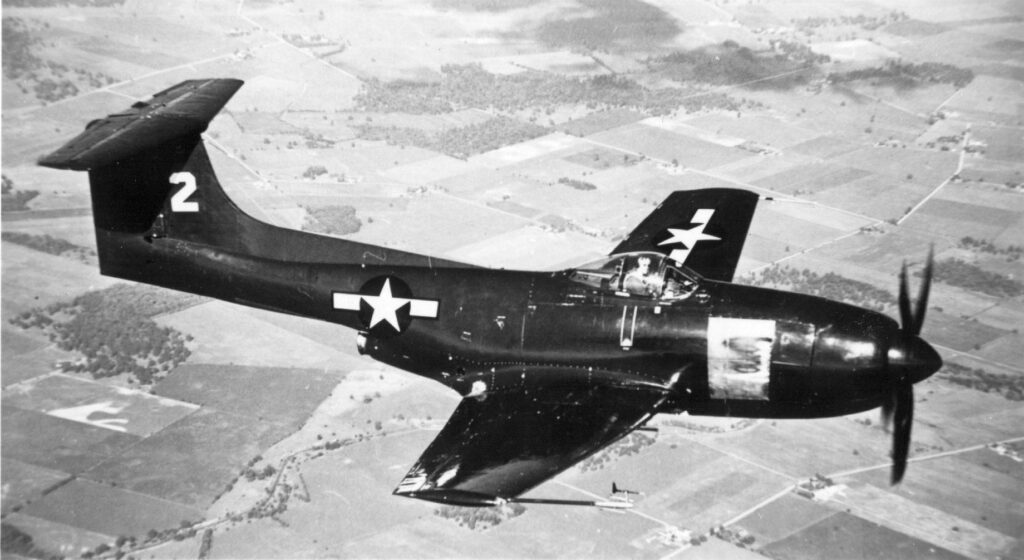
On February 27, 1945, the XF15C made its first flight. Built for the United States Navy by the Curtiss-Wright Corporation, it was planned as a carrier-based fighter that could serve during the shift from propeller aircraft to jets. Though it never entered full production, its design showed how uncertain and experimental that period had become.
Designed for a Changing Navy
The Navy’s interest in the XF15C grew from the limits of early jet engines. Turbojets of the mid-1940s often lacked strong acceleration and had high fuel consumption. On aircraft carriers, where short takeoff runs and steady landing approaches were required, these weaknesses raised concern. Naval planners wanted a fighter that could match the speed of jets but still retain the reliability and range of piston power.
Curtiss answered with a mixed-propulsion design. The XF15C used a Packard-built Rolls-Royce Merlin piston engine in the nose, driving a four-bladed propeller. In the rear fuselage, engineers installed an Allison J33 turbojet engine. The idea was simple in theory: the propeller engine would handle takeoff, climb, and cruising, while the jet could provide added thrust during combat or high-speed flight. This combination aimed to bridge the gap between older fighters and the fully jet-powered models that were still under development.
Technical Features and First Flight
The aircraft had a low-wing monoplane layout and was built with carrier operations in mind. It featured a tailhook for arrested landings and folding wings to save space below deck. The cockpit sat forward, giving the pilot a clear view for carrier approaches. Armament plans called for four 20 mm cannons mounted in the wings, placing it among the more heavily armed naval fighters of its day.
When the XF15C took to the air for the first time on February 27, 1945, test pilots were cautious but hopeful. Early flights showed that the piston engine provided stable handling at lower speeds, which was important for carrier work. The jet engine, when engaged, increased top speed and climb rate. However, operating two different powerplants in one airframe added weight and mechanical complexity. Maintenance demands were high, and the overall performance did not greatly exceed that of newer pure jet designs.
A Short Career in a Rapidly Changing World
Only three prototypes of the XF15C were built. During testing, one aircraft was lost in an accident, though the pilot survived. As 1945 progressed, dedicated jet fighters such as the McDonnell FH Phantom began to show better long-term potential for naval service. These aircraft did not rely on mixed systems and were designed from the start around jet power.
With the war nearing its end and technology advancing quickly, the Navy chose not to move forward with production of the XF15C. The project quietly closed, and Curtiss would soon leave the fighter business altogether. The aircraft remains a symbol of a brief period when designers tried to merge two generations of propulsion in a single machine, searching for answers during a time of rapid change in military aviation.