American Bomber That Was Buried in Australia’s Landfill
YouTube / Not What You Think
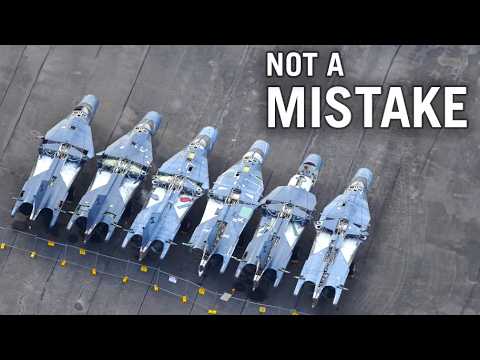
In November 2011, transport trucks carried the wingless bodies of 23 aircraft to the Swanbank landfill in Queensland, Australia, over three days. The last operational F-111s in the world were buried underground. An aircraft that pioneered afterburning turbofans, automatic terrain following at 600 mph, and variable sweep wings ended its life in the ground next to household garbage. The reason it couldn’t be recycled or preserved is as strange as everything else about its history.

Built to Do Everything
The F-111 program began in 1961 when Defense Secretary Robert McNamara forced the US Air Force and Navy to develop a single aircraft serving both branches simultaneously. The Air Force needed a supersonic low-level strike aircraft after the Soviet Union shot down a U-2 spy plane in 1960, proving that high-altitude subsonic aircraft were no longer safe. The Navy needed a long-range fleet interceptor. McNamara decided one aircraft would satisfy both requirements, overriding objections from both services who understood their needs were fundamentally incompatible.

General Dynamics won the contract in November 1962. Australia ordered its own variant in 1963 before a single pre-production model existed, paying what would eventually balloon from a $100 million estimate to over $300 million by 1969.
Everything That Went Wrong
The first combat deployment in 1968 was catastrophic. Six F-111s flew missions over North Vietnam. Two disappeared without trace in the first two weeks. A third went down shortly after. The remaining three were recalled. Engineers traced the losses to a failed hydraulic control valve rod in the horizontal stabilizer.

Then the wing problems began. In December 1969 an F-111 lost a wing mid-flight over Nevada and the entire fleet was grounded. Australia’s aircraft, finally delivered after five years of delays, were immediately partially disassembled and placed in storage. The Australian government paid $1,700 per aircraft per day in storage costs rather than cancel the order and absorb a $200 million cancellation penalty.

The Navy had already quit. After carrier trials aboard USS Coral Sea in 1968, the Navy cancelled its F-111B order citing weight and performance problems. The UK cancelled its variant the same year over cost increases and Sterling devaluation.
The Aircraft That Earned Its Reputation
The wing pivot box was redesigned and the F-111 returned to Vietnam in 1972. Over 3,800 combat missions, it lost only six aircraft, recording the highest survival rate of any combat aircraft in the theater. The program that had nearly collapsed completely had vindicated itself.

Australia operated its F-111Cs for over three decades. The aircraft gained the Pave Tack targeting pod in the early 1980s, transforming it from a low-level dumb bomber into a precision strike platform capable of designating and guiding laser-guided munitions from altitude. In 2006, Australian F-111s destroyed a North Korean cargo vessel called the Pong Su that had been caught smuggling heroin into Australia.

The aircraft also developed an unintended party trick. Because the fuel dump nozzle sat directly between the engine exhausts, dumping fuel with afterburners lit turned the F-111 into a pillar of fire. The dump and burn became a fixture of Australian air shows and appeared at the closing ceremony of the 2000 Sydney Olympics.
Why They’re in a Landfill
The F-111’s fuselage panels were bonded with asbestos for heat resistance. When retirement came, that asbestos made recycling prohibitively expensive. The Australian government had also committed to the US government to dispose of the airframes securely. Thirteen surviving aircraft reached museums. The remaining 23 went into the ground at Swanbank in 2011.

The aircraft that inspired the Tornado, MiG-23, Tu-160, B-1B Lancer, and F-14 Tomcat ended its operational life buried under Queensland soil because of a material commonly used in 1960s construction. The variable sweep wing technology it pioneered flew on for decades in aircraft across three continents. The original aircraft itself was not considered worth the cost of saving.