

Legendary PBY Catalina Engine Run and Takeoff In 4K
YouTube / Paul Stewart 2nd channel
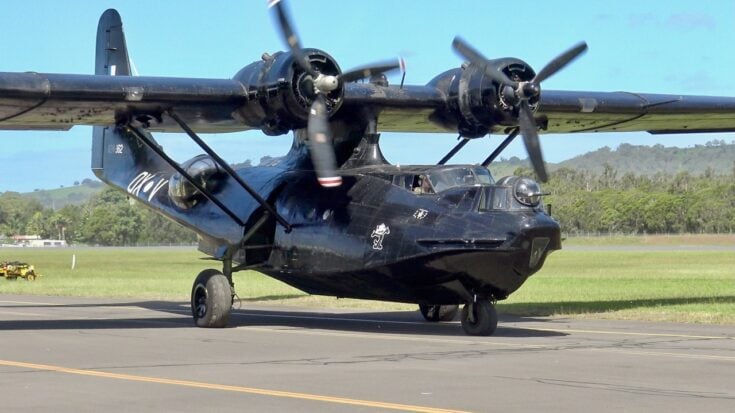
Built in 1945 in New Orleans, this PBY-6A Catalina has outlived wars, a sinking, two continents of firefighting service, and the very conflict it was painted to commemorate.

What the Black Cats Were
The RAAF used more than 150 Catalinas between 1941 and 1945, pressing them into long-range bombing, mine-laying, anti-submarine patrol, and air-sea rescue roles. Since most of these operations were conducted at night, aircraft were painted in dark colors and became known as Black Cats.

The Black Cats undertook night-time precision mine-laying, flying as low as a few meters above the water and placing mines within a ten meter radius of their targets. Their missions played a major role in crippling the Japanese Navy.
The Aircraft Itself
The HARS Catalina, registered VH-PBZ, was built in 1945 and delivered to the US Navy. It passed through civilian ownership, was transferred to Chile, spent two decades in storage, and returned to service as a water bomber. On January 27, 1986, the aircraft sank in Lago Gutierrez in Argentina while on firefighting duties. It was salvaged, rebuilt, and returned to service by 1988. It subsequently operated in Spain and Portugal before HARS acquired it in 2002.

The aircraft is painted to represent A24-362, which served with 43 Squadron RAAF and was flown by HARS member Rees Hughes. As a PBY-6A amphibian it carries retractable landing gear that the original wartime flying boats did not have, but with wheels retracted in flight the configuration matches the Black Cats closely.








