

Iran Destroys US E-3 AWACS at Prince Sultan Air Base in Major Strike
YouTube / CNN-News18
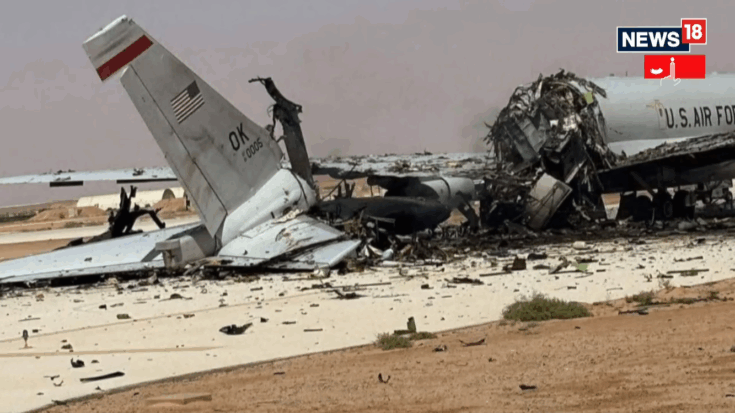
An Iranian missile and drone attack on Prince Sultan Air Base in Saudi Arabia on March 27 destroyed at least one US Air Force E-3 Sentry AWACS aircraft, damaged multiple aerial refueling tankers, and injured more than ten American service members, two of them seriously.
New image reportedly showing the USAF E-3 Sentry destroyed in an Iranian attack at Prince Sultan Airbase on Friday.
Matches 81-0005, an E-3C seen deployed to the base in recent weeks. pic.twitter.com/zRVzzkEPeU
— OSINTtechnical (@Osinttechnical) March 29, 2026
Ground-level photographs showing E-3 serial number 81-0005 with its rear fuselage completely burned out and destroyed have been geolocated to Prince Sultan and corroborated by satellite imagery from multiple sources.

What Was Destroyed
The E-3 Sentry is the Air Force’s primary airborne battle management platform, carrying a rotating radar dome above its fuselage and providing commanders with a comprehensive picture of airspace across hundreds of miles. Photographs show the aircraft split and burned, with debris scattered around it. Iran claimed a Shahed drone struck the aircraft. Whether the destruction came from a direct hit or from shrapnel and fire following a nearby detonation, the extent of damage renders the aircraft almost certainly beyond repair.

Six E-3s had been deployed to Prince Sultan before the attack according to open-source flight tracking data. The Air Force’s total E-3 fleet stood at 16 aircraft before this loss, with a mission-capable rate of approximately 56% meaning fewer than half were operational at any given time.
Iran shows satellite image of destroyed U.S. Air Force E-3G Sentry AWACS aircraft at Saudi Arabia’s Prince Sultan Air Base before and after Iran’s March 27 strike. https://t.co/ZmYHTAOJvh pic.twitter.com/9rK98rXT6S
— Clash Report (@clashreport) March 29, 2026
At least five aerial refueling tankers were also damaged in the same strike. The attack reportedly combined long-range one-way attack drones and ballistic missiles. Saudi-based satellite imagery from Chinese firm MizarVision has since confirmed E-3s were parked on isolated taxiways around the airfield, an arrangement designed to minimize damage from Iranian long-range strikes by dispersing high-value aircraft.
Why This Loss Matters
The AWACS provides fighter pilots and strike planners with the comprehensive battlefield picture that makes coordinated air operations possible. It handles airspace deconfliction, targeting support, aircraft tracking, and the coordination of lethal effects across the entire force operating in theater. Losing it creates immediate coverage gaps that affect every aircraft it was supporting.

The remaining E-3s must now cover the workload previously shared with the destroyed aircraft. Each aircraft that absorbs additional hours accelerates the wear on a fleet that was already aging out of operational relevance.
Iran’s Deliberate Targeting Pattern

The destruction of the E-3 follows a pattern that defense analysts describe as a deliberate counter-air campaign targeting American enablers rather than frontline combat aircraft. Iran has struck radar installations, communications sites, tanker aircraft, and now AWACS. Each category of target degrades the infrastructure that allows US airpower to function rather than attacking the fighters and bombers directly.
Via: pic.twitter.com/XtiPE2o04P
— OSINTtechnical (@Osinttechnical) March 29, 2026







