The D-Day Ship Nobody Wants
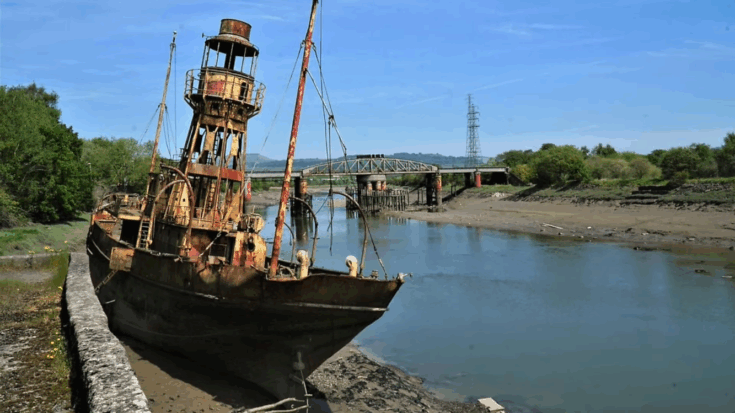
YouTube / War Stories with Mark Felton
In June 1944, hundreds of Allied vessels crossing the English Channel toward the five Normandy beaches needed safe passage through extensive German minefields. Naval minesweepers cleared the channels. Two civilian light vessels marked them. One of those ships is still afloat today, tied to a riverbank in Wales, unsold and rusting.
What Light Vessels Did at Normandy
Operation Neptune, the naval component of the Normandy invasion, required cleared and marked corridors through the Channel minefields before any troop transport could safely reach France. After minesweepers opened the channels, Trinity House light vessels deployed marker buoys along the cleared routes and then anchored off the French coast as floating lighthouses. They remained there for months, guiding the constant traffic of ships bringing men, vehicles, and supplies across the Channel as the Allies fought their way inland.

Light Vessel 72, code named Juno, marked the approaches to the three British and Canadian beaches. Light Vessel 68, code named Kansas, covered the two American sectors. Both ships remained anchored off the French coast under the same threats facing the warships around them: Luftwaffe air attack, German S-boats, U-boats, drifting mines, and weather. Their civilian crews received no special protection.

Juno remained on station until January 27, 1945, when she was withdrawn to Le Havre for storm and collision repairs. She returned to England on March 3, 1945. Kansas was withdrawn in November 1944 and has since been scrapped.
The Ship
Light Vessel 72 was built in 1903 in Sunderland, England, making her 41 years old on D-Day. She measures just over 116 feet in length with a 24-foot beam and displaces 257 tons. She carries no engine and was always towed into position before anchoring. Her paraffin lamp was visible for 20 miles. Before the war she served around the British Isles, the Channel Islands, and off Gibraltar.

After the war she continued working in the Bristol Channel until she was sold for scrap in 1973 at age 70. A manager at the Steel Supply Company of Neath in Wales recognized her historical significance and prevented her destruction. Instead of being cut up she was moored alongside the scrapyard on the River Neath, where she has remained ever since.
Where She Sits Now
Juno is listed on the National Historic Ships Register. She has not been restored. A hull survey conducted in recent years found she could be made to float again with relatively minor repairs. The Steel Supply Company has been asking £40,000 for her, a figure that represents only the purchase price before any restoration or display costs.

She was nine years old when the Titanic sank. She is currently tied to a riverbank exposed to weather and corrosion with no confirmed buyer and no restoration program underway. How much longer the hull can survive in its current condition is uncertain.