The B-52 Is Testing America’s Next Nuclear Cruise Missile and It Wants You to See It
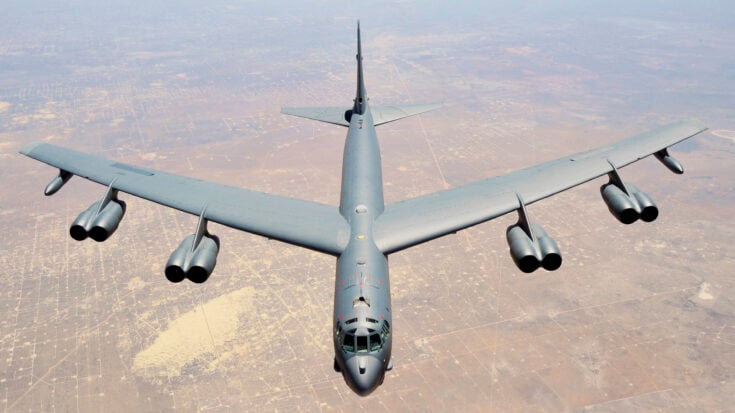
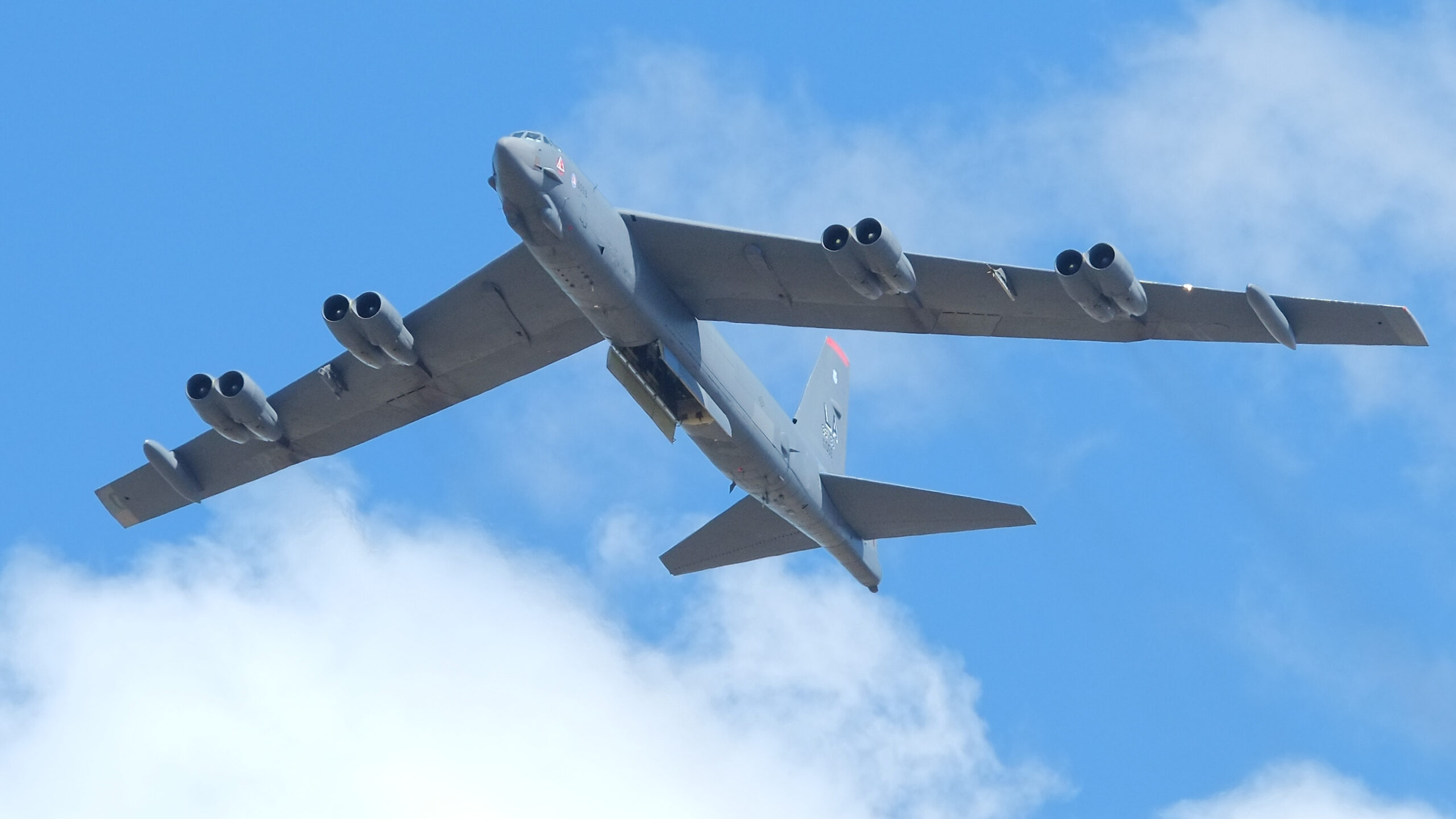
A B-52H Stratofortress has been photographed in flight over California carrying two inert AGM-181 Long Range Stand Off missiles under its wings, the latest in a series of increasingly frequent test flights suggesting the program is ramping up toward a production decision. Aviation photographer Jarod Hamilton captured the bomber flying alongside an Edwards Air Force Base NKC-135R Stratotanker and what appeared to be an F-22 recently seen testing its own new stealthy equipment.
“Only at Edwards, could you find a formation like this” pic.twitter.com/cc2X09yXJJ
— jmh.creates (@JarodMHamilton) March 21, 2026
The B-52 was flying under the TORCH callsign assigned to Edwards’ 419th Flight Test Squadron, which handles developmental testing for the B-1B, B-2A, and B-52H. The same callsign appeared during previous LRSO sightings in November. The weapons were mounted on a Multiple Ejector Rack capable of holding up to six missiles. The fact that a highly classified nuclear weapon was flown at low altitude in clear daylight conditions is unlikely to be accidental.
What the AGM-181 Is
The AGM-181 LRSO is a stealth nuclear cruise missile designed to replace the AGM-86 Air Launched Cruise Missile, which has been in service since the 1980s. The AGM-86 inventory was reduced from 1,715 missiles to 528 and is scheduled for retirement by 2030. Approximately 1,020 AGM-181s are planned as replacements.
Here’s TORCH92 with some nice jewelry. pic.twitter.com/YUBt4iWAJR
— jmh.creates (@JarodMHamilton) March 21, 2026
The LRSO is designed to penetrate advanced integrated air defense systems from significant standoff ranges and deliver nuclear effects against strategic targets. It will be carried by both the B-52H and the B-21 Raider. The B-21 is planned to carry three nuclear weapons: the AGM-181, the B61-12 gravity bomb, and the B61-13, with the latter exclusive to the Raider.
Raytheon was selected as prime contractor in 2020. The program entered Engineering, Manufacturing, and Development in 2021. By 2022 nine successful major flight tests had demonstrated safe separation from the B-52H, flight surface deployment, engine operations, and controlled flight. A low-rate initial production decision is expected in Fiscal Year 2027.
The Cost Problem
The program’s total cost was estimated at approximately $16 billion in late 2022. Cost per unit has risen to roughly $14 million against an original target of $10 million, a 40 percent increase reported in 2024. The Air Force and Congress had previously discussed a conventionally armed variant of the missile but ultimately decided against it, directing conventional standoff requirements toward the AGM-158B JASSM-ER and the longer-range AGM-158D JASSM-XR instead.
Why It Matters Now
The AGM-181 is central to the Air Force’s nuclear modernization effort. The existing AGM-86 fleet was designed for a Cold War threat environment. The LRSO is built specifically to survive modern air defense networks that the AGM-86 was never intended to face. As the B-21 Raider enters service and the B-52H continues as the primary nuclear standoff platform, the LRSO becomes the weapon that makes both aircraft credible against the most capable air defenses currently deployed.
Testing frequency is increasing. The first official rendering appeared in June last year. The first in-flight photographs emerged in November. The aircraft is now being routinely spotted during integration work. The production decision clock is running toward 2027.