The Shocking State of Britain’s Navy In 2026
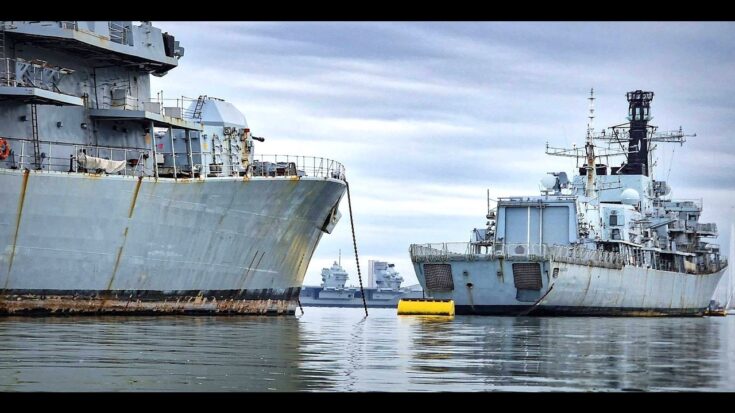
YouTube / Mark Felton Productions
The Royal Navy has more admirals than warships. That single fact, which emerged from recent analysis of fleet composition, summarizes a decline that has accelerated across three decades of defense cuts. In March 2026, with Britain unable to dispatch a warship at short notice to defend its own sovereign base in Cyprus during the Iran conflict, the consequences of that decline became impossible to ignore.

The Numbers
The Royal Navy currently has 63 commissioned vessels, but only 25 qualify as genuine fighting ships. The remainder are patrol, support, and survey vessels. Of those 25 fighting ships, the breakdown is 10 submarines, 2 aircraft carriers, 6 destroyers, and 7 frigates.

In 1996 the Royal Navy operated 17 submarines, 3 aircraft carriers, 15 destroyers, and 22 frigates. Britain’s defense commitments are roughly the same today. The fighting fleet has been cut approximately in half while the workload has not.
What Is Actually Operational
The figures above already paint a bleak picture. The operational reality is considerably worse.
Of six Astute-class fleet submarines, only HMS Anson is currently operational. HMS Astute is in mid-life revalidation. HMS Ambush has been in maintenance since 2022. HMS Artful has been in regeneration since 2023. HMS Audacious has been in refit since 2023. HMS Agamemnon is still in trials and won’t enter full service until March 2027. One hunter-killer submarine covers the entire fleet.

The nuclear deterrent operates on similar margins. Four Vanguard-class ballistic missile submarines are meant to maintain continuous at-sea deterrence, but HMS Victorious entered long-term refit in 2023 for at least three to four years. HMS Vanguard spent seven years in refit before returning to service in 2023. In practice only three boats operate at any time, not four, with at least one always unavailable. Whether genuine gaps have occurred in the continuous at-sea deterrent has never been officially acknowledged.

Of two aircraft carriers, only HMS Prince of Wales is operational, currently held at high readiness. HMS Queen Elizabeth is in dry dock at Rosyth undergoing propulsion repairs. The Prince of Wales would sail without adequate destroyer or frigate escort if deployed.
Of six Type 45 destroyers, two are operational: HMS Dragon and HMS Duncan. HMS Daring is returning from an eight-year refit absence. HMS Dauntless is entering scheduled maintenance. HMS Diamond is likewise in a support period. HMS Defender is undergoing a £68 million upgrade at Portsmouth.

Of seven Type 23 frigates, five are active. HMS Richmond faces decommissioning this year with no replacement. HMS Kent has been in deep maintenance since 2024.
Who Is Actually Doing the Work
Seven River-class offshore patrol vessels, each under 2,000 tons and armed only with guns, are all seven currently operational. These vessels are covering commitments around Britain, the Falklands, and the South Pacific that would normally fall to frigates and destroyers. Small patrol craft are doing the work of warships because the warships are unavailable.

The Falklands Comparison
In 1982 Britain deployed two aircraft carriers, eight destroyers, and sixteen frigates to retake the Falklands while maintaining other global commitments simultaneously. Today, stripping every active vessel from every other commitment worldwide, the Royal Navy could deploy one carrier, two destroyers, and five frigates. Whether that would be sufficient to retake the islands is a question defense analysts prefer not to answer directly.