The Illegal Nose Art That Made VF-27 Famous
YouTube / SVG Productions
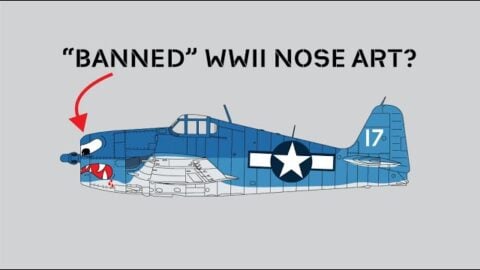
The US Navy banned nose art during World War II. The Army Air Forces tolerated it for morale. The Navy did not, permitting only minimal squadron markings or a pilot’s name in small lettering. Rules existed. Some pilots ignored them anyway. None did so more famously than the pilots of Fighting Squadron 27.

The Design
In early 1944, VF-27 was training at Kahului Naval Air Station in Maui, equipped with Grumman F6F Hellcats. Three pilots, Carl Brown, Richard Stanbrook, and Robert Burnell, designed an unauthorized marking for their squadron’s aircraft. Inspired by the Flying Tigers shark mouth, they created a cat face with sharp fangs and prominent eyes placed directly on the engine cowling. Some versions showed bloodshot eyes. Others showed them clear. Burnell, the squadron’s designated artist, handled most of the painting with other pilots assisting.

All 24 Hellcats were painted before VF-27 was assigned to USS Princeton and departed Hawaii in late May 1944. Nobody in Princeton’s command objected.
What the Squadron Did
The cat mouth Hellcats became the most successful light carrier air group of the war. VF-27 claimed 30 aerial kills during the Battle of the Philippine Sea on June 19 1944, the engagement known as the Great Marianas Turkey Shoot. In September a fighter sweep over Manila produced 38 more victories. The squadron scored over 130 aerial kills between May and October 1944, more than 100 of them across just three days of combat. Ten pilots achieved ace status with a minimum of five kills each.

The End of the Art
On October 24 1944, during the Battle of Leyte Gulf, a single Japanese dive bomber hit Princeton with a bomb that penetrated the flight deck and hangar before detonating. Multiple internal explosions followed throughout the day. Princeton was scuttled that afternoon, the only light carrier the US Navy lost during the war.

Nine cat mouth Hellcats were airborne when Princeton was struck. They survived and landed on other carriers in Task Force 38. The reaction was immediate. Admiral Frederick Carl Sherman of USS Essex ordered the markings painted over that night after the aircraft landed on his ship. Other carrier commanders followed. By morning the iconic markings were gone, ending five months of unauthorized artwork and the most famous case of US Navy regulation violations in the war.

VF-27 continued serving through the end of the war aboard USS Independence. The cat mouth design never officially flew again.