

Britain’s Middling (But Vital) Heavy Fighter: Bristol Beaufighter
YouTube / IHYLS
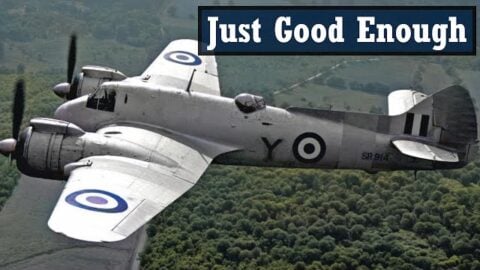
The Bristol Beaufighter was never meant to be a star. It was not designed as a clean-sheet marvel or a sleek symbol of cutting-edge aerodynamics. Instead, it was born from urgency. In the late 1930s, Britain faced growing international tension and the very real possibility of war. The Royal Air Force needed a long-range, heavily armed aircraft, and it needed it fast. Bristol’s solution was pragmatic: take proven components from existing designs and turn them into something that could fight immediately.
From Blenheim to Beaufighter
The Beaufighter’s roots lay in the Bristol Blenheim light bomber. When the Blenheim proved too slow and lightly armed for modern air combat, Bristol reworked the concept into the Beaufort torpedo bomber. But even before the Beaufort entered service, another requirement emerged- an aircraft capable of intercepting enemy bombers at long range, especially at night. By mating the Beaufort’s structure with powerful Bristol Hercules engines and concentrating heavy firepower in the nose, Bristol created the Beaufighter almost by accident.
Before the war, many air forces believed the future belonged to heavy fighters- large, twin-engine aircraft with long range, endurance, and overwhelming firepower. The Beaufighter fit this thinking perfectly. It sacrificed agility for durability and hitting power, carrying four 20 mm cannons and multiple machine guns. While it could not dogfight like a Spitfire or Hurricane, it did not need to. Its job was to find the enemy, absorb punishment, and destroy targets decisively.
A Multirole Workhorse
The Beaufighter entered combat during the Battle of Britain, primarily as a night fighter. Equipped with early airborne radar, it became one of the RAF’s first truly effective nocturnal interceptors. In darkness, speed and elegance mattered less than stability, firepower, and the ability to locate the enemy. Here, the Beaufighter excelled. It helped blunt German night bombing and laid the groundwork for Britain’s growing night-fighting capability.
As the war expanded, the Beaufighter proved astonishingly adaptable. It served as a night fighter, long-range interceptor, ground-attack aircraft, and maritime strike platform. Armed with rockets or torpedoes, it devastated Axis shipping and harassed coastal targets across Europe, North Africa, and the Pacific. It was rugged, forgiving, and capable of operating from rough airstrips- traits that endeared it to crews even if it never inspired awe.
Overshadowed by the Mosquito
Later in the war, the de Havilland Mosquito began to replace the Beaufighter in many roles. Faster, lighter, and more versatile, the “Wooden Wonder” captured public imagination and historical fame. Yet the Mosquito arrived later and benefited from lessons learned by aircraft like the Beaufighter. For years, the Beaufighter carried the burden of Britain’s heavy fighter needs when few alternatives existed.
A Quiet Legacy
The Bristol Beaufighter was not the fastest aircraft of the war. It was not the most elegant, nor the most advanced. But it was dependable, adaptable, and effective. Like a Toyota Camry, it did exactly what was asked of it, day after day, in harsh conditions and across multiple theaters of war. Britain may not have loved the Beaufighter, but without it, the RAF would have been far less capable at some of the war’s most critical moments.
In the end, the Beaufighter’s legacy is one of service rather than spectacle. It filled gaps, answered urgent needs, and continued to fly long after sleeker designs took the spotlight.







