

The British Test Pilot Who Pulled a 12G Inverted Dive to Save the Spitfire
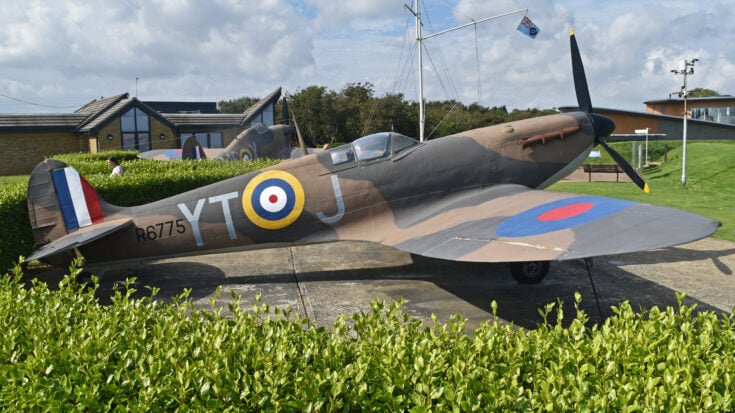
Alan Wilson from Peterborough, Cambs, UK, CC BY-SA 2.0, via Wikimedia Commons
Early Warnings and the Problem
By early 1940, the Spitfire had become a symbol of British resistance. Its sleek design and speed made it the pride of the Royal Air Force, and ground crews treated it with extraordinary care. But over the skies of France, pilots began noticing a deadly flaw. Spitfires diving past 400 miles per hour sometimes became uncontrollable. Pilots would pull back with all their strength, bracing against the cockpit, yet the elevators failed to respond. The fighter would continue its plunge, leaving the pilot helpless as the ground surged upward. Flight Lieutenant Ginger Lacy watched his own wingman crash, the Spitfire twisting violently until it struck a field.
The cause was aerodynamic, not mechanical. Airflow over the tail plane would separate at extreme speeds, causing the aircraft’s center of pressure to shift forward and forcing the nose down. Supermarine and the Royal Aircraft Establishment recognized the urgency. The Spitfire Mark I and II were entering full service just as Britain prepared for the Battle of Britain. Engineers proposed stronger elevators, altered tail angles, or even redesigned tail sections, but the solutions were theoretical. They needed precise data: the exact limits of the airframe and the pilot’s ability to survive extreme G-forces.
The Choice of Jeffrey Quill
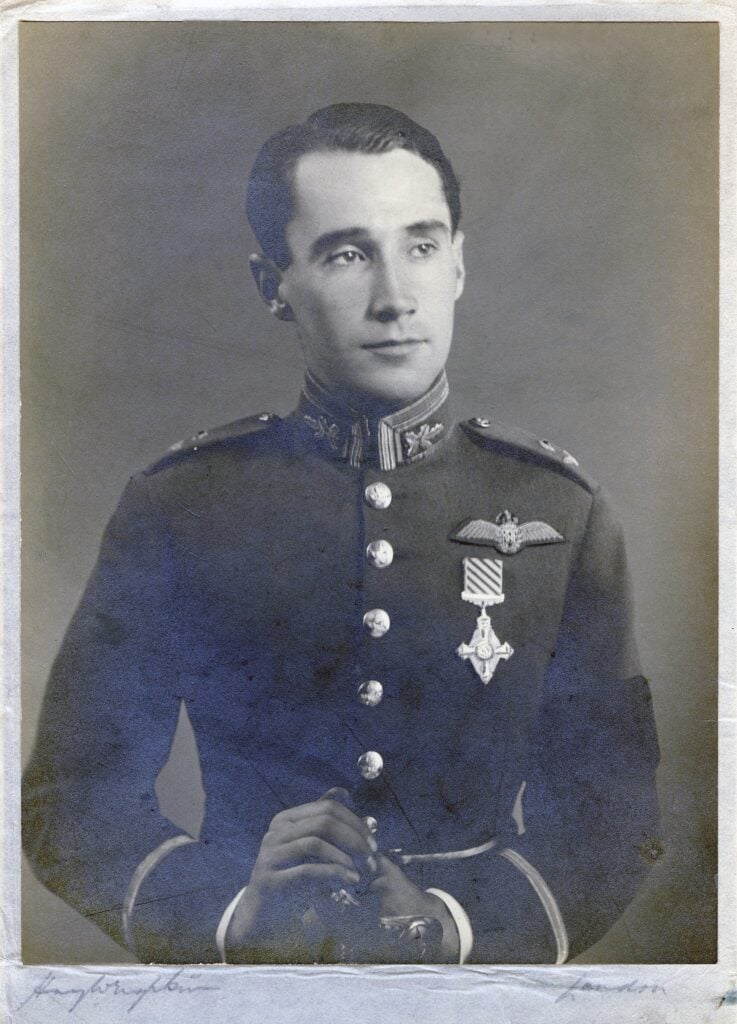
Test pilot Jeffrey Quill volunteered to fly a Spitfire into a 12G inverted dive, a maneuver few believed any human could survive. At 30, Quill had flown every Spitfire prototype and understood the aircraft better than anyone. Engineers suggested another, younger pilot take the risk, but Quill insisted. He believed only someone familiar with every nuance of the plane could detect early warning signs of structural failure and react appropriately. His experience made him the safest, though still extraordinarily exposed, choice.
To prepare the aircraft, Supermarine reinforced wing spars, added extra bracing, strengthened internal beams, and installed a mechanical accelerometer to measure G-forces. Every joint and spar was examined to withstand forces that could rip the wings apart. The dive profile was carefully planned: climb to 28,000 feet, roll inverted, and dive, exceeding 500 mph before rolling upright at 10,000 feet to pull out of the dive. Medical officers tested Quill repeatedly, warning that survival was uncertain and lasting injuries likely.
The Flight and Its Aftermath
On July 19, 1940, Quill climbed into the modified Spitfire K9834 at Worthy Down airfield. The climb was steady, the Spitfire calm beneath him. At altitude, he rolled inverted and began the dive. Speeds exceeded 500 mph, with negative and positive G-forces combining to push his body toward the edge of human tolerance. His vision constricted, arms felt weightless yet heavy, and the airframe groaned under pressure. For seconds, the Spitfire and pilot were tested to their absolute limits.
Gradually, Quill recovered control, pulling the aircraft out at roughly 4,800 feet. The accelerometer confirmed 11.8G had been reached. Engineers inspected every spar, rivet, and joint. No catastrophic failure occurred, though the aircraft bore the stress of the extreme maneuver. The dive failures over France were determined to be aerodynamic and could be mitigated with new procedures. Pilots were instructed to trim nose-up during dives or roll inverted if necessary. Adjustments to elevator mass balances were introduced, improving safety for squadrons across Fighter Command.
Legacy of the Test
Jeffrey Quill rarely spoke of the flight, noting it only briefly in his memoir. He preferred quiet accomplishments, preventing accidents rather than fighting in combat. The revised dive recovery techniques saved dozens of Spitfire pilots during the Battle of Britain, allowing them to fly more missions and intercept more enemy bombers. Quill continued testing into the 1950s, accumulating more Spitfire hours than anyone else. When he passed in 1996, his 12G dive remained largely unrecognized publicly, but its impact—saving countless lives—endured quietly in the history of aviation.







_(51638093177).jpg)
