Was The Only Allied Jet Fighter Of WW2 Any Good?
YouTube / Imperial War Museums
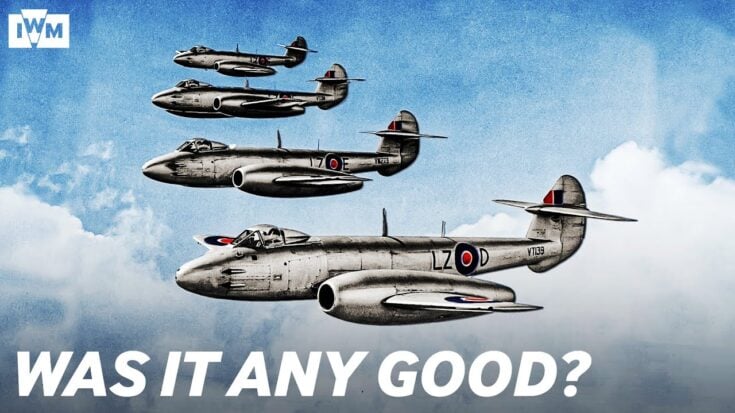
The Gloster Meteor holds a unique place in aviation history as the only Allied jet fighter to enter operational service during World War II. Developed in parallel with Germany’s jet program, it represented Britain’s answer to a rapidly changing air war. The question is not whether it was revolutionary, but whether it was effective within the limits of its time.
Britain Enters the Jet Age
British jet development began quietly during the Battle of Britain. Frank Whittle’s early turbojet work led to the experimental E.28/39, which flew in 1941 and proved that jet propulsion was viable. Engineers quickly realized that early engines lacked sufficient thrust, forcing designers to rely on twin engine layouts. This same limitation shaped both the Meteor and Germany’s Me 262.

The Meteor first flew in March 1943 and followed a conservative design philosophy. Straight wings, conventional control surfaces, and sturdy construction reflected British caution with unfamiliar technology. Compared to the Me 262’s swept wings, the Meteor favored stability over outright performance.
Performance and Limitations
Early Meteors were underpowered by modern standards and suffered from slow throttle response. Acceleration took time, fuel consumption was high, and endurance was limited. Top speed hovered around 450 miles per hour, well below the Me 262. Pilots had to plan maneuvers carefully, especially during landing approaches where deceleration was sluggish.
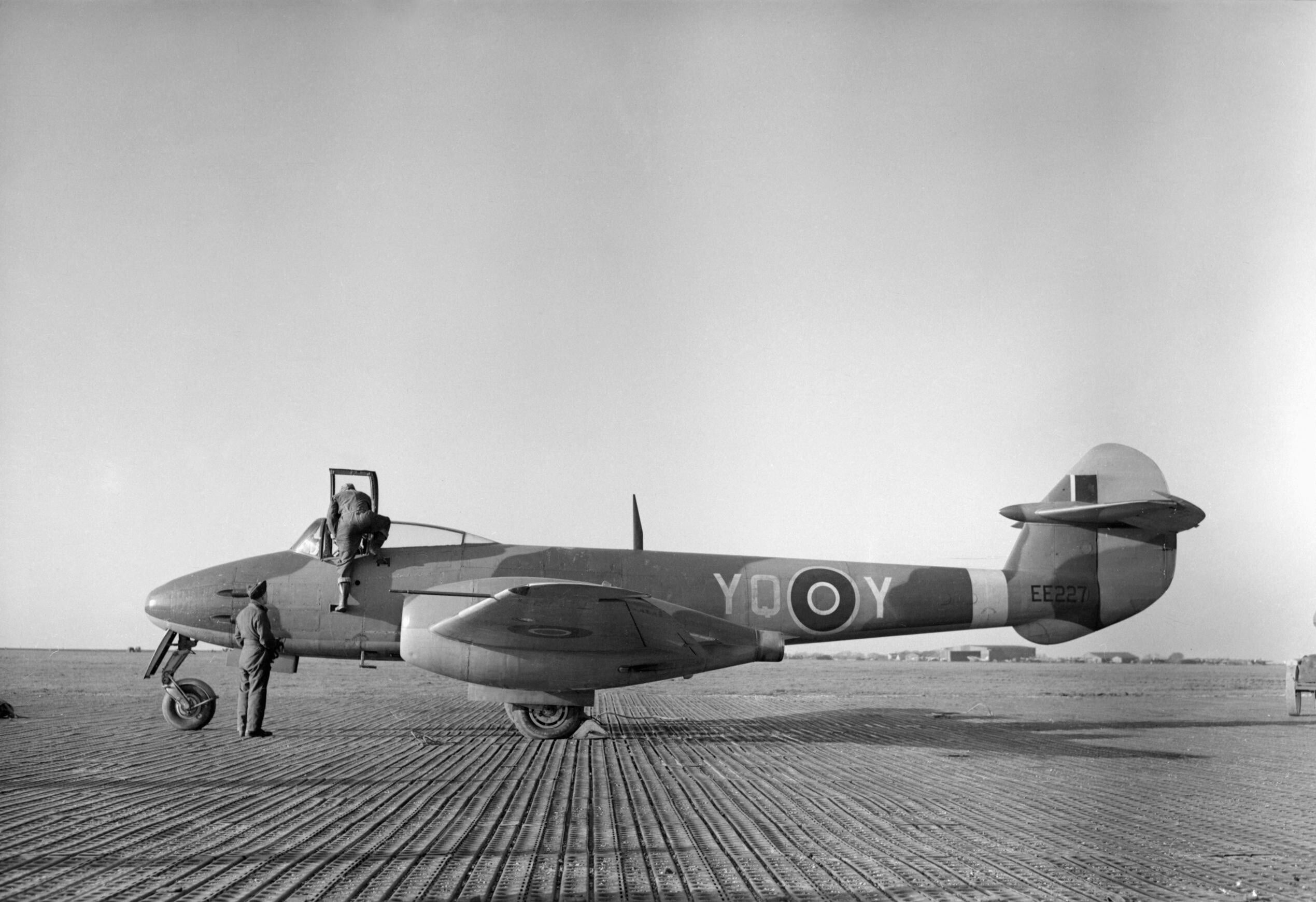
The aircraft introduced features that would define jet fighters going forward. Engine nacelles buried in the wings reduced ground clearance needs, and tricycle landing gear improved visibility and handling on the ground. Later variants gained improved canopies, pressurization, and eventually ejection seats.

Combat Use During the War
The Meteor entered squadron service with No. 616 Squadron in July 1944. Security concerns prevented it from flying over enemy territory, so it never met German jets in combat. Instead, its first operational role was home defense against V-1 flying bombs. Its first confirmed kill came not from gunfire, but by tipping a V-1’s wing and disrupting its guidance system.
Britain no longer faced sustained daylight air attacks by this stage of the war, leaving the Meteor without a traditional fighter mission. As a result, its World War II combat record remained limited.
After the War, A Clearer Verdict
Postwar development pushed the Meteor’s speed close to 600 miles per hour, and it set a world air speed record in 1946. Its true combat test came during the Korean War, where Royal Australian Air Force Meteors initially flew air combat missions before being outmatched by the MiG-15 at altitude. The aircraft then shifted to ground attack, where it proved effective and durable.
So Was It Any Good

The Meteor was not a dominant air superiority fighter, but it was reliable, adaptable, and arrived when jet technology was still immature. Its greatest contribution lay in bridging the gap between piston fighters and true second generation jets. As a wartime weapon it was limited, but as a foundation for postwar jet aviation, it served its purpose well.