Everyone Hates This WWII Fighter, But Is It Justified
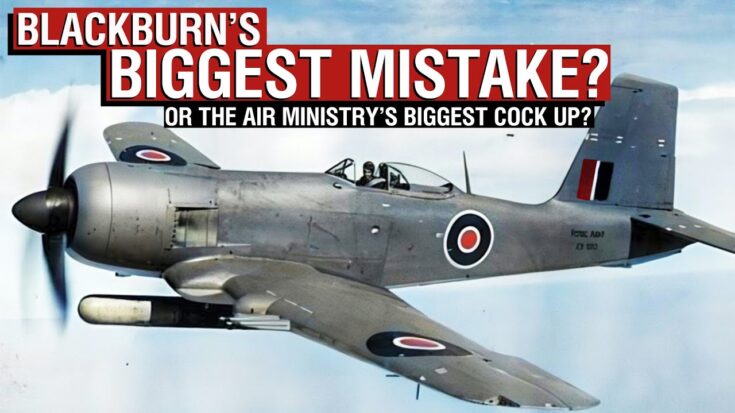
YouTube / Rex's Hangar
The Blackburn Firebrand is often cited as one of the Royal Navy’s great disappointments of World War II. Its reputation rests on delays, redesigns, and an aircraft that never reached combat when it mattered. Yet the Firebrand’s story is less about failure in the air and more about how shifting requirements and external pressures can derail an otherwise workable design.
Born Into Confusion
The Firebrand’s problems began before it ever flew. Starting in March 1939, the Air Ministry issued a rapid sequence of changing specifications for a new naval fighter. Within a year, requirements shifted from a two seat turret fighter to a single seat cannon armed aircraft. Five separate specifications followed one another in quick succession. Blackburn’s designers were forced to chase moving targets, reworking the aircraft repeatedly before a prototype even existed.

A Powerful Engine With a Short Lifespan
At the heart of the Firebrand was the Napier Sabre, a high output engine placing it in the same power class as top RAF fighters. On paper, this promised strong performance. In practice, the engine became the aircraft’s undoing. By 1943, Sabre production was diverted entirely to the Hawker Typhoon, which had become a priority for the RAF. The Firebrand lost its engine just as improved naval fighters like the Seafire and American lend lease aircraft were entering service. Its original role vanished overnight.
Reinvented as a Strike Aircraft
Rather than cancel the program, the Ministry pushed Blackburn to redesign the Firebrand as a torpedo strike aircraft. This required major structural changes, including widening the fuselage center section to carry an 18 inch torpedo. When the Sabre remained unavailable, the aircraft was reengined with the Bristol Centaurus radial. This version finally gave the Firebrand a powerplant, but it introduced severe handling problems.
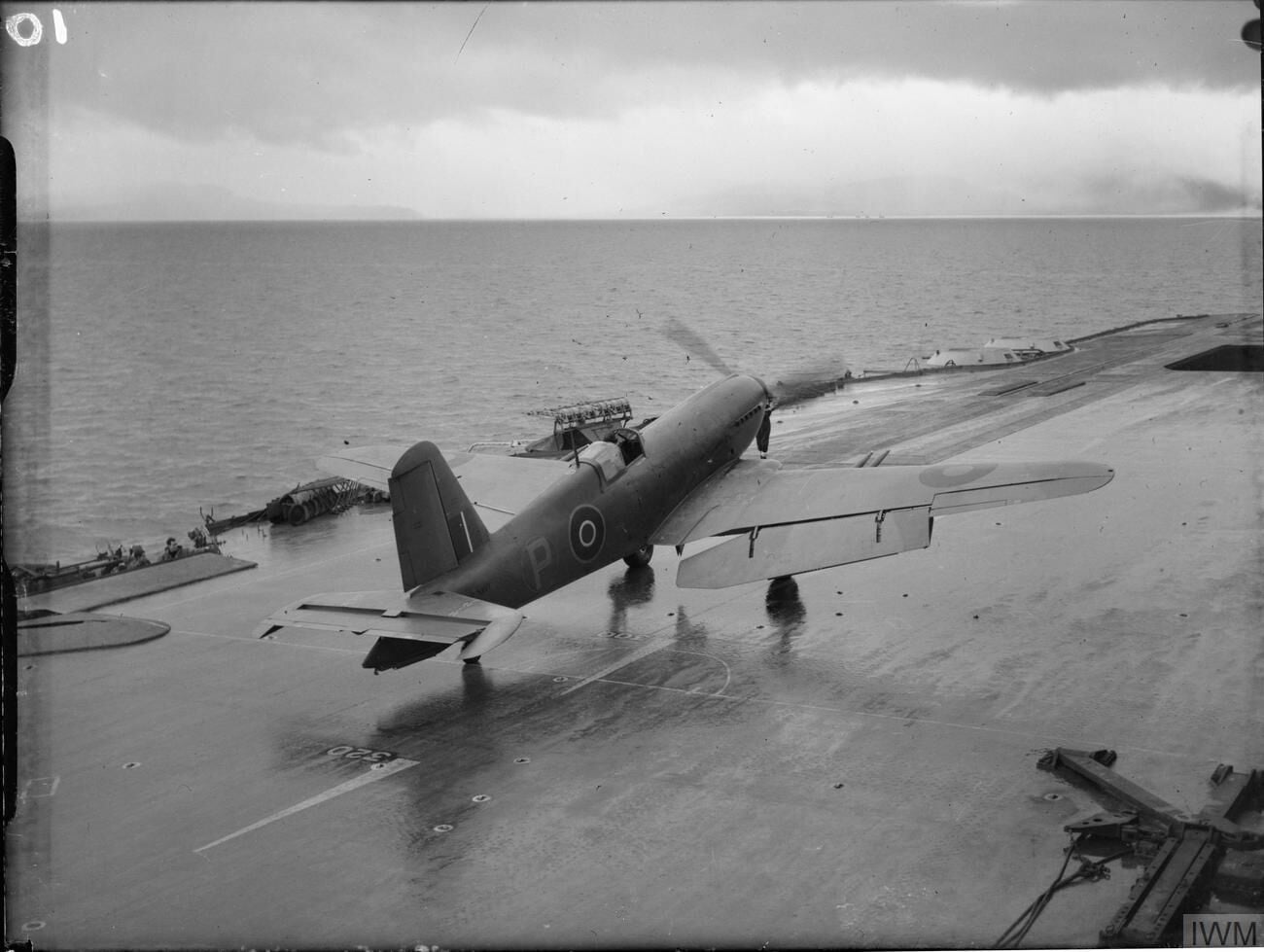
Carrier Handling Problems
Flight testing revealed poor directional control during takeoff, weak arrestor gear, and dangerous stall behavior. Forward visibility during landings remained limited, and torque from the Centaurus engine overwhelmed the rudder at low speeds. These flaws made the aircraft unsuitable for frontline carrier operations, and deliveries in late 1944 went directly to trials units rather than combat squadrons.
Too Late for Its Own War
Later variants attempted to correct these issues with larger control surfaces, improved canopies, and better flight controls. By the time the Firebrand reached a stable configuration, the war had ended. It entered limited postwar service, performed routine strike duties, and never saw combat. Withdrawn in 1953, it was replaced by the Westland Wyvern as jets reshaped naval aviation.

A Reputation Reconsidered
The Firebrand’s poor reputation reflects timing more than incompetence. Constant specification changes and the loss of its intended engine left it flying a mission it was never designed to perform. It never had the opportunity to prove itself in wartime conditions. In that light, the hatred may say more about circumstance than the aircraft itself.