They Shot Down His P-51 — So He Stole a German Fighter and Flew Home
YouTube / WW2 Paths
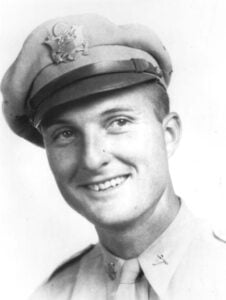
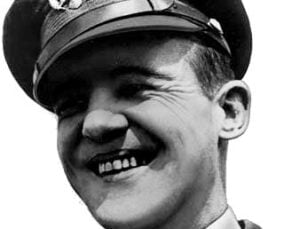
On November 2, 1944, the war in Europe was grinding toward its brutal winter phase when USAAF fighter pilot Bruce Carr found himself alone, stranded, and surrounded deep behind German lines in Czechoslovakia. His P-51 Mustang lay in ruins, his radio was useless, and the survival manuals offered only one realistic outcome: surrender. Capture, captivity, and the long wait for the war’s end seemed inevitable.
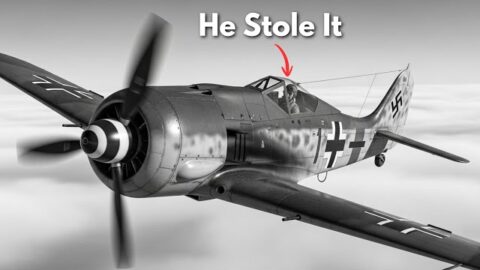
But Carr chose a path so reckless it bordered on impossible. Under the cover of darkness, he crept onto an active Luftwaffe airfield, slipped past guards, and climbed into a parked Focke-Wulf Fw 190- an enemy fighter he had never flown. With no instructions, no markings he could read, and German forces closing in, he coaxed the aircraft into the air and fled at treetop height, dodging gunfire from both sides of the front. This is the true World War II story of one of aviation history’s most daring escapes- a shot-down Mustang pilot who stole a German fighter and flew it home.
Shot Down Behind Enemy Lines
On November 2, 1944, USAAF fighter pilot Bruce Carr was flying a P-51 Mustang on a combat mission over German-occupied Czechoslovakia when his aircraft was hit by enemy fire. The Mustang, one of the Allies’ most feared escort fighters, could not survive the damage. Carr was forced to bail out deep behind enemy lines, far from friendly territory. His radio was gone, his supplies were minimal, and winter was rapidly closing in. According to every survival guideline, surrender was the safest and most realistic option.
Alone in hostile territory, Carr faced the grim reality shared by many downed airmen: capture by German forces and years in a prisoner-of-war camp- if he survived that long. Evading on foot through occupied Europe was dangerous enough in summer, but freezing temperatures, patrols, and informants made escape nearly impossible. As night fell, Carr realized that waiting or hiding would only narrow his chances.
An Unthinkable Idea
Instead of surrendering, Carr made a decision no training manual could have prepared him for. He slipped onto an active Luftwaffe airfield under the cover of darkness. German fighters sat lined up on the tarmac, their silhouettes barely visible in the moonlight. Carr selected a Focke-Wulf Fw 190, one of Germany’s most formidable fighters and an aircraft he had never flown or studied in detail.
Inside the cockpit, nothing was familiar. The gauges were labeled in German, the layout was different, and even the startup procedure was unknown. Relying on instinct, combat experience, and sheer nerve, Carr began experimenting with the controls. Miraculously, the engine came to life. With no time to second-guess himself, he lined up on the runway and pushed the throttle forward, lifting the stolen fighter into the night sky.
Home at Last
Getting airborne was only the beginning. Flying low to avoid detection, Carr headed toward Allied lines, skimming the terrain at treetop level. German anti-aircraft guns opened fire, and Allied gunners- seeing a German fighter approaching- joined in. Trapped between both sides, Carr weaved through tracer fire, knowing a single hit would end the escape.
Against all odds, Carr crossed the front lines and reached friendly territory. Only then did the shooting stop. What began as a routine combat mission ended as one of the most audacious solo escapes of the Second World War. Bruce Carr had not only survived being shot down- he had turned the enemy’s own weapon into his way home.
A Legend of Wartime Ingenuity
Stories of courage are common in wartime, but few match the sheer audacity of Carr’s escape. Stealing and flying an enemy fighter from an active airfield required nerve, skill, and a willingness to gamble everything on a single idea.
His flight remains one of the most unbelievable true stories in aviation history- a reminder that sometimes survival depends not on following the rules, but on daring to break them.