How Two F4U Corsair Pilots Survived the Impossible
YouTube / TJ3 History
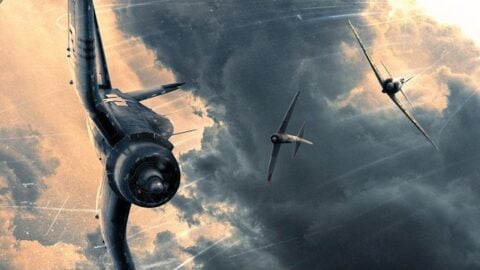
On June 7, 1943, the air war over the South Pacific entered a new phase. American Marine pilots flying the newly arrived F4U Corsair scrambled from Henderson Field on Guadalcanal to intercept a large Japanese strike force approaching down the Solomon Islands chain. The Corsair was still proving itself in combat, and the Japanese pilots it faced remained experienced, aggressive, and dangerous.

A New Aircraft Meets a Veteran Enemy
The Marine unit involved was VMF-12, known as the Wolfpack. Equipped with early production Corsairs, the squadron had already seen success, but losses had shown the aircraft alone was no guarantee of survival. Japanese raids on Guadalcanal often exceeded one hundred aircraft, and Fighter Command at Henderson Field remained the only real defense.

At approximately 10:20 a.m., VMF-12 was ordered airborne to intercept an enemy force reported 150 miles out. Cloud cover over the Russell Islands quickly disrupted formations, scattering pilots just as contact with Japanese fighters became imminent.
Lieutenant Percy’s Fall
As combat erupted around 20,000 feet, Lieutenant JG Percy broke away while attempting to assist another Corsair under attack. Six Japanese fighters turned on him, dragging the fight down to low altitude. His Corsair was soon crippled, leaving him no choice but to bail out.

Percy exited his aircraft at roughly 2,000 feet. His parachute streamed but never fully deployed. He struck the water at high speed and survived by chance alone. Medical reports later confirmed a broken pelvis, sprained ankles, and severe bruising. Japanese fighters departed, assuming the Marine was dead. He was not.
Lieutenant Logan’s Ordeal
Shortly afterward, Lieutenant Sam Logan found himself isolated in the broken cloud layers. Spotting Royal New Zealand Air Force P-40s under attack, he dove in to assist. He drove a Japanese fighter off a P-40 but exposed himself in the process. A Zero latched onto his Corsair and inflicted fatal damage.

Logan bailed out at approximately 18,000 feet. As he descended under canopy, a Japanese fighter deliberately attacked him. The Zero made repeated firing passes, narrowly missing. On the third pass, Logan attempted to descend faster by pulling in his parachute lines. The Japanese pilot misjudged the closure rate and struck Logan’s right foot with the aircraft’s propeller, severing it.

Driven off by an RNZAF P-40, the Japanese fighter disengaged. Logan applied first aid, inflated his life raft, and waited. He was rescued two hours later by a U.S. Navy seaplane. His foot was later amputated at a hospital in Pearl Harbor.
Survival Beyond the Aircraft
A month later, Percy and Logan were photographed together while recovering. One had survived a near free fall into the sea. The other had endured direct attack while suspended beneath a parachute.
The F4U Corsair earned its reputation as a tough and capable fighter. On June 7, 1943, it was the pilots who demonstrated the same resilience. Their survival reflected endurance, training, and a measure of luck that no aircraft design could provide.