CORSAIR vs ZERO: Why Japan Was So Scared Of This Fighter
YouTube / Combat Zone - Aviation
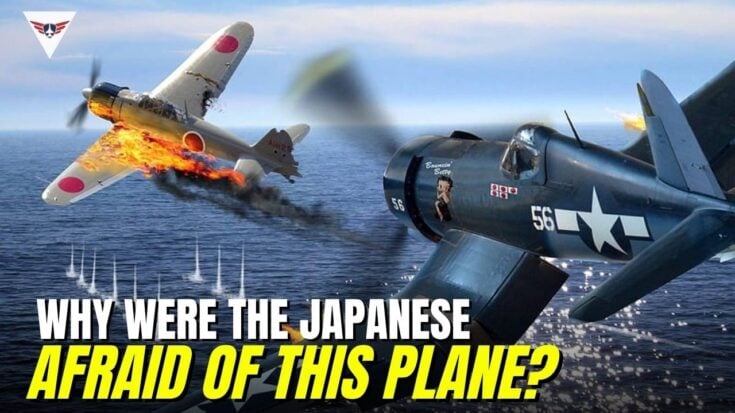
Across the vast Pacific theater of World War II, air superiority determined whether an island could be held or lost. Two fighters came to define that struggle more than any others: the American F4U Corsair and Japan’s Mitsubishi A6M Zero. Their encounters were not just battles between aircraft, but contests between opposing design philosophies, training systems, and industrial capacity.
Two Fighters, Two Doctrines

The A6M Zero entered the war as a highly refined weapon. Designed for extreme lightness, it emphasized maneuverability above all else. With no armor protection and no self-sealing fuel tanks, every unnecessary pound was stripped away. The result was a fighter that could out-turn nearly anything it faced. In the early months of the war, flown by highly trained Japanese veterans, the Zero achieved overwhelming success.

The F4U Corsair represented a different approach. Designed around the powerful Pratt and Whitney R-2800 engine, it prioritized speed, climb performance, firepower, and survivability. Its inverted gull wing allowed a massive propeller while maintaining manageable landing gear height, making it suitable for carrier and land-based operations. Armor protection and self-sealing tanks reflected an American belief that a fighter needed to absorb damage and bring its pilot home.
Early Encounters Over the Solomons
The Corsair first met the Zero in combat during 1943 over the Solomon Islands. At low altitude and in tight turning fights, the Zero retained a dangerous advantage. American pilots quickly learned that attempting to out-turn Japanese fighters led to predictable losses.

Instead, Corsair pilots exploited speed and altitude. Using boom-and-zoom tactics, they attacked from above, fired short bursts, and climbed away before the Zero could respond. The Corsair’s power allowed it to dictate when and how engagements occurred, gradually neutralizing the Zero’s greatest strength.
Tactics and Training Shift the Balance
American pilots also employed coordinated tactics such as the Thach Weave, flying in pairs to cover each other during attacks. This reduced the Zero’s ability to isolate and destroy individual aircraft. Altitude control became another key factor, as the Corsair performed best at medium to high altitudes where the Zero’s advantages diminished.

Over time, pilot experience tipped the scales. Japan’s long and selective training pipeline could not replace combat losses, while the United States rapidly expanded both aircraft production and pilot training. As inexperienced Japanese pilots took the place of fallen veterans, the Zero’s effectiveness declined sharply.
Why the Corsair Inspired Fear
By late 1943, Japanese pilots increasingly recognized the Corsair as a serious threat. It was fast, heavily armed, difficult to destroy, and flown by increasingly experienced opponents. The Zero remained agile, but agility alone could not overcome superior tactics, survivability, and numbers.

The Corsair’s dominance reflected a broader reality of the Pacific War. Industrial strength, pilot replacement, and adaptable tactics ultimately proved decisive. In that environment, the Corsair was not just another fighter. It was a signal that air superiority was shifting, and that Japan’s early advantage was slipping away.