

The Most Dangerous Seat in WWII
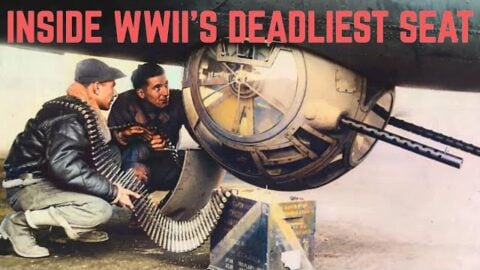
YouTube / FORGOTTEN HISTORY
During World War II, bomber crews faced constant threats from enemy fighters, anti-aircraft fire, and the brutal conditions of high-altitude flight. Yet among all crew positions, none matched the sheer danger of the ball turret gunner. Mounted beneath heavy bombers such as the B-17 Flying Fortress and the B-24 Liberator, the ball turret was a small, rotating sphere designed to provide gunners with a full 360-degree view of the skies below. From this exposed vantage point, they defended the bomber from incoming attacks, often becoming the aircraft’s last line of defense.
Inside the Steel Sphere
The ball turret was barely large enough to hold a single crewman. Gunners had to climb inside and curl into a cramped, fetal-like position, with their knees drawn up to their chest. Surrounded by glass panels and thin armor, they operated twin .50 caliber machine guns while suspended thousands of feet above the ground. Temperatures at 25,000 feet could drop well below freezing, making electrically heated flight suits essential. Even then, frostbite remained a constant threat, and oxygen masks were crucial in preventing hypoxia in the thin air.
A Prime Target
Despite its effectiveness, the ball turret was also one of the most vulnerable positions on the aircraft. Enemy fighters quickly learned that disabling the turret could weaken a bomber’s defenses, making it a frequent target. With limited armor protection and nowhere to hide, gunners were dangerously exposed to incoming fire. Unlike other crew members, they were isolated from the rest of the aircraft, with only intercom communication linking them to their crew. If the turret was damaged or jammed, escape could be nearly impossible.
The Risk of Landing
One of the most terrifying aspects of the job came not during combat, but during landing. The ball turret had to be retracted before the bomber touched down. If the landing gear failed or the turret malfunctioned, the gunner could be trapped in place, facing a catastrophic outcome. In some emergency situations, crews were forced to make impossible decisions, highlighting just how perilous the position truly was.
Despite the risks, thousands of young men served as ball turret gunners, demonstrating extraordinary bravery and resilience. Their role was crucial in protecting bomber formations and ensuring missions could be completed. Many earned decorations for their actions, while others paid the ultimate price.
A Lasting Legacy
Today, the ball turret gunner remains a powerful symbol of courage in the face of overwhelming danger. Their story captures the human side of aerial warfare-the fear, the sacrifice, and the determination to carry on despite the odds. It is no exaggeration that many veterans would later describe it as the most dangerous seat in World War II.







