

Davis-Monthan AFB Graduates Final Group of A-10C Thunderbolt II Pilots
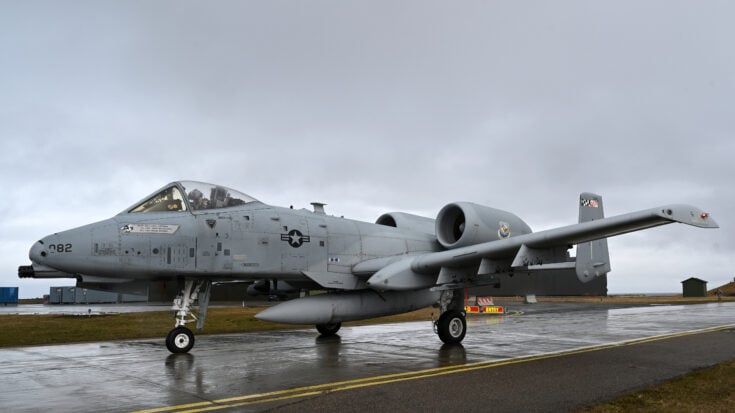
Enjoli Saunders, Public domain, via Wikimedia Commons
The Closing Chapter of a Long-Standing Training Mission
At Davis-Monthan Air Force Base, a milestone quietly marked the end of a major chapter in modern American air power. On April 3, 2026, the 357th Fighter Squadron held a graduation ceremony for what would become the final class of pilots trained to fly the A-10C Thunderbolt II, closing decades of continuous instruction tied to one of the Air Force’s most recognizable aircraft.
For many years, this base served as the primary training ground for new A-10 pilots. Since the aircraft entered service in the late 1970s, it developed a reputation as a reliable platform for close air support, designed to operate at low altitudes and assist ground forces. Its durability and heavy armor became central to its identity, particularly during conflicts in the Middle East.
The Role of the 357th Fighter Squadron
The 357th Fighter Squadron, often called the “Dragons,” carried the responsibility of preparing pilots for these demanding missions. As the Air Force’s sole formal training unit for the A-10, it trained both active-duty and reserve personnel, producing dozens of qualified pilots each year.
Students entering the program underwent months of intensive instruction. Training began with basic flight operations, followed by defensive tactics against enemy aircraft. Pilots then advanced to weapons training, learning to employ the aircraft’s well-known GAU-8 cannon along with a range of guided and unguided munitions. By the end of the course, students completed a final close air support exercise designed to simulate real combat conditions.
A Legacy Aircraft Nearing Retirement
The aircraft itself, the Fairchild Republic A-10 Thunderbolt II, was originally built during the Cold War to counter large armored formations. Over time, however, it proved equally effective in modern conflicts, especially in Iraq and Afghanistan, where its ability to loiter over battlefields provided critical support to troops below.
Despite its long service record, the Air Force has gradually moved toward retiring the A-10 fleet in favor of newer multi-role aircraft. The end of pilot training represents a clear step in that direction, even as existing aircraft remain in operation. Officials have indicated that the A-10 will continue flying for several more years, depending on operational needs.
Notable Figures and Continued Relevance
Among those present at the graduation ceremony was Kim Campbell, a retired colonel known for surviving severe battle damage during a mission in Iraq in 2003. Her experience, which included landing a heavily damaged aircraft using manual controls, remains one of the most cited examples of the A-10’s resilience and the skill required to operate it.
Recent updates to the aircraft have also extended its usefulness. Efforts to adapt the A-10 for probe-and-drogue aerial refueling, a system used by many allied aircraft, reflect attempts to keep the platform compatible with modern operations. These changes highlight the continued demand for the aircraft, even as its long-term future becomes uncertain.
Transition and Historical Perspective
The conclusion of formal A-10 pilot training signals a broader transition within the Air Force. While new pilots will no longer be trained specifically for the aircraft, those already qualified will continue to operate it in active units. This shift mirrors earlier changes in military aviation, where older aircraft gradually gave way to newer designs.
From its origins in Cold War planning to its role in recent conflicts, the A-10 has maintained a distinct place in aviation history. The final graduation at Davis-Monthan reflects both the aircraft’s long service and the evolving priorities of modern air forces.







