KC-135 With Visible Damage Flies Through UK En Route to Repairs
marklynham / Instagram
A Tanker’s Unusual Arrival in Britain
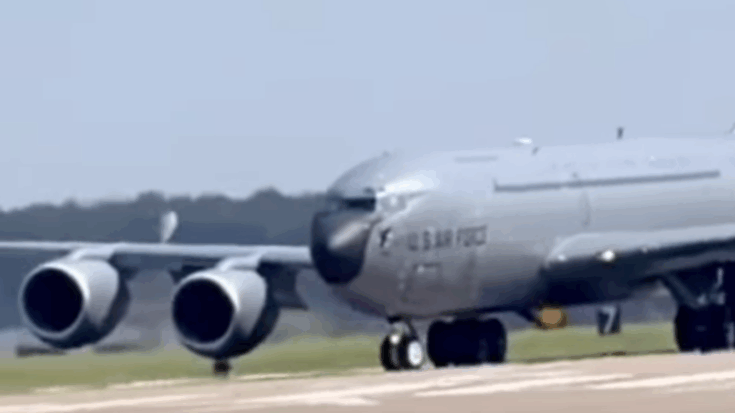
On April 12, 2026, aircraft observers gathered near RAF Mildenhall noticed something unusual as a U.S. Air Force tanker approached the runway. The aircraft, a Boeing KC-135 Stratotanker, showed clear signs of recent repair work. Scattered across its fuselage were unpainted patches, each marking where technicians had carried out rapid fixes following damage sustained during operations overseas.
The aircraft, identified as tail number 59-1444, had been flying under the callsign REACH 717. Its appearance quickly drew attention because such visible repairs are rarely seen outside of wartime conditions. The pattern of patching suggested the aircraft had been struck by fragments from nearby explosions rather than direct impact, a type of damage commonly associated with missile or drone attacks.
Deployment to a Tense Region
Earlier in March, the tanker had deployed from the United States to Prince Sultan Air Base, a key installation used by American forces in the Middle East. This base has played a central role in regional operations for decades, especially since its reactivation by U.S. forces in 2019 amid rising tensions.
Shortly after the aircraft’s arrival, the base came under a series of attacks attributed to Iranian forces. These incidents reflected a broader pattern of regional conflict, where air bases and logistical hubs have increasingly become targets. While details remain limited, reports indicated that several aircraft on the ground were affected during these strikes.
Damage and Broader Impact on the Fleet
Among the most serious outcomes of the attacks was the reported destruction of an Boeing E-3 Sentry, one of the Air Force’s key surveillance platforms. Additional reports suggested that multiple tankers, including KC-135 aircraft, suffered varying levels of damage. The tanker later seen in the United Kingdom is believed to have been among those affected during an earlier strike in mid-March.
In response, the U.S. Air Force reportedly began reactivating stored KC-135 aircraft from long-term storage at Davis-Monthan Air Force Base. These aircraft, often preserved in the desert climate, can be returned to service when operational needs demand it. The move suggested that some of the damaged tankers might require extended repair periods or could be deemed beyond economical restoration.
View this post on Instagram
An Emergency Over the Mediterranean
The damaged tanker’s return flight to Europe was not without complications. On April 10, while flying over the Mediterranean Sea, the aircraft transmitted a 7700 emergency code, a universal signal indicating a serious onboard issue. It then diverted toward Chania International Airport, a facility that supports both civilian and military traffic near Souda Bay.
Although officials did not release details about the emergency, aviation patterns suggested a possible pressurization problem. In such cases, aircraft often descend to lower altitudes where passengers and crew can safely breathe without cabin pressurization. The presence of temporary repairs may have contributed to the issue, requiring additional inspection before the flight could continue.
Field Repairs and Continuing Assessment
The visible patches on the aircraft were examples of battle damage repair, a long-established practice in military aviation. These repairs are designed to restore enough structural integrity for safe flight, even if the aircraft is not yet fully restored. Crews are trained to perform such work quickly, often under difficult conditions.
Once back in the United States, the aircraft is expected to undergo a full evaluation to determine whether permanent repairs are feasible. Decisions in such cases depend on cost, structural condition, and the aircraft’s remaining service life, factors that have guided military aviation maintenance for decades.